


Matching to a fellowship program is a competitive endeavor. Even strong residents can have difficulty getting fellowship positions in certain sub specialties. Those candidates that do match may not get their first or second choices, leaving them in suboptimal locations or programs. Consequently, professional fellowship admissions consulting has become increasingly important in optimizing fellowship applications, improving candidates’ chances of being admitted into the sub specialty programs they desire. Read more ›
Blog Archives
Fellowship Admission
Tags: Admissions Consulting, Admissions Officers, Electronic Residency Application, Electronic Residency Application Service, Fellowship Application, Fellowship Applications, Fellowship Positions, Fellowship Programs, Interview Skills, Personal Statements, Professional Fellowship, Residency Application Service
Medical Residency Admissions: Apply Early
Because matching to a medical residency program continues to get harder each year, the submission of a strong residency application is critical. Following a timeline and getting your materials in early can assist you in improving your candidacy and thus, your chances of success.
Getting your ERAS® and residency personal statement in early is essential. ERAS opens in July and materials can be assigned to residency programs in early September. I recommend submitting your written materials as early as possible, while maintaining quality. Some residency admissions officers have more time to carefully review residency applications earlier in the season before the onslaught of application submissions. You should also move quickly on interview requests. Invitations for interviews warrant a quick response for two reasons: First, you want to demonstrate your appreciation and responsibility. Second, the faster you respond the more likely you are to procure a time slot that works best for you. Read more ›
Getting into Medical School: Tips for Obtaining Optimal Letters of Recommendation
In part because of the failing economy, getting into medical school is becoming increasingly competitive. Top-notch candidates who used to target law or business school are turning their interest toward medicine, a more secure field. Consequently, more competitive candidates are now pursuing a medical career, making the submission of an excellent medical school application more important.
The American Medical College Application Service (AMCAS®) is a centralized application processing service for medical school applicants. AMCAS® accepts letters of recommendation (LOR) for participating medical schools, enabling institutions to receive letters electronically. It also allows the letter of recommendation writers to send their written materials to AMCAS® instead of to individual medical schools, saving time. Read more ›
Tags: Admissions Officers, Amcas, Applying To Medical School, College Application Service, Getting Into Medical School, Letter Of Recommendation, Letter Writer, Letter Writers, Letters Of Recommendation, Medical Career, Medical College Application Service, Medical School Applicants, Medical School Application, Medical Schools
Residency Admissions
Matching to a residency program through the NRMP® (National Resident Matching Program) is a competitive endeavor. Even strong candidates – especially IMGs (international medical graduates) – can have difficulty getting PGY-1 (post graduate year one) positions in many specialties. Those that do match may not get their first or second choices, leaving them in suboptimal locations or programs. Consequently, professional residency admissions’ consulting has become increasingly important in optimizing residency applications and ensuring that candidates get into the programs they desire. Read more ›
Tags: Admissions Consulting, Admissions Officers, Electronic Residency Application, Electronic Residency Application Service, International Medical Graduates, Interview Skills, Medical Focus, Medical Institutions, National Resident Matching Program, Personal Statements, Program Directors, Residency Admissions, Residency Application Service, Residency Applications, Residency Programs
How to Write a Compelling Letter of Intent
A medical school letter of intent is a notice to an institution explicitly stating one’s continued interest in the school. An applicant might write a letter of intent after interviewing or in response to a waitlist notification. Why write a letter of intent? Medical school admissions have become increasingly competitive of late – especially in this weaker economy. Competitive applicants who would have considered business or law school are now recognizing the stability of a medical career. The bottom line: The number of medical school applications has again increased this year.
Here are some tips for writing a noteworthy letter of intent: Read more ›

Dr. Finkel is a graduate of Stanford University and Harvard Medical School. On completing her residency at Harvard, she was asked to stay on as faculty at Harvard Medical School and spent five years teaching at the world-renowned Massachusetts General Hospital. She was appointed to the Assistant Residency Director position for the Harvard Affiliated Emergency Medicine Residency where she reviewed countless applications, personal statements and resumes. Read more
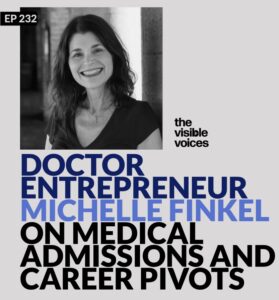
Listen to Dr. Finkel’s interview on The Visible Voices podcast:
Listen to Dr. Finkel’s interview on the White Coat Investor podcast:
Listen to Dr. Finkel’s interview on the FeminEm podcast:
