


I’ve been offering help to post bacc applicants informally (with great success; my last client got into Penn). But now I’ve added a post baccalaureate page with a list of my services for clients. Take a look at my first blog entry on searching post baccaluareate programs for help deciding where to apply.
Physician Shortage
Here’s an interesting NYT article focusing on the predicted U.S. physician shortage. It’s worth a read particularly because it describes how residency slots are funded, something many people don’t understand.
Tags: May 2009
Calculating your GPA
I have found this document very helpful for applicants who are computing their GPAs for AMCAS. And once you’ve calculated your numbers, take a look at my blog entries on deciding where to apply to medical school.
Contact me for application help at Insider Medical Admissions.
Tags: April 2009
Quick Tip: Step 2
I was just advising a client about when he should take his Step 2. The answer to this question is different depending on a medical students’ step 1 scores, how competitive her/his specialty choice is, etc. I can make one suggestion to everyone, though:
On the ERAS form you can check a box to ensure that your Step 2 scores are not automatically released to residency programs. I recommend this. If your score is poor, you can hold it from programs to which you are applying indefinitely. If it is good, you can choose then to release it with very little delay. This move keeps your options open.
Contact me for a strategy session now – before the application season starts. I can assist with decisions about rotation scheduling, the need for research, letters of recommendation, etc.
Tags: April 2009
Quick tips: Sub-i Success
Now is the time that many third year medical students are starting their sub-internships. Here are some quick tips on how to succeed:
1. Read before starting your rotation. You don’t have to be ready for board-certification but knowing something about the field from the beginning will impress.
2. Be on time and eager.
3. Don’t be annoying. No one likes a gunner.
4. Consider teaming up with an attending to write a case report if you’re involved in an interesting case.
5. Don’t complain at the hospital. At home you can punch your pillow or cry to your significant other, but at the hospital be cheerful.
6. Attend optional events (if invited) – conferences, morbidity and mortality, luncheons, grand rounds.
7. Be nice to everyone a) because it’s the right thing to do and b) because you never know if you might run into someone again.
Contact me for strategy session help now. It’s much better to get on top of things early. Also, check out my updated testimonials page.
Tags: April 2009

Dr. Finkel is a graduate of Stanford University and Harvard Medical School. On completing her residency at Harvard, she was asked to stay on as faculty at Harvard Medical School and spent five years teaching at the world-renowned Massachusetts General Hospital. She was appointed to the Assistant Residency Director position for the Harvard Affiliated Emergency Medicine Residency where she reviewed countless applications, personal statements and resumes. Read more
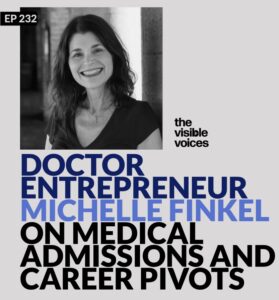
Listen to Dr. Finkel’s interview on The Visible Voices podcast:
Listen to Dr. Finkel’s interview on the White Coat Investor podcast:
Listen to Dr. Finkel’s interview on the FeminEm podcast:
