Take-aways from the 2026 Match

Doximity recently published a “Clinical Brief” summarizing stats from last month’s Match. Here are the take-home messages:

1) The good news: The Match had the most applicants ever and a strong 93.5% overall fill rate.

2) More good news: DOs and U.S. citizen IMGs saw record high Match rates at 93.2% and 70.0%, respectively.

3) Bad news: Despite 134 new positions, the Family Medicine (FM) fill rate dropped to 83.6%, leaving 899 slots unfilled. The NRMP is taking this seriously: It’s convening a Blue Ribbon Panel to look at why medical students aren’t choosing FM.

4) More bad news: Non-U.S. Citizen IMGs saw a 56.4% Match rate — a five-year low.

Of note, the two pieces of bad news are connected and potentially a big problem: IMGs historically fill a disproportionate number of FM and other primary care positions. If IMG Match rates and FM fill rates are both dropping, that’s an escalating problem for primary health care access, particularly in underserved regions. 

Tags: , , ,

Confused? Check out these AAMC Webinars

For those approaching the medical school admissions cycle, I noted (at least) two AAMC webinars that look helpful:

First, on April 14 there is a live webinar at 11 AM PST reviewing general AMCAS information, described as follows: This webinar will help applicants prepare for the 2027 AMCAS® application cycle. Participants will receive a walkthrough of the AMCAS application, an overview of updates and changes for the upcoming cycle, and information about available resources to support a successful submission.

Then, on April 21 at 10:30 AM PST there is another live webinar on submitting AMCAS coursework and transcripts. Here’s the description: Submitting transcripts and completing the coursework section are important steps in the AMCAS® application process. This session will help applicants navigate common issues that arise when submitting official transcripts and entering coursework, and provide guidance to prevent processing delays.

Participants will learn about transcript submission requirements and timelines, common problems with electronic transcripts, how to accurately enter and update coursework, and common errors that result in returned applications. There will be time for live Q&A with AMCAS experts.

Both look very helpful.

Tags: , , ,

Positively Influence your Letters of Recommendation by Making the Job of Letter Writing Easy

When pre-meds, residents, nurses, and physician colleagues asked me to write them LORs when I was Assistant Residency Director, the first thing I requested was that they send me background information to make my letter robust…and my job easier. Accordingly, whether you are applying to medical school, post bacc programs, dental school, residency, or fellowship, I strongly recommend you create a “LOR packet,” which can include the following:

1. A brief, well-written cover letter defining all of your important accomplishments
2. Your curriculum vitae (CV)
3. Your personal statement in its final form (if available)
4. Your transcripts.

With regard to the cover letter, keep it streamlined: Thank the writer and highlight your pre-professional achievements on one page. The point of the cover letter is to supplement a writer’s knowledge of your candidacy and offer flattering content for inclusion. A college professor may know that you made the only A in an organic chemistry class, but her LOR for medical school will be more complete, and she will demonstrate a more intimate familiarity with you if she knows enough to write that you volunteer regularly at a homeless shelter.

With regard to the CV and personal statement, these make useful supplements to the LOR packet only if they are in professional and final form. Don’t include rough drafts, as poorly organized background information leaves your writer the impression that you are disorganized. Also, only include the transcript if it bolsters your candidacy, demonstrating academic achievement. Don’t shoot yourself in the foot if you have some bad grades you’d rather not showcase.

Bottom line: An applicant who offered me a list of her accomplishments in a tidy, accessible package was more likely to get a strong, comprehensive letter that was submitted promptly. If you can make a letter writer’s job easier, your forethought is likely to pay dividends in the letter you receive. The savvy applicant can take subtle advantage of her ability to “lead the witness.”

Tags: , , ,

People > Prestige

For those of you medical school applicants who are fortunate enough to have more than one acceptance by the end of this cycle, I would recommend looking into research by Dan Chambliss, author of How College Works. I also heard him interviewed on the Your College Bound Kid podcast. Chambliss argues that colleges work best when students form robust connections with other students and with faculty because human bonding is a major driver of learning, belonging, and motivation.

Chambliss’ assertions are based on a 10-year study of Hamilton College students, who were tracked over time to identify the experiences that matter most in college. In choosing a learning institution, he recommends asking yourself:

  1. Will I find my people here?
  2. Will I know my professors here?
  3. Will this place make connection easy?

While we can’t say for sure that these findings apply to medical school, they sure do make intuitive sense. I’m still in daily contact through text with multiple medical school friends! Peers were the best part of medical school for me.


“…We’ll Build Our Own Damn Medical School”

A California Assemblywoman, who is also a physician, recently introduced a bill to force the hand of the University of California in hopes of opening a medical school by next year in an underserved area of California. 

Since 1960, the University of California has been the only public education system authorized to confer medical degrees in the state. However, a new bill, introduced by Jasmeet Baines, a family physician and Democrat representing Kern County’s city of Delano, allows California State University, Bakersfield, and the Kern Community College District authority to establish a medical school if the University of California doesn’t do so within a year. 

In 1978, the Fed formally designated Kern County an area with a physician shortage. The County is located in the California Valley, which has fewer than 45 primary care physicians per 100,000 people compared to 156 per 100,000 across California.

Dr. Bains was quoted as saying, “If the UC won’t build it, we’ll build our own damn medical school.”

Tags: , , ,

About Dr. Michelle Finkel

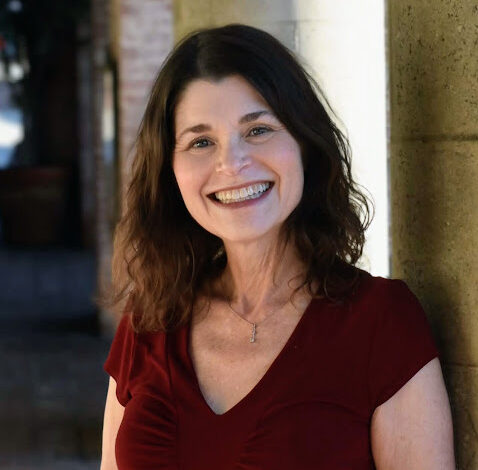
Dr. Michelle Finkel

Dr. Finkel is a graduate of Stanford University and Harvard Medical School. On completing her residency at Harvard, she was asked to stay on as faculty at Harvard Medical School and spent five years teaching at the world-renowned Massachusetts General Hospital. She was appointed to the Assistant Residency Director position for the Harvard Affiliated Emergency Medicine Residency where she reviewed countless applications, personal statements and resumes. Read more

Receive FREE Insider Medical Admissions Tips.

Listen to Dr. Finkel’s interview on the White Coat Investor podcast:

Listen to Dr. Finkel’s interview on the FeminEm podcast: