How Fast Do You Need to Submit Your Secondaries?

I’ve received several questions recently asking in what time frame secondary essays need to be submitted.

Frankly, this is a hard question to answer because the sooner you can get secondaries in, the better, but if you don’t do quality work, you could bomb your candidacy. 

The question reminds me of one I get frequently: What MCAT scores should I target? Well, the higher the better, but there are downsides to fixating on a number. 

So, while you might have heard the popular belief that you must get your secondary applications submitted within two weeks, that’s completely arbitrary. What you want is to do outstanding work as efficiently as possible.

Tags: , , ,

Secondary Essays: Simply Not Fun

I’ve been getting a ton of questions about secondary essays. As many of you know, I’m not a fan of the entire secondary application requirement. (See my piece, “The Medical School Admissions Process is Falling Short.”) Having said that, most pre-med candidates will have to complete several – if not many – secondary essays and do so on an expedited timeline. 

Secondary essay prompts vary, but there are a few that are standard fare, and one of the most important is “Why do you want to attend our school?” 

Medical school admissions officers want to be assured you know their institution, are seriously considering it, and will fit in well. In approaching the “why-our-school” question, do your research on the institution and link something specific about you with the school’s philosophy, curriculum, patient population, and/or extracurricular programs.For example, if you were a physics teaching assistant in college, you might link your use of the Socratic method with a school’s tutorial-based learning. In that way, you demonstrate knowledge of the school, show you connect well with it, and showcase your distinctive accomplishment.  

The paradox here is that – although you’re focusing your essay on one school – because so many institutions have overlapping philosophies, curricula, programs, and objectives – you can oftentimes use the same framework for many different institutions. That’s one strategic way to cut down the overwhelming workload that secondary applications present.  As you craft your essay, it’s key, however, to know and leverage the names of institution-specific programs like student-run clinics, summer travel scholarships, and/or primary care tracks, for example.

Tags: , , ,

Two Important Updates for Medical Students

1) Future residency applicants, the USMLE recently announced a significant change to the Step exam calendar – moving from near continuous availability to limited testing dates starting in 2028. There will only be a 45-day window to test. USMLE posits that this change will improve the integrity of the exams. They say they will expand the number of testing centers to mitigate fewer exam dates.

Of note, this will make strategic timing around clerkships, the application season, and the Match more difficult for students.

2) For IMGs applying to residency this year, please note that ERAS tokens are now available through the Intealth portal. If you are applying through ResidencyCAS instead of ERAS (obstetrics and gynecology, emergency medicine), you do not need an ERAS token.

Tags: , , ,

Pregnancy During Residency: An Impossible Feat?

The AAMC recently published a piece by Beth Howard on residency programs looking to support female residents during and immediately after pregnancy. The article highlights research that demonstrates that trainees who become pregnant during residency or fellowship have an elevated risk of miscarriage, preterm birth, and other pregnancy-related complications compared to the general population.

Starting in 2022, the ACGME mandated at least six weeks of paid parental leave for residents (without causing adverse effects on board eligibility), and last year an ACGME task force published recommendations, including the elimination of overnight calls and 24+- hour shifts in the third trimester, among other supportive policies.

Interestingly, according to a Massachusetts General Hospital randomized trial, instituting a specific pregnancy supportive intervention for trainees kept the burnout curve flat versus a significant burnout increase in the control group. The study points out that the cost of the intervention ($2300) was less than the estimated price of burnout per employee ($7600).

Here’s the AAMC news article for more details. 

Tags: , , ,

Get Reliable Post Baccalaureate Program Information

For those applicants seeking post baccalaureate guidance, I highly recommend the AAMC database. On the left panel you can filter by public or private, undergraduate or graduate, and special focus. For the latter, distinguishing whether you need a career changer or academic record enhancer program is critical.

For each individual program, you can search whether the curriculum awards a certificate of completion or a master’s degree, affiliations like linkage programs, and, importantly, length of time to complete the program (from one year to 24 months).

Here’s some additional information from the AAMC regarding post baccalaureate programs – what to look for, how the curriculum prepares students for medical school, etc. 

Tags: , , ,

About Dr. Michelle Finkel

Dr. Michelle Finkel

Dr. Finkel is a graduate of Stanford University and Harvard Medical School. On completing her residency at Harvard, she was asked to stay on as faculty at Harvard Medical School and spent five years teaching at the world-renowned Massachusetts General Hospital. She was appointed to the Assistant Residency Director position for the Harvard Affiliated Emergency Medicine Residency where she reviewed countless applications, personal statements and resumes. Read more

Receive FREE Insider Medical Admissions Tips.

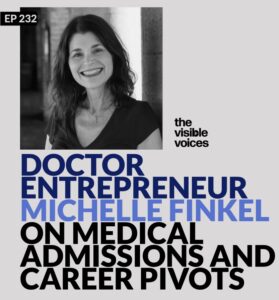
Listen to Dr. Finkel’s interview on The Visible Voices podcast: 


Listen to Dr. Finkel’s interview on the White Coat Investor podcast:

Listen to Dr. Finkel’s interview on the FeminEm podcast: