Blog Archives

Talented Pre-Meds: Leverage your Money

Recently I’ve heard from a few fortunate Insider medical school applicant clients who were not only accepted to several medical schools, but also were offered scholarship money to attend. They’ve asked me this: Is there a way to leverage the money I’ve been granted at one medical school to get funding at another?

Well, it’s worth a try.

As long as you’re diplomatic, contacting other medical schools, advising them of your scholarship, and requesting a match might help, although I’d suggest having low expectations. Still, if done politely, it cannot hurt.

In a different vein, a sometimes-successful technique I’ve encountered is to use the scholarship award as a means of obtaining an interview or trying to get off the wait list at another school. Send a note to your wait listed schools to let them know of your promised funds. After all, if you’re competitive enough to earn a scholarship at one place, you should be competitive enough to be accepted at another.

Tags: , , ,

You Can Lead the Witness: Letters of Recommendation Part 2

This is my second blog entry regarding actions you can take immediately to help you obtain strong letters of recommendation (LORs). The first entry describes two initial strategies for improving your medical school letter of recommendation process.

As a Harvard Assistant Residency Director, I bore witness to how weak – or even mediocre – LORs had the potential to bomb an otherwise competitive candidacy. Once you’ve followed directions and asked the right people (see my previous entry), it’s time to influence the content of your letters by making the job of letter writing easy:
medical school application and residency application

Influencing the Content

When pre-meds, residents, nurses, and physician colleagues asked me to write them LORs when I was Assistant Residency Director, the first thing I requested was that they send me background information to make my letter robust…and my job easier. Accordingly, I strongly recommend you create a “LOR packet,” which can include the following:

1. A brief, well-written cover letter defining all of your important accomplishments
2. Your curriculum vitae (CV)
3. Your personal statement in its final form
4. Your transcripts.

With regard to the cover letter, keep it streamlined. No one will skip the beach or her two-year old’s birthday party to read your exhaustive biography, so you want to thank the writer and highlight your pre-professional achievements in one page. The point of the cover letter is to supplement a letter writer’s knowledge of your candidacy and offer flattering content for inclusion. A professor may know that you made the only A in an organic chemistry class, but her LOR will be more complete, and she will demonstrate a more intimate familiarity with you if she knows enough to write that you volunteer regularly at a homeless shelter.

With regard to the CV and personal statement, these make useful supplements to the LOR packet only if they are in professional and final form. Don’t include rough drafts, as poorly organized background information leaves your writer the impression that you are a disorganized person. Also, only include the transcript if it bolsters your candidacy, demonstrating academic achievement. Don’t shoot yourself in the foot if you have some bad grades or an incomplete you’d rather not showcase.

Bottom line: An applicant who offered me a list of her accomplishments in a tidy, accessible package was more likely to get a strong, comprehensive letter that was submitted promptly. She also distinguished herself from the majority of candidates who requested letters without demonstrating a comparably sophisticated understanding of the demands this process made on my time. If you can make a letter writer’s job easier, your forethought is likely to pay dividends in the letter you receive. This is not a court of law, so the savvy applicant can take subtle advantage of her ability to “lead the witness.”


Tags: , , ,

Medical School Applicants, Don’t Mess Around with Your Letters of Recommendation

Today’s topic will be letters of recommendation (LORs), a part of your application you should get moving on immediately if you haven’t already. Having read many LORs as a Harvard Assistant Residency Director, I can tell you that these letters matter much more than I originally thought when I was applying to medical school and residency myself.

I have a distinct memory from years ago of a colleague’s pointing out the word “shy” in an applicant’s LOR and asking me what I thought it meant. I didn’t make much of it, but my admissions colleague was worried about what the writer was trying to convey about the candidate. If one ambiguous word can make an admissions reader balk, you can imagine what a weak letter can do.

This brings me to one of the most important points about medical LORs: Mediocre letters (not to mention frankly bad ones) are a lost opportunity at best and a fast way to bomb your application at worst. It is critical that you get strong letters of recommendation…so let’s review how to do that.

Getting the best letters of recommendation for medical school, residency and fellowship is dependent on multiple factors:

1. Following Directions
2. Asking the right people
3. Influencing the content of your letter by making the job of letter-writing easy

Because there is so much advice to offer on these topics, today’s blog entry will cover #1 and #2, and I’ll focus on #3 in a follow up piece.

Following Directions
Different medical schools are seeking different sources of your letters. It’s worth checking online to ensure you meet the varied requirements of each institution.
Many medical schools require at least two science professors and one non-science professor to submit LORs on your behalf. Some also require a letter from your principal investigator (PI) if you’ve done research. Other medical schools may prefer a composite letter from a premedical advisor or committee. (For students attending schools that do not provide this service, individual letters from faculty members can be substituted.)

If you are currently attending graduate school, you may have a different set of letter writer requirements altogether, so it’s worth looking into this issue at each medical school before you apply. Furthermore, if you are employed in the workforce or on active duty in the military, some schools will require that you have a letter from an immediate supervisor. Also, some medical schools mandate “expiration dates” on their letters; they may require that no LORs be older than a year.

The reality is that medical schools are (generally) not malevolent institutions bent on creating confusion for their prospective applicants; being able to read and follow their directions is a basic and reasonable prerequisite for consideration as a candidate. If you can’t be bothered to follow instructions as an applicant, how can they expect you to learn the nuances and complexities of caring for patients :)?

Asking the right people
Now, beyond fulfilling a school’s requirements, you want to get the strongest letter you possibly can from the most influential writer. Choosing the right professors can be a challenge, and advisees often ask me what to look for in a letter writer. Here is my suggested wish list for potential letter-writers:

1. Senior faculty
2. Weighty academic titles
3. Well known in their field
4. Spent significant time with you
5. Experienced letter-writers
6. Explicitly state they will write you a strong LOR

Of course all of these qualifications are not possible for all letter-writers. But the more of these you can garner the better. With regard to #1-3, admissions officers are human just like the rest of us: Receiving a LOR from an accomplished, known colleague will be weighed much more heavily than one from someone deemed less successful and unfamiliar. If you are better connected to someone without a title, consider asking the professor (a more senior person who has a weightier title) if she would consider writing the LOR with significant input from your closer contact (i.e., the TA who taught your section, or the postdoctoral fellow who directly supervised your research project). That way you get a LOR that includes insight from someone who knows you, signed by a name that packs a punch.

With regard to #6, don’t be afraid to ask a potential letter-writer if she will write you “a very strong” LOR. It may seem awkward at the time you ask but, believe me, getting a wimpy letter will be much thornier. If the faculty member says no, hesitates, or tells you in May that she has to plan her Thanksgiving get-together, politely thank her and move on. Although disappointing, acknowledge that she has done you a huge favor. You are far better off avoiding her letter. You now have the advantage of substituting a stronger LOR written by someone who loves you.

Remember that your letters have a big impact on your application, and a mediocre letter can bomb your candidacy. In a follow up blog entry I’ll review how to influence the content of your letter by making the job of letter-writing easy.

Tags: , ,

Match Day and Financial Security

First, congratulations to all of my residency applicant advisees: I am thrilled by the enormous success the Match brought to these candidates in a variety of fields. If you have not yet updated me, please send me an email.

Second, now that residency applicants have a professional plan for their next few years, they also need a financial plan. You could choose to work many fewer years, work in an environment you prefer, or go to part-time if you start to make good financial decisions right now.

CrispyDoc.com is a financial literacy blog for the newly minted physician. (Yes, you.) Here’s a recent blog entry about how to simply start to manage your financial portfolio without a financial advisor (even if that portfolio is tiny or you have significant debt). You can use Dr. CrispyDoc’s advice and call up Vanguard or Fidelity (I get no kickback from them) and tell them you need help setting up what you have read. Whala! You are already making good decisions that will earn you compound interest and give you more control as you move through your career.

Here are more posts from Crispy Doc on finances, early retirement for doctors, raising a family, career choice, hedge funds, Costco and more.

Tags: , ,

An Offer You Can’t Refuse

I speak to a few lucky medical school and residency applicants who are asked to write their own letters of recommendation. If you have this opportunity, first, realize that it is not unethical to write your own letter if you’re asked to do so. If you’d like to explore the scruples of this issue, take a look at this New York Times ethicist column about this topic.

The mistake I see candidates make in these situations is that applicants don’t write strong enough letters for themselves because they feel awkward about showcasing their accomplishments fully. If you have the opportunity to write your own letter, craft a glowing one. Be effusive and full-throated in your remarks about yourself. Remember that the letter-writer can choose to tone down the recommendation if she doesn’t agree. But if she does, you’ve utilized an opportunity fully and bolstered your candidacy tremendously.

Tags: , ,

About Dr. Michelle Finkel

Dr. Michelle Finkel

Dr. Finkel is a graduate of Stanford University and Harvard Medical School. On completing her residency at Harvard, she was asked to stay on as faculty at Harvard Medical School and spent five years teaching at the world-renowned Massachusetts General Hospital. She was appointed to the Assistant Residency Director position for the Harvard Affiliated Emergency Medicine Residency where she reviewed countless applications, personal statements and resumes. Read more

Receive FREE Insider Medical Admissions Tips.

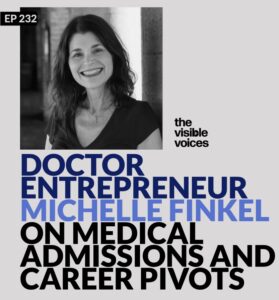
Listen to Dr. Finkel’s interview on The Visible Voices podcast: 


Listen to Dr. Finkel’s interview on the White Coat Investor podcast:

Listen to Dr. Finkel’s interview on the FeminEm podcast: