
Blog Archives

Doctor, Shut Up and Listen

female doctor with older womanThis recent NYT piece by Nirmal Joshi is interesting, and as someone with a human biology background, I’m a big fan of improving patient-doctor communication.

But the author fails to address a critical factor here – oppressive patient volumes. In the Emergency Department (ED), a physician must balance the time she’s spending with each patient with the wait time that many others are suffering without having had the privilege of seeing a doctor yet. And crushing patient volume is not just an ED problem. A primary care friend of mine told me she has to see one patient every 15 minutes to keep on schedule. She points out that just getting a thorough history from a new, elderly patient and counseling on preventive care can take all of that time.

Tags: , , ,

Match Ranking may be emotionally hard, but it’s strategically easy

For those of you who are starting to think about your Match rank lists, please remember that you simply rank your first choice first, your second second, etc. The Match algorithm is mathematically quite complicated, but because the process always begins with an attempt to match an applicant to the program most preferred on the applicant’s rank list, your best bet is not to try to “game” the system.

For example, I’ve had applicants tell me that they plan to rank a less preferred institution higher because that program has more residency slots. That’s a no-no. The applicant will actually be harming him/herself with that strategy.

Here’s a less-than-one-minute Guru on the Go© video “NRMP Ranking to Avoid a Spanking” to emphasize your optimal ranking strategy.


Tags: , ,

David and Goliath

Here’s a short, fun piece by an emergency medicine program director positing that being from a humble background might provide an advantage to those medical students and residents who choose emergency medicine.

Tags: ,

What is a letter of intent?

A letter of intent (LOI) is a supplemental note applicants write to medical schools, residencies, and other medical programs to let faculty know of their interest in an institution and the distinctiveness of their candidacies. Letters of intent can be written early in an effort to obtain an interview, after the interview to show enthusiasm and remind the faculty of the candidate’s worthiness, or after a wait list notification (for medical and dental students who don’t participate in the Match).

The letter should be written in a timely fashion. In other words, there’s no reason for a residency applicant to write a letter of intent in late February. The letter should avoid restating the strengths of the institution. Instead the applicant should express his/her interest and then move onto his/her strengths. An LOI should be a page or less.

For help writing a professional, expert LOI, contact me.

Tags: , ,

Dine But Don’t Whine

Many residency programs and medical schools are now offering applicants an opportunity to get to know their institutions through social events before the interview day – dinners or optional happy hours, for example. While I would recommend attending these events to score social points and familiarize yourself with the programs, please do remember that what you say can be repeated. Be discrete about your plans and preferences.
Take a look at this quick Guru on the Go® video for more information.

Tags: , , ,

About Dr. Michelle Finkel

Dr. Michelle Finkel

Dr. Finkel is a graduate of Stanford University and Harvard Medical School. On completing her residency at Harvard, she was asked to stay on as faculty at Harvard Medical School and spent five years teaching at the world-renowned Massachusetts General Hospital. She was appointed to the Assistant Residency Director position for the Harvard Affiliated Emergency Medicine Residency where she reviewed countless applications, personal statements and resumes. Read more

Receive FREE Insider Medical Admissions Tips.

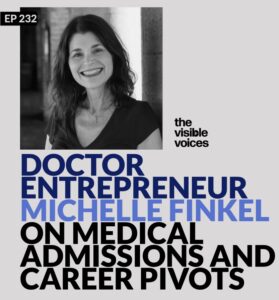
Listen to Dr. Finkel’s interview on The Visible Voices podcast: 


Listen to Dr. Finkel’s interview on the White Coat Investor podcast:

Listen to Dr. Finkel’s interview on the FeminEm podcast: