Blog Archives

Two Important Updates for Medical Students

1) Future residency applicants, the USMLE recently announced a significant change to the Step exam calendar – moving from near continuous availability to limited testing dates starting in 2028. There will only be a 45-day window to test. USMLE posits that this change will improve the integrity of the exams. They say they will expand the number of testing centers to mitigate fewer exam dates.

Of note, this will make strategic timing around clerkships, the application season, and the Match more difficult for students.

2) For IMGs applying to residency this year, please note that ERAS tokens are now available through the Intealth portal. If you are applying through ResidencyCAS instead of ERAS (obstetrics and gynecology, emergency medicine), you do not need an ERAS token.
Tags: , , ,

Check Out Key Match Dates and Two Safeguarding Policies for Applicants

Recently, the NRMP hosted a webinar called, “Introduction to the 2027 Main Residency Match®.” There are two categories of take away points:

1) Key dates relevant for applicants:

September 15 — Applicant and medical school registration opens
September 23 — Applications available via ERAS and ResidencyCAS (OB/GYN and Emergency Medicine use ResidencyCAS)
February 1 — Ranking opens
March 3 — Rank Order List certification deadline
March 15–19 — Match Week and SOAP
March 19 — Match Day

2) Two policies particularly notable for applicants:

First, residency programs can’t extend more invitations than available slots and must give applicants at least 48 hours to respond.
Second, programs can’t ask applicants about their ranking plans, request preference signals, or solicit commitments to rank.

Here’s the webinar link.

Tags: , , ,

Medical School and Residency Admissions: It’s Not Personal

When I was in my second year of medical school, a third-year student (who later also went into emergency medicine, as I did) came to speak to our class about being on the wards. He gave an animated talk about how important it was to recognize that when residents, attendings, or nurses hollered at us on our clinical rotations, 99% of the time, it wasn’t personal. He likened the situation to Boston traffic – how drivers lean on their horns simply because they are frustrated about their days.

It’s not personal, he said.

I say the same to those I mentor. Applicants get an interview at one highly ranked institution but rejected at what is considered a lesser one with no clear cause. Faculty interviewers mix candidates up with one another; some turn up wholly unprepared – reading applicants’ AMCASes or ERASes for the first time during the interview itself. 

Remember: It’s not personal. This process is arduous and cruel, and most candidates, faculty, and program coordinators are tired and doing their best in a dysfunctional system.

Tags: , , ,

Match 2025 Results Are Out

The NRMP® has already published data from last month’s Match. Of note, under 80% of the applicants who submitted a certified rank order lists matched to either a categorical or preliminary year. Match rates specifically for US-citizen and foreign national IMGs were 67.8% and 58.0%, respectively.

My field of emergency medicine did quite well this year, a big contrast from two years ago. (The field is notorious for waxing and waning in popularity over the years.) Primary care specialties also eked out a win.

See more Match statistics here.

Tags: , , ,

Sleep As a Vital Sign

“Without enough sleep, we all become tall two-year-olds.” — JoJo Jensen, Dirt Farmer Wisdom

As a resident, I spent one horrible week on my surgical rotation clocking 138 hours in the hospital…and I slept only 6 1/2 of those. By the end of the week, I had decided to quit residency. Fortunately, a good night’s sleep helped me turn that decision around.

I recently heard an interesting AMA Journal of Ethics podcast called “Sleep as a Vital Sign” with Dr. Lauren Hale from Stony Brook University. In her interview, she clarifies the distinction between sleep medicine and the study of sleep as a public health issue, the latter of which is her academic interest. She offers policy recommendations to decrease morbidity and mortality from sleep deprivation, like eliminating daylight savings time and making school start times later. She also touches on how the lack of sleep adversely affects medical professionals. 

The podcast episode is brief and interesting. Plus, you can get CME credit for listening :-).

Tags: , , ,

About Dr. Michelle Finkel

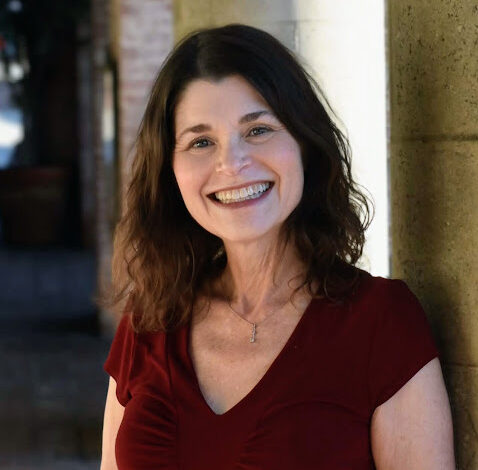
Dr. Michelle Finkel

Dr. Finkel is a graduate of Stanford University and Harvard Medical School. On completing her residency at Harvard, she was asked to stay on as faculty at Harvard Medical School and spent five years teaching at the world-renowned Massachusetts General Hospital. She was appointed to the Assistant Residency Director position for the Harvard Affiliated Emergency Medicine Residency where she reviewed countless applications, personal statements and resumes. Read more

Receive FREE Insider Medical Admissions Tips.

Listen to Dr. Finkel’s interview on The Visible Voices podcast: 


Listen to Dr. Finkel’s interview on the White Coat Investor podcast:

Listen to Dr. Finkel’s interview on the FeminEm podcast: