


Please check out my latest Student Doctor Network article here. Enjoy!
Blog Archives
The Residency and Medical School Application: Moving Past Impostor Syndrome
First described by psychologists Drs. Suzanne Imes and Pauline Rose Clance in the 1970s, impostor phenomenon occurs among high achievers who cannot easily internalize their successes. They often externally attribute their accomplishments to luck and worry that others will eventually realize they are frauds.
Recognize this phenomenon of self-doubt?
You are not alone. Although many people suffer in silence (as they do not want to be revealed for what they perceive to be major deficiencies), the syndrome is quite common, especially in medical school. According to one 2016 study, almost a quarter of male medical students and nearly half of female students surveyed suffered with impostor syndrome. The phenomenon can be associated with depression, burn out, and anxiety.
The American Psychological Association offers a few tips for overcoming impostor syndrome including speaking to mentors, recognizing what you excel at, and talking to a professional if necessary.
Your Residency or Medical School Application: More on the Squeaky Wheel
Please see my previous blog entry about contacting institutions regarding your status. When you call you can gently say, “I’m attempting to make some travel arrangements and was wondering if you could give me an update on my status.” As long as you are polite, you won’t hurt your candidacy. (Of course, if an institution specifically requests on their website or brochures that you not call, I would advise against it.)
How to Explain Inconsistencies in Your Medical School Application
You put your heart and soul into your compelling, charismatic medical school personal statement; you showcased your accomplishments and drive to succeed in your activities section; and you demonstrated the endorsement of respected faculty allies in your letters of recommendation. Now your hard work has paid off and helped you get a foot in the door: You’ve been invited to interview at your dream medical school.
But how do you manage the medical school interview when you have a gap in your resume? Let’s say, for argument’s sake, that you took a year off after college and moved to Barcelona to pursue an exciting romantic relationship, only to find yourself dumped two months later. You moped the rest of the year and had neither research nor volunteer experiences to show for your time off. Your interviewer asks you that dreaded medical school interview question: What exactly did you do, anyway, during the gap year?
A prepared candidate can see this interview question as an opportunity to turn a skeptic into an ally. Responding with a calm demeanor – without making excuses or delving into the intricacies of your personal life – will make you look professional. This is a great time to explain that, although you graduated college with a minimum of life experiences, your year off helped you consider alternative professional paths and strengthened your resolve to enter medicine. Consequently, you will pursue your medical career with greater maturity and commitment and a broader perspective than those who went straight through.
The medical school interview requires preparation and an optimistic attitude. Support your candidacy with practice and enthusiasm.
Crossing your “t”s and Dotting your “i”s
Make sure you double and triple check that your application materials are complete. A residency applicant I know only realized that his USMLE scores were not “assigned” when he contacted a residency coordinator asking the program to consider him for an interview. Residencies and medical schools will, of course, not invite you to interview if they don’t have your completed application.

Dr. Finkel is a graduate of Stanford University and Harvard Medical School. On completing her residency at Harvard, she was asked to stay on as faculty at Harvard Medical School and spent five years teaching at the world-renowned Massachusetts General Hospital. She was appointed to the Assistant Residency Director position for the Harvard Affiliated Emergency Medicine Residency where she reviewed countless applications, personal statements and resumes. Read more
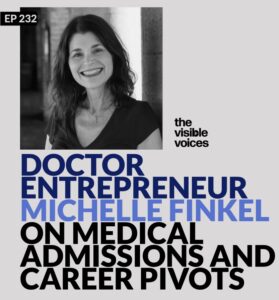
Listen to Dr. Finkel’s interview on The Visible Voices podcast:
Listen to Dr. Finkel’s interview on the White Coat Investor podcast:
Listen to Dr. Finkel’s interview on the FeminEm podcast:
