
Blog Archives

Make It Pop: Your Residency or Medical School Personal Statement

Many of you already know that I feel very strongly that the personal statement should be substantive and crafted in a persuasive essay format… Yet, the introduction is a place where you can let your hair down (to a point) and write in a narrative fashion. It helps to start your essay with a “clincher,” something that will convince the reader your statement is worth reading: I found a short piece in an old Stanford Magazine to be an interesting reminder of what a dedicated writer can do with a personal statement intro. The author compiled a list of first lines from the application essays of Stanford’s newest college class at the time.

Some of my favorites:

Unlike many mathematicians, I live in an irrational world; I feel that my life is defined by a certain amount of irrationalities that bloom too frequently, such as my brief foray in front of 400 people without my pants.

When I was 8 years old, I shocked my family and a local archaeologist by discovering artifacts dating back almost 3,500 years.

As an Indian-American, I am forever bound to the hyphen.

Note that these introductions catch the reader’s attention, while also saying something about the writer’s qualities and/or sense of self. For help with your personal statement, contact me.

Tags: , ,

Personal Statement Russian Roulette #2

Last week I showcased a personal statement mistake to avoid. Here’s another common one simplified in a stop-motion Guru on the Go© video. This advice applies to residency applicants as well.

Tags: , ,

DNR

Recently, I was socializing with an old friend who reviews residency applications for his academic program. We were discussing personal statement errors (don’t worry – we chatted about nonprofessional topics too), and he told me that he and his colleagues have a term for candidacies that are represented by bad written materials: DNR, or Do Not Rank.

Make sure your candidacy is not hamstrung by bad writing. Avoid common personal statement errors that can bomb your application. Good writing takes a lot of time, so make sure to start early. AMCAS is opening on May 1, so medical school applicants should be completing their essays and experience descriptors. Residency applicants should be starting an outline for their personal statements and a draft of their experiences.

Contact me (soon) for help.

Tags: , ,

Make It Pop: Your Residency or Medical School Personal Statement

As I’ve written many times, the personal statement should be substantive and crafted in a persuasive essay format. Yet, the introduction is a place where you can let your hair down (to a point) and write in a narrative fashion.

It helps to start your essay with a “clincher,” something that will convince the reader your statement is worth reading:

I found this short piece in an old Stanford Magazine to be worth a read. The author compiled a list of first lines from the application essays of Stanford’s newest college class at the time.

Some of my favorites:

Unlike many mathematicians, I live in an irrational world; I feel that my life is defined by a certain amount of irrationalities that bloom too frequently, such as my brief foray in front of 400 people without my pants.

When I was 8 years old, I shocked my family and a local archaeologist by discovering artifacts dating back almost 3,500 years.

As an Indian-American, I am forever bound to the hyphen.

Tags: , ,

Medical School and Residency Personal Statements

Medical School Personal Statement and Residency Personal Statement It’s time to get moving on your medical school or residency personal statement. (It’s actually late to start on your medical school essay; if you don’t already have a good draft, I’d recommend starting immediately.)

The goal of the personal statement is to distinguish yourself from everyone else and demonstrate your worthiness as a candidate. Here’s a piece I wrote for Student Doctor Network (I did not choose the title ;)) that will guide you.

Tags: , , ,

About Dr. Michelle Finkel

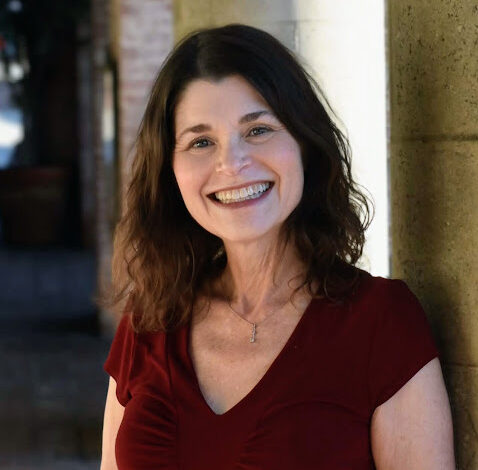
Dr. Michelle Finkel

Dr. Finkel is a graduate of Stanford University and Harvard Medical School. On completing her residency at Harvard, she was asked to stay on as faculty at Harvard Medical School and spent five years teaching at the world-renowned Massachusetts General Hospital. She was appointed to the Assistant Residency Director position for the Harvard Affiliated Emergency Medicine Residency where she reviewed countless applications, personal statements and resumes. Read more

Receive FREE Insider Medical Admissions Tips.

Listen to Dr. Finkel’s interview on the White Coat Investor podcast:

Listen to Dr. Finkel’s interview on the FeminEm podcast: