


Check out this featured Student Doctor Network piece by Dr. David Presser and me called Choosing a Specialty:The Generalist vs. the Early-Committer. It’s valuable for anyone in college through the third year of medical school (maybe more).
Blog Archives
Do Interviews Matter?
 Yes!
Yes!For residency candidates: The NRMP Program Directors’ Survey makes it very clear that interviews matter a lot, which was also my experience as an Assistant Residency Director. I recall very robust conversations about even small comments candidates made during their interviews, some of which affected their ranking on our Match list.
For medical school applicants: Although there is controversy over how much college interviews matter, even skeptics acknowledge that graduate school interviews make a difference in the application process. In this NYT piece, two former interviewers strongly advise conducting mock interviews and being prepared for “curve ball” questions.
Remember: If you’re well-prepared, once you get your foot in the door, you can make a strong impression about the worthiness of your candidacy.
Tags: Interviews, Medical School, NRMP
Medical School – Accepted!
So far this year, Insider clients have seen a lot of medical school acceptances. School include University of California – Irvine, Washington University, Drexel, University of Michigan, Northwestern, Louisiana State University, Tulane, University of Texas – Southwestern, Baylor, Temple University, Oakland University, and Hofstra-LIJ North Shore School of Medicine, to name a few. Click here to see a complete list of Insider client acceptances.
Avoiding a Re-application to Medical School
After disappointing admissions cycles, multiple medical school re-applicants hire me every year. Individual cases are complex, but keep the below five suggestions in mind as you approach the application season in order to avoid missteps:
1. Make sure you have robust clinical experiences. No one wants to hire a chef who’s never been in the kitchen.
2. Ensure you have the grades/MCAT and apply to schools that are appropriate to your academic level. Check out the Medical School Admissions Requirements (MSAR) to get an idea of what grades you’ll need. (Take a deep breath. It might be shocking.)
3. Get very strong letters of recommendation. Consider a mediocre letter a bad one in this competitive environment.
4. Craft a compelling personal statement that distinguishes you from everyone else.
5. Practice interviewing. Don’t get as far as the interview only to be rejected because you weren’t prepared.
Tags: Medical School, re application, tips
Gap Year
I’d recommend purusing this brief piece by Varsity Tutors’ Dr. Anubodh “Sunny” Varshney regarding the benefits and drawbacks of taking a gap year before medical school. I should note that Dr. Varshney does not mention a gap year’s financial drawbacks, which can be significant.
I took an extra year (although it was during medical school, part of HMS’s 5-year plan) that grounded me and made me a more competitive emergency medicine applicant. If feasible, it’s a great opportunity.
Tags: Gap year, Medical School, Varisity Tutor

Dr. Finkel is a graduate of Stanford University and Harvard Medical School. On completing her residency at Harvard, she was asked to stay on as faculty at Harvard Medical School and spent five years teaching at the world-renowned Massachusetts General Hospital. She was appointed to the Assistant Residency Director position for the Harvard Affiliated Emergency Medicine Residency where she reviewed countless applications, personal statements and resumes. Read more
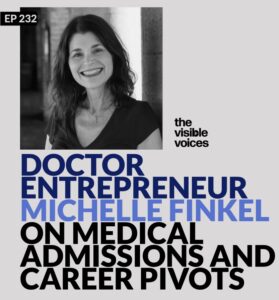
Listen to Dr. Finkel’s interview on The Visible Voices podcast:
Listen to Dr. Finkel’s interview on the White Coat Investor podcast:
Listen to Dr. Finkel’s interview on the FeminEm podcast:
