
Blog Archives

Your Residency or Medical School Application: More on the Squeaky Wheel

Please see my previous blog entry about contacting institutions regarding your status. When you call you can gently say, “I’m attempting to make some travel arrangements and was wondering if you could give me an update on my status.” As long as you are polite, you won’t hurt your candidacy. (Of course, if an institution specifically requests on their website or brochures that you not call, I would advise against it.)

Tags: , ,

Your Residency Application: Know Before You Go

I distinctly remember a very strong candidate whom we considered as a potential emergency medicine resident many years ago. Although multiple faculty members raved about the medical student, one of my colleagues pointed out that the applicant made it clear he did not want to move to Boston. “He wants to stay in California. If he’s not interested in us, why are we interested in him?”

Mathematically speaking, this strategy doesn’t make a lot of sense. Programs should rank strong applicants highly no matter what they believe the candidates’ desires are. (After all, the program may be wrong, and there is little disincentive to go for the gold.) But the point is that it’s critical that you don’t give off signals that you are not interested in the program at which you are interviewing. (If you would rather not Match than be at that residency, you shouldn’t be interviewing there – not a tactic I would generally recommend, however.)

Know the program well and be enthusiastic about its strengths. Every program has something to offer, and you’ll need to learn details of those positive qualities if you want to stay in the running for a spot.

Tags: , ,

Residency Application: ERAS Tips

I’ve been editing a whole heck of a lot of ERAS applications recently, so I thought I’d create a list of tips for those embarking on their descriptors:

1. Include relevant pre-professional accomplishments from college. If you conducted research, for example, list and describe it. Do not include high school achievements unless they were truly unique (worked at the White House, sang on Broadway ;)).

2. While you want to include many strong achievements, you do not want your ERAS to be so long that your reader is tempted to skim it. Be selective.

3. Keep your descriptors to approximately three to seven sentences. Fewer can look lazy and more can look self-indulgent.

4. Use full sentences. It’s a formal application, and you want to make your written materials as readable as possible.

5. Avoid abbreviations. Again, you want to be formal, and abbreviations you think are common might not be familiar to the reader.

6. Make sure you spell out your accomplishments clearly. If your reader doesn’t understand an activity, you will not get “full credit” for what you’ve done. Make no assumptions.

7. Write about yourself and your role – not an organization. For example, don’t use the space to discuss Physicians without Borders. Use it to discuss the specifics of your role at Physicians without Borders.

8. Use numbers to be persuasive. Saying that the conference you organized had 300 participants says it all.

9. Unless your PI won the Nobel, avoid using supervisors’ and/or doctors’ names in your descriptors as they will be meaningless to the majority of your readers.

10. Get help. Do not submit your residency application without having it reviewed. Don’t submit suboptimal materials for a process that is this important and competitive.

Tags: ,

Residency Personal Statement: Should you be a Creative Non-Conformist?

There is no question that being different is an asset in medicine. Those who think outside the box consider diagnoses that others miss, craft approaches to tough patients that others don’t conceive of, and come up with solutions to systemic problems that can positively change medicine as a whole. However, being different does not mean being unprofessional.

Yes, you want to distinguish yourself in your residency personal statement, but you want to do that by showcasing your unique and impressive pre-professional accomplishments, not by submitting a zany essay. Think of it this way: It would be a shame to annihilate your career goal because you’ve made a reader cringe when you were simply trying to write imaginatively.

This is not to say your residency personal statement should be boring! By using good writing techniques – crafting a catchy intro, using robust language, even choosing a compelling sequence – you can write an outstanding essay while still showcasing your accomplishments.

For the skeptic who insists, “Michelle, I’m special. I can do something wild and not scare off the reader,” I will tell you the following anecdote: In all of the time I read essays at Harvard, I remember only one applicant who submitted a truly wacky essay who still received rave reviews. (There was a lively discussion about his weird personal statement, however, before he got the thumbs up.) This person was a true superstar applicant. He came to our program, was loved by patients and staff alike, and eventually became an emergency medicine chief resident. The point of this story? I remember him because he was an outlier – the only applicant in years of assessing candidates whose strange essay did NOT kill his candidacy. Much like CPR, the vast majority of eccentric essay writers don’t respond to heroic efforts to save their candidacy.

Take home point: You get one bullet. Don’t use it to shoot yourself in the foot.

Tags: ,

Residency Personal Statement: What’s Your Best Strategy and How Do You Execute It?

I’ve had several applicants recently ask me if they need to showcase their accomplishments in their residency personal statements if they have already drafted a strong ERAS activities section. The simple answer is yes.

First, remember that you don’t know at what part of your application the readers will be starting. If some start with your personal statement, and it’s pale, you will have lost those readers from the beginning.

Also, note that the faculty members seeing your application are reading many more ERASes than just yours. If you only mention an important achievement once in your application, the program director might simply forget your accomplishment. After all, s/he is reading scores or even hundreds of similar applications. Your readers have to be reminded several times of your candidacy’s strengths. (You’ll mention those accomplishments in your interviews as well.)

To a program director who hasn’t yet met you, you are what you’ve done. You need to use substantive examples of your achievements to demonstrate your worthiness for a potential residency position. Evidence is persuasive; use it!

Tags: ,

About Dr. Michelle Finkel

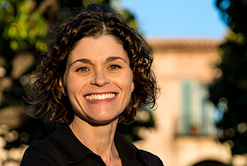
Dr. Michelle Finkel

Dr. Finkel is a graduate of Stanford University and Harvard Medical School. On completing her residency at Harvard, she was asked to stay on as faculty at Harvard Medical School and spent five years teaching at the world-renowned Massachusetts General Hospital. She was appointed to the Assistant Residency Director position for the Harvard Affiliated Emergency Medicine Residency where she reviewed countless applications, personal statements and resumes. Read more

Receive FREE Insider Medical Admissions Tips.

Listen to Dr. Finkel’s interview on the White Coat Investor podcast:

Listen to Dr. Finkel’s interview on the FeminEm podcast: