The Disadvantages of a BS/MD Program

I’ve always had major qualms about BS/MD programs, especially the six and seven-year ones, perhaps because I appreciated my college experience so much. There are many other disadvantages (and a few advantages) of these programs, which are extremely well covered in podcast episode 542 of Your College Bound Kid

There, college counselor extraordinaire Mark Stucker does a very deep dive into the BS/MD option. Start at 10 minutes into the podcast for his extensive discussion of the (few) pros and (multiple) cons.

Tags: , , ,

White Coat Investor Scholarship 2025 Applications are Now Open

Each year the White Coat Investor (WCI) offers a scholarship opportunity to students enrolled in full-time US professional schools. This year’s application opened June 1, and the deadline is August 31. Students must be in good academic standing in eligible professional schools, including medical, dental, law, podiatry, pharmacy, physician assistant, nurse practitioner, and veterinarian, among others. The stated goal of the scholarship is to reduce winning students’ indebtedness and to promote financial literacy in professional schools.

The lion’s share of the application is an 800 to 1200 word essay. There are 10 grand prize winners.

For more information please check out this web page.

Tags: , , ,

Great Podcast Episodes for College Applicants on Pre-med Paths

For those high school students already considering a career in medicine, I recommend a recent, two-part Your College Bound Kid (YCBK) podcast series. YCBK is run by Mark Stucker, a genial college counselor who covers a panoply of topics on the college admissions process. 

He and his colleague Susan Tree recently spoke about what pre-med students should be looking for and avoiding when considering colleges. They get down to the nitty-gritty, including inflated medical school acceptance statistics, specific institutions that offer mentored research programs, and the corporatization of modern medicine. The episodes are number 537 and 539.

Tags: , , ,

The Middle School Drama Class you Took Could Help your Medical Career

Taking Spanish and typing classes were two of the best decisions I made in middle school. But after reading Dr. Christina Brown’s Doximity article “How We Can Help Women in Medicine Become Better Presenters,” I realize that going to performing arts camp was also a boon. Brown points out that women are less likely to be speakers at medical conferences, which limits their career trajectories. She contends that public speaking, writing, and networking skills should be taught during medical school and residency to propel professional success. Her piece is worth a read.

Tags: , , ,

Leverage the MSAR for Your Benefit

The Medical School Admission Requirements (MSAR) database is an online resource that allows users to search, sort and compare information about U.S. and Canadian medical schools. (When I was applying in the 90s, the MSAR was a hard copy book.) The 2025 MSAR was just recently published; if you’re applying to medical school, I’d recommend purchasing the current version because it provides so much information about institutions and their admissions statistics. The MSAR allows you to compare schools by median MCAT scores, AMCAS GPAs, and other criteria. (Of course, how institutions utilize the MCAT score is variable, which contributes to the shameful opaqueness of the medical school admissions process.)

You should use the MSAR to help determine which schools are in your range and which are “reach” schools. While it’s okay to have a lot of “reach” schools (if you can afford it), it’s critical to ensure you are applying wisely to schools that match your numbers. The advantage of the MSAR is that you can make evidence-based decisions. I’ve found some applicants have eye-opening experiences when they thoroughly review schools’ statistics and either realize their numbers are on the lower side and that they should apply to schools accordingly or, happily, that they have numbers that match with top schools. Either way, reviewing the data is critical to good decision making.

Tags: , , ,

About Dr. Michelle Finkel

Dr. Michelle Finkel

Dr. Finkel is a graduate of Stanford University and Harvard Medical School. On completing her residency at Harvard, she was asked to stay on as faculty at Harvard Medical School and spent five years teaching at the world-renowned Massachusetts General Hospital. She was appointed to the Assistant Residency Director position for the Harvard Affiliated Emergency Medicine Residency where she reviewed countless applications, personal statements and resumes. Read more

Receive FREE Insider Medical Admissions Tips.

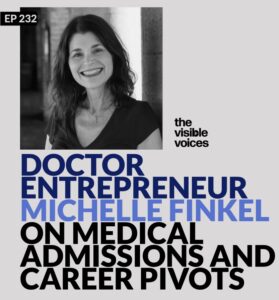
Listen to Dr. Finkel’s interview on The Visible Voices podcast: 


Listen to Dr. Finkel’s interview on the White Coat Investor podcast:

Listen to Dr. Finkel’s interview on the FeminEm podcast: