
Secondary essay dilemma

Many of my med school applicant clients have been emailing me about their frustration over the number of secondary essays they have to complete. It might sound like a nice problem to have but remember that many schools send out secondaries indiscriminately – to all applicants from whom they received primary applications. It’s cynical but true: Secondaries are a way for schools to make a little cash.

I recommend the following to keep your workload to a manageable level:

1. Start to prioritize where you want to attend school. If you’ve applied to fifty schools (some people do) and have received an equivalent number of secondaries, this is the time to consider which schools you want to eliminate. Don’t be flattered by the fact that you were asked to complete secondary (especially because, as mentioned above, some schools send them out to all applicants).

2. Try to use the same essay for several secondaries. With some small changes (or better yet, none at all) an essay may be versatile.

3. Get help from a professional. I edit scores of essays every month. I offer secondary essay editing as part of my services.

For individualized help on your secondary essays, go to http://www.insidermedicaladmissions.com/applicants/medapplicant.shtml .
Tags:

Competitiveness of a specialty’s match is related to projected income

Mark Ebell, MD (University of Georgia) just published an article indicating that a higher salary in a particular specialty tends to mean more U.S. med students fill residencies in that specialty at academic hospitals.

For example, family medicine had the lowest average salary last year at $186,000; it also had the lowest share of residency slots filled by U.S. students (42%). Orthopedics, on the other hand, paid $436,000, and 94 percent of residency slots were filled by U.S students.

I think it’s hard to blame U.S. med students for this trend: the Association of American Medical Colleges reports that the average graduate last year had $140,000 in student debt (up nearly 8 percent from the previous year). Yikes!

For help getting into that better-paying 🙂 and hopefully, personally-satisfying specialty get help from me at http://www.insidermedicaladmissions.com/ .

Tags:

Quick tip: Personal statement length

The number one mistake I see with personal statements is wordiness. Remember to keep your essay at a single-spaced page or under (forget the word count) and avoid flowery language. As my colleague Dr. Presser says (see the bottom of this blog for his credentials), a writer should imagine s/he is being charged for each word.

So when you read your PS draft say to yourself, “If I had to pay $5 for each word how would I save myself some bucks?”

For one-on-one help with your personal statement editing please see http://www.InsiderMedicalAdmissions.com.

Tags:

How important is applying early?

Because yesterday was the day when students could start applying to residency programs through ERAS, I’ve had a lot of clients recently ask me about the importance of getting their applications in now. These are my thoughts:

1. Yes, getting your ERAS in early helps. At the beginning of the season there weren’t many ERASes to review so I recall giving more time and attention to the early applications. I was also impressed by students who could get their materials in promptly.

2. On the other hand, if your application is not in its best shape then submitting early is a huge mistake. Waiting a few weeks is absolutely preferable to submitting a suboptimal ERAS that will be tossed into the “do not invite” pile.

For personalized help on your residency application check me out at Insider Medical Admissions.

Tags:

Geriatrics Fellowship Training in the News

Geriatrics as a subspecialty has been somewhat unpopular in part because of poor reimbursements. As we know, procedure-based subspecialties are best remunerated. Having said that, as the elderly population grows and the government offers some loan forgiveness programs, the field is having a bit of a resurgence. Most Geriatric Medicine fellowship programs are available to candidates from both Internal Medicine and Family Medicine backgrounds and use ERAS. Click here for a list of ERAS-participating specialties and programs, including Geriatrics. There was a short piece on NPR that is now posted on their site about Geriatrics that is worth a listen.

For one-on-one help from me with your fellowship application please see the Insider Fellowship Page for a detailed list of my admission services.

Tags:

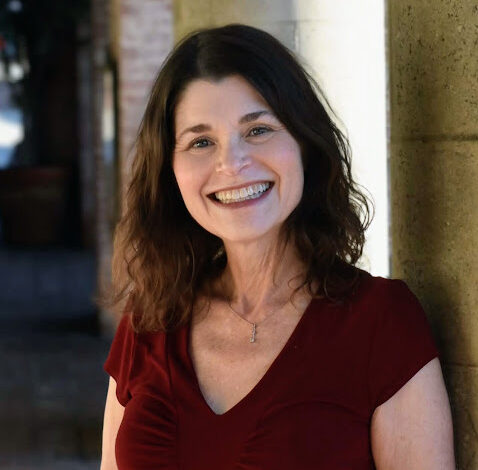
About Dr. Michelle Finkel

Dr. Michelle Finkel

Dr. Finkel is a graduate of Stanford University and Harvard Medical School. On completing her residency at Harvard, she was asked to stay on as faculty at Harvard Medical School and spent five years teaching at the world-renowned Massachusetts General Hospital. She was appointed to the Assistant Residency Director position for the Harvard Affiliated Emergency Medicine Residency where she reviewed countless applications, personal statements and resumes. Read more

Receive FREE Insider Medical Admissions Tips.

Listen to Dr. Finkel’s interview on The Visible Voices podcast: 


Listen to Dr. Finkel’s interview on the White Coat Investor podcast:

Listen to Dr. Finkel’s interview on the FeminEm podcast: