
Blog Archives

Interview Strategies: Cutting Costs

This is my first of many blog entries about interview strategies. I want to start by exploring ways to decrease costs, especially considering current sky high air fares. Here are several suggestions:

1. If you are ambivalent about an institution, schedule your interview later. By January you may decide not to interview there at all, saving you some money.

2. Group your interviews geographically. If you think this is impossible, consider this: There is nothing wrong with calling an institution and letting the assistant know you have been invited to interview at a nearby school/program, you can only afford to fly out to the area once and consequently, might the admissions committee be willing to let you know as soon as possible if their institution will be offering you an interview as well? As long as you are polite about your request, this is completely appropriate and won’t harm your candidacy.

3. Check out travel web sites daily. Occasionally, a low price is available only if you catch it quickly.

4. Consider staying with students/residents if the institution offers. Hotels can be expensive, and sometimes you can gather useful information about the school/program this way. Just beware that anything you do or say may be repeated to the admissions committee. (Make sure to write a thank you note.)

For one-on-one interview practice please contact me via InsiderMedicalAdmissions.com . I am scheduling mock interviews up to two weeks in advance so email me as soon as possible.

Tags:

Quick tip: Nontraditional medical school applicants

Many nontraditional medical school candidates have impressive accomplishments on their resumes. However, it’s important for these candidates to ensure that their successes don’t paradoxically harm their applications: Candidates who have thriving careers in other fields need to go the extra mile to prove their interest in leaving what they have for medical school. No admissions committee wants to accept a candidate who then quits school to resume his or her original field. You need to convince the committee that you won’t be that person.

Having a lot of clinical experience is a good way of doing this. Also, conveying clearly in your application and interviews an interest in your current field (don’t be negative) but a much stronger drive to become a doctor – despite the difficult training – is important. (Acknowledging the long road ahead shows you’ve had a reality check.)

Nontraditional candidates who want personalized assistance should check me out at www.InsiderMedicalAdmissions.com .

Tags:

The recession and medical school

A friend was asking me how I thought the current recession was going to affect medical school applicants.

Historically, when the economy has worsened medical school applications have increased. Presumably, this is because medicine is a stable field; it’s rare to find a doctor who wants to work who’s unemployed. Furthermore, with the credit crunch, it’s probable that medical schools will have poorer financial packages available for potential students.

All in all, the financial situation makes things harder for medical school applicants in more ways than one. Because the application season already got underway prior to the most recent financial downturns, I’m hoping the changes won’t be felt until next year (or later).

For help optimizing your application to medical school please see www.InsiderMedicalAdmissions.com .

Tags:

Personal statement and secondary essay pitfalls

Here’s an oldie-but-goodie blog entry written by my colleague Ann Levine who is a law school admissions consultant. I have found these same errors in medical application essays, especially Ann’s number four “I believe” (and its corollary “I feel”). Along these same lines, please see my blog entry about the importance of brevity in essay writing.

For one-on-one help with your statement please contact me at insidermedical@gmail.com or see www.InsiderMedicalAdmissions.com .

Tags:

Quick tip: ERAS and AMCAS pitfalls

Here are a few errors to avoid in composing your ERAS and AMCAS:

1. Use full sentences. Some applicants erroneously use phrases in their activity descriptors. You’re submitting a formal application, and full sentences are appropriate.
2. Avoid abbreviations. Again, we’re talking about a formal application here so let’s treat it as such. Also, abbreviations you think are common might be unintelligible to the reader.
3. Ensure the email address you offer has a spam detector that is set low. You don’t want to miss important emails.
4. Do a spell and grammar check. Don’t submit only to be embarrassed by a simple error.
5. Get help. Do not send your application without having it reviewed. You cannot afford to submit suboptimal materials.

For professional, individually-tailored assistance with your AMCAS or ERAS please check me out at www.InsiderMedicalAdmissions.com. My

Tags:

About Dr. Michelle Finkel

Dr. Michelle Finkel

Dr. Finkel is a graduate of Stanford University and Harvard Medical School. On completing her residency at Harvard, she was asked to stay on as faculty at Harvard Medical School and spent five years teaching at the world-renowned Massachusetts General Hospital. She was appointed to the Assistant Residency Director position for the Harvard Affiliated Emergency Medicine Residency where she reviewed countless applications, personal statements and resumes. Read more

Receive FREE Insider Medical Admissions Tips.

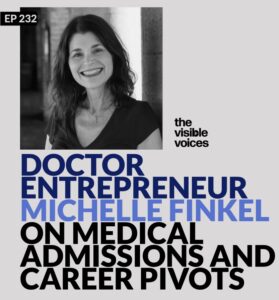
Listen to Dr. Finkel’s interview on The Visible Voices podcast: 


Listen to Dr. Finkel’s interview on the White Coat Investor podcast:

Listen to Dr. Finkel’s interview on the FeminEm podcast: