
Blog Archives

Tips for how to improve the likelihood of training in a city you enjoy

Please see my July 12 blog entry about the importance of prioritizing a nice place to live for your medical training, if possible. As I pointed out, not everyone gets the opportunity to go to medical school or train in a residency and fellowship program in a city that is fun and populated by a personal support system. However there are a few things that can be done to increase your chances:

1. For residents, tailor your personal statements. (ERAS allows you to do this.) I have advised people who are desperate to be in a particular city to make that clear with an extra sentence in their essays. (Just make sure, via ERAS, that you send the correct personal statement to the correct program.)
2. For medical school, residency and fellowship applicants, tell all the important individuals you encounter at your interviews. Some programs may not believe, for example, a Californian will move to the East Coast. (As a devote Californian, I hardly believe it.) If you want to move let them know and tell them why so that you are convincing.
3. For all applicants, when you write thank you notes tell the receivers.
4. For all applicants, choose accordingly. Don’t box yourself in by pursuing schools/programs in cities you cannot stomach. You may feel you need to apply broadly because of weaknesses in your application or because of how competitive medical school admissions or your specialty is. This is reasonable for many candidates. But if you have some options, explicitly consider geography as well as school/program reputation. This is particularly important for residency and some fellowship applicants who are bound to their match lists.

As I said in my July 12 entry, where you live for your medical training is as important (or more so) than the quality of your training program. For one-on-one help from me with your application please see www.InsiderMedicalAdmissions.com .

Tags:

Might there be an easier way?

I can’t help myself. Here’s another interesting NYT article. This one chronicles the growth of the physician assistant and nurse practitioner roles.

As anyone reading (and writing) this blog knows, becoming a physician requires a tremendous financial and time commitment. According to the article, the average total income for physician assistants in full-time clinical practice is about $86,000, and the average total income for nurse practitioners is $92,000. Considering how many fewer years of training (and thus tuition) one needs, being a physician assistant or nurse practitioner is an interesting alternative for those who want to be clinicians.

Here’s the link.

Tags:

Controversy in New York

Here’s another great NYT article. This piece discusses the controversial move by New York City’s Health and Hospitals Corporation to provide clinical training for St. George’s University medical students at the city’s public hospitals. The Corporation has signed a 10-year, $100 million contract with St. George’s.

Students in New York are understandably concerned that their training might be suboptimal with the influx of new students. (A problem we had at Harvard Med was the rare ability to practice procedures because of the high numbers of fellows, residents and medical students vying for experience in the Harvard hospitals).

Here’s the link to the article.

Tags:

Doctor and Patient at Odds?

Here’s another NYT article about dissatisfaction in medicine. This piece (unlike the other one I blogged on) is about patient disillusionment. I think it’s worth a read for those training to be physicians. Click here to read the article “Doctor and Patient, Now at Odds.”

Tags:

“Cliff notes” for the MSAR

In my last blog, I wrote about the utility of the MSAR for choosing where to apply to medical school. (Remember, though, that the MSAR only includes schools in the U.S. and Canada.) I wanted to suggest a good web page I found that highlights medical schools’ average GPAs and MCAT scores, data that comes directly from the 2008-9 MSAR. Although this data is technically a year old, this site is useful if you don’t have a MSAR at home: http://www.washington.edu/uaa/gateway/advising/downloads/gpamcat.pdf .

Alternately, you can order the brand new 2009-10 MSAR from the AAMC web site and Amazon (currently cheaper).

For one-on-one help applying to medical school – assistance with your AMCAS, personal statement, secondary essays, your interviews – please see http://www.insidermedicaladmissions.com/applicants/medapplicant.shtml .

Tags:

About Dr. Michelle Finkel

Dr. Michelle Finkel

Dr. Finkel is a graduate of Stanford University and Harvard Medical School. On completing her residency at Harvard, she was asked to stay on as faculty at Harvard Medical School and spent five years teaching at the world-renowned Massachusetts General Hospital. She was appointed to the Assistant Residency Director position for the Harvard Affiliated Emergency Medicine Residency where she reviewed countless applications, personal statements and resumes. Read more

Receive FREE Insider Medical Admissions Tips.

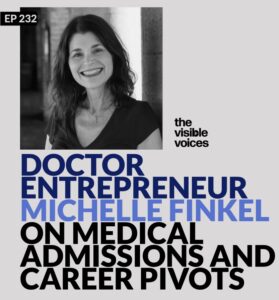
Listen to Dr. Finkel’s interview on The Visible Voices podcast: 


Listen to Dr. Finkel’s interview on the White Coat Investor podcast:

Listen to Dr. Finkel’s interview on the FeminEm podcast: