Blog Archives

Urgent, Urgent, Urgent, Emergency?

The AMCAS open-for-submission date came and went, and the question I’m getting now is: Should I panic if I haven’t yet submitted my AMCAS?

The answer is no – and depending on where you are in the process – yes. Submitting on Day 1 precisely is not worth losing your mind over, so if you didn’t do so, please don’t kick yourself. On the other hand, submitting very soon is to your advantage because of rolling admissions.

So, if you are wrapping up your work and have your written materials in a superior state, just keep moving and get your application submitted promptly. If you are behind the eight ball and don’t feel that you can craft outstanding written materials speedily, consider waiting a year to apply. Every season I encounter re-applicants who, during the previous application cycle, submitted their AMCASes in August or September…thus making them re-applicants :(. 

So… on your mark. Get set. Go!

Tags: , , ,

AMCAS Tips (and Particulars): How to Best Draft Your Work/Activity Experience Description Section

I’ve had a few clients recently who were confused about the AMCAS Work/Activity Experience Description character limits and how the Most Meaningful Experiences fit in.

Please remember that AMCAS Experience Descriptions can have up to 700 characters (not words!), while the Most Meaningful Experiences max out at 1325 characters. (Note, then, that the Most Meaningful Experiences are separate from the Experience Descriptions.)

Here’s a short blog with AMCAS Work/Activity Experience Description writing tips and another with Most Meaningful Experiences guidance. Good luck!

Tags: , , ,

Locum Tenens: A Nontraditional Path in Medicine

For those pre-meds, medical students, and residents interested in creative ways doctors practice medicine, here is a helpful review of a course on obtaining, maintaining, and effectively juggling locum tenens. For those unfamiliar, a medical locum tenens job allows a doctor to temporarily fill an empty slot (e.g. for someone who is on maternity leave). Locum tenens is an opportunity to do some traveling and make some income, but there are some complications you’ll want to avoid. Take a peek at the article. 

Tags:

TMDSAS: The Old and The New

For those applying to medical school through the Texas Medical and Dental Schools Application Service (TMDSAS), please note that your process is a little different from the AMCAS system: The TMDSAS allows for more expository writing, including the medical personal statement, the personal characteristics essay, and the optional essay. This year, too, the TMDSAS has added on a meaningful activities section, which can include up to three accomplishments, with a 500 character limit each.

The TMDSAS has a different timeline from AMCAS as well. Check it out here. For TMDSAS official application instructions, click this link.  

Yes, I do edit the TMDSAS! Contact me for help. 

Tags: , ,

Is Your Personal Statement a Little Too Personal?

As medical school applicants are crafting their essays and residency candidates are starting to think about theirs, I’m posting a short piece by a guest blogger today: Dr. David Presser graduated from UCSF Medical School, completed his emergency medicine residency at UCLA/Olive View and his MPH at Harvard. He wrote an excellent primer on getting into an emergency medicine residency. Here’s today’s blog written by him:

Picture, if you will, a residency admissions committee member beneath a halo of light reading applicant essays in her office at midnight. Caffeine on her breath, crumpled white coat next to her desk chair, she is making steady progress on the never-ending stack of applicant files until she picks up a residency personal statement that begins, “I first became interested in internal medicine when Grandma was diagnosed with cancer…” Pulling out her hair by the fistful, she tosses the file into the trash. That cancer may not have killed your grandma, but it just might have killed your application.

Many students devote a significant portion of their ERAS essays to describing a universal experience that may have piqued their initial interest in a specialty. A residency admissions committee member does look for evidence of how your fundamental connection to humanity will make you an empathetic and skilled physician. The problem comes when an applicant starts to make the reader feel like s/he is providing counseling to the applicant, that is, when the candidate uses language that could strike the wrong reader as inappropriate for a professional application. The admissions committee can handle empathetic writing; however, if they suspect you mistook your essay for the journal under your pillow, they may not be forgiving.

Think carefully about the topics you choose. With all due respect to each of us who has had a family medical catastrophe, you can estimate the prevalence of cancer among the elderly and conclude that starting an essay with the description of a grandparent’s battle with cancer is not going to catch the reader’s attention. Unfortunately, just because it is genuine, it may not be compelling reading or a useful means to distinguish you from the hundreds of residency applicants whose essays share similar themes.

There are exceptions. You can be forgiven for including a common topic if it directly ties into highlighting a unique personal accomplishment. Perhaps grandpa’s prostate cancer diagnosis led you to seek out a research position with a faculty member at your local university lab where you were directly involved in sequencing a promising new molecular marker for prostate cancer. Give the generic topic a brief mention and transition rapidly into how it demonstrated that you are a mover and shaker who took a universal experience and, by virtue of your work ethic and intellectual curiosity, turned it into a contribution to science.

You get a pass on writing about universal experiences if you can pull off a convincing reason to keep the midnight reader going; otherwise, keep your essay distinctive and befitting the professional you hope to become.

Tags: , , ,

About Dr. Michelle Finkel

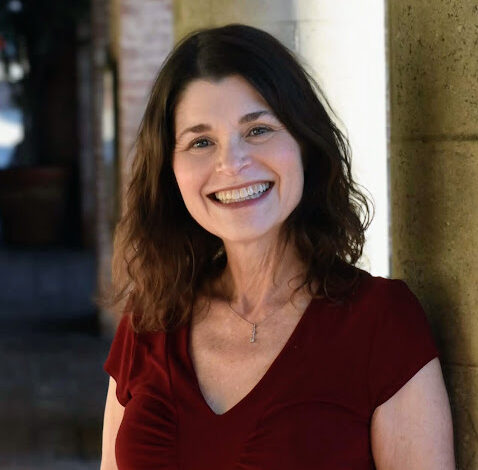
Dr. Michelle Finkel

Dr. Finkel is a graduate of Stanford University and Harvard Medical School. On completing her residency at Harvard, she was asked to stay on as faculty at Harvard Medical School and spent five years teaching at the world-renowned Massachusetts General Hospital. She was appointed to the Assistant Residency Director position for the Harvard Affiliated Emergency Medicine Residency where she reviewed countless applications, personal statements and resumes. Read more

Receive FREE Insider Medical Admissions Tips.

Listen to Dr. Finkel’s interview on The Visible Voices podcast: 


Listen to Dr. Finkel’s interview on the White Coat Investor podcast:

Listen to Dr. Finkel’s interview on the FeminEm podcast: