
Blog Archives

The AMCAS Most Meaningful Paragraphs: Three Mistakes to Avoid

In 2012, seemingly out of blue, a significant, new addition appeared on the AMCAS. Applicants were being asked to identify their most significant extracurricular experiences (up to three) and support their choices with more writing:

This is your opportunity to summarize why you have selected this experience as one of your most meaningful. In your remarks, you might consider the transformative nature of the experience, the impact you made while engaging in the experience and the personal growth you experienced as a result of your participation. 1325 max characters.

Now the “Most Meaningful” paragraphs are par for the course, but applicants routinely make a few avoidable errors in crafting them:

1) Don’t merge the descriptors with the Most Meaningful paragraphs because they are separate sections: You can complete descriptors for up to 15 activities with up to 700 characters each, plus up to three most meaningful paragraphs of up to 1325 characters each. The fact that these are two different tasks might seem obvious, but every year, I get AMCAS drafts to edit that include this error.

2) Do not use patient anecdotes in your Most Meaningful paragraphs: Most medical school applicants have patient vignettes to share, which means that a patient story does not distinguish an applicant from the masses of other candidates. Also, these patient stories can sound trite or even condescending.

3) Don’t repeat what you have written in your descriptor. The Most Meaningful is an opportunity to delve deeper into your achievement. Let’s say you are showcasing your experience as a biochemistry teaching assistant. In the Most Meaningful paragraph, give concrete examples of what you taught, to whom, how often, using what techniques. If you were promoted to head TA or asked to come back the next semester, showcase teaching achievements that propelled you to get the position. Did you get excellent teaching reviews from students? Did you offer an unconventional way of learning the difficult material? If so, what was it? By delving deeper, you can truly demonstrate the “transformative nature of the experience, the impact you made while engaging in the experience and the personal growth you experienced as a result of your participation.”

The Most Meaningful paragraphs are an opportunity for you to demonstrate your distinctiveness and worthiness for medical school. Don’t waste this chance to further your candidacy.


Tags: , ,

Tomorrow Belongs to Those Who Can Hear it Coming

That’s right: Tomorrow, May 1 is the day before the official open date of AMCAS 2019. (Okay, I know that sounds confusing, but originally the AMCAS open date looked to be May 1 and is still posted as such in multiple locations. As it turns out, it is May 2.) So, at 9:30am EST on Wednesday, you can start inputting your data.

Because of rolling admissions, submitting a complete application early in the cycle has distinct advantages at many schools.That doesn’t mean you should submit suboptimal written materials; it means you should start early enough (now, at the latest!) that you are offering your best work.

Rolling admissions means that a school takes applications in the order in which they are received and makes decisions about interviews and then acceptances, accordingly. So, as times goes by, there are fewer interview and admissions offers remaining to be made.

If your application is not complete, your candidacy may not be evaluated early when there are more opportunities for interviews and admissions. So, if you have not already, get started immediately. It could make a huge difference in your available opportunities.

Tags: , ,

Medical School Help: What are the Next Steps Once the AMCAS is Submitted?

Once your AMCAS is in, what can you do next to best prepare for what’s to come in the medical school admissions process?

Here are a few tips:

1. Start to draft secondary essays. Even if you haven’t yet received the prompts, you can begin to craft responses to common themes like “how would you add diversity to our school?” and “describe an extracurricular activity that might be of interest to the committee.” Good writing takes time, but if you wait for the onslaught of secondary applications, you won’t be able to impart your essays with your highest quality effort.

2. Get a head start on preparing for the medical school interview. Practice, practice, practice. Start mocking up answers to interview questions so that you distinguish yourself.

3. Consider what you want. Do some soul searching to determine what you are really seeking geographically, philosophically, and educationally. You want to make considered decisions when the time comes.

Tags: , ,

Medical School Help: What are the Next Steps Once the AMCAS is In?

Medical School ApplicationOnce you’ve submitted your AMCAS, what can you do next to best prepare for what’s to come in the medical school admissions process?
Here are a few tips:
1. Start to draft secondary essays. Even if you haven’t yet received the prompts, you can begin to craft responses to common themes like “how would you add diversity to our school?” and “describe an extracurricular activity that might be of interest to the committee.” Good writing takes time, but if you wait for the onslaught of secondary applications, you won’t be able to impart your essays with your highest quality effort.
2. Get a head start on preparing for the medical school interview. Practice, practice, practice. Start mocking up answers to interview questions so that you distinguish yourself.
3. Consider what you want. Do some soul searching to determine what you are really seeking geographically, philosophically, and educationally. You want to make considered decisions when the time comes.
Tags: , ,

AMCAS Opens this Week

Medical School AdmissionsJust a reminder that AMCAS opens on May 3, and you can submit your AMCAS as early as June 7. This application cycle’s AMCAS Processing Fee is $160 (which includes one medical school designation). Additional medical school designations are $38 each.
AMCAS has fantastic resources, including a FAQ sheet and pre-med calendar for applicants. Take a look here to get started.

Tags: ,

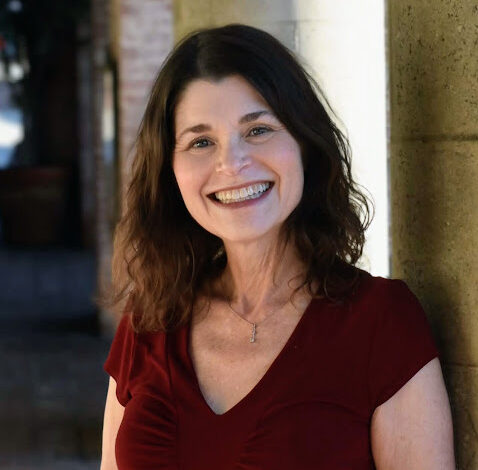
About Dr. Michelle Finkel

Dr. Michelle Finkel

Dr. Finkel is a graduate of Stanford University and Harvard Medical School. On completing her residency at Harvard, she was asked to stay on as faculty at Harvard Medical School and spent five years teaching at the world-renowned Massachusetts General Hospital. She was appointed to the Assistant Residency Director position for the Harvard Affiliated Emergency Medicine Residency where she reviewed countless applications, personal statements and resumes. Read more

Receive FREE Insider Medical Admissions Tips.

Listen to Dr. Finkel’s interview on The Visible Voices podcast: 


Listen to Dr. Finkel’s interview on the White Coat Investor podcast:

Listen to Dr. Finkel’s interview on the FeminEm podcast: