Blog Archives

Confused? Check out these AAMC Webinars

For those approaching the medical school admissions cycle, I noted (at least) two AAMC webinars that look helpful:

First, on April 14 there is a live webinar at 11 AM PST reviewing general AMCAS information, described as follows: This webinar will help applicants prepare for the 2027 AMCAS® application cycle. Participants will receive a walkthrough of the AMCAS application, an overview of updates and changes for the upcoming cycle, and information about available resources to support a successful submission.

Then, on April 21 at 10:30 AM PST there is another live webinar on submitting AMCAS coursework and transcripts. Here’s the description: Submitting transcripts and completing the coursework section are important steps in the AMCAS® application process. This session will help applicants navigate common issues that arise when submitting official transcripts and entering coursework, and provide guidance to prevent processing delays.

Participants will learn about transcript submission requirements and timelines, common problems with electronic transcripts, how to accurately enter and update coursework, and common errors that result in returned applications. There will be time for live Q&A with AMCAS experts.

Both look very helpful.

Tags: , , ,

How are Residency Programs Managing the $100,000 Fee for New H-1B Visa Applications?

The Association of American Medical Colleges (AAMC) recently published a piece on the effect H-1B visa fees will have on the Match, hospitals, and access to medical care going forward unless there is an exception made for the healthcare field. The article also explains the distinctions between the H-1B and J-1 visas for physicians.

Andrea Price-Carter, MPA, director of health equity advocacy and government relations for the AAMC points out that J-1 and H-1B visa holders do not displace U.S. medical graduates, and instead, fill gaps where there is a shortage of needed professionals.

Here’s the AAMC piece.

Tags: , , ,

Some Faculty are Using AI to Craft Letters of Recommendation

The AAMC recently published a piece about faculty members who use artificial intelligence to craft first drafts – at least –  of recommendation letters for students. 

I understand the pull of AI for this purpose, but even if the flow and syntax are better, I’m concerned these letters will sound generic and unoriginal. Letters of recommendation can make a huge difference in a student’s candidacy, and submitting something iterative or bland could be a real disservice to the applicant.

The article ends with a quote from a urologist advising that faculty members tell students and the institutions that receive their letters that they use AI to help compose the text, but I would go further and say that if a faculty member is planning to use AI, s/he should tell the student before writing the letter so the applicant can decline the recommendation if s/he wants to.

Tags: , , ,

AAMC Report on Residents 2025

Yearly, the Association of American Medical Colleges publishes a report with residency statistics. The 2025 edition has some interesting data:

  1. In 2024, women accounted for 50.2% of residents and fellows, representing a persistent increase that has been noted over the past years.
  2. Only approximately 29.4% of medical students list the same specialty preference on their graduation questionnaire as they did on their matriculating student questionnaire.
  3. US osteopathic (DO) seniors saw a 92.6% PGY-1 Match rate, the highest ever.

You can find more information here.

Tags: , , ,

Going to Medical School at Age 30+

According to the American Association of Medical Colleges (AAMC), approximately 3.5% of this year’s matriculants to medical school are entering at 30+ years old. I was in my early twenties when I started, and there was a definitive difference in maturity and composure between the “older” students in the class and the rest of us.

Traditionally, some medical schools have been reluctant to train older students, as they see their career longevity truncated compared to younger pupils’, however, with increasing demand for physicians and burnout that may shorten younger doctors’ careers anyway, some schools are now more open-minded.

Here is a piece from the AAMC about folks who start medical school later.

Tags: , , ,

About Dr. Michelle Finkel

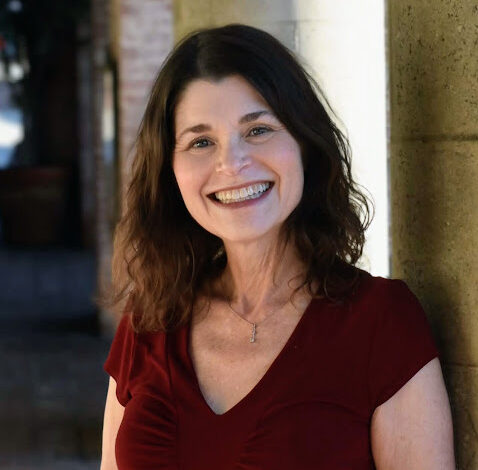
Dr. Michelle Finkel

Dr. Finkel is a graduate of Stanford University and Harvard Medical School. On completing her residency at Harvard, she was asked to stay on as faculty at Harvard Medical School and spent five years teaching at the world-renowned Massachusetts General Hospital. She was appointed to the Assistant Residency Director position for the Harvard Affiliated Emergency Medicine Residency where she reviewed countless applications, personal statements and resumes. Read more

Receive FREE Insider Medical Admissions Tips.

Listen to Dr. Finkel’s interview on the White Coat Investor podcast:

Listen to Dr. Finkel’s interview on the FeminEm podcast: