


Here’s an interesting article by Dr. Pauline Chen on medical student grades. In reading the article, residency applicants should reflect on how important the content of their letters of recommendation is, especially in the setting of medical school grades that may be inflated or simply inaccurate. The 2016 NRMP Program Director Survey supports the importance of letters, as well, with statistics. Make sure your letters are very strong; remember that mediocre letters should not be a part of your residency package.
Blog Archives
Writing Your Own Residency or Medical School Letter of Recommendation: Is it Ethical?
It’s not infrequent that an applicant tells me that a letter of recommendation (LOR) writer has asked the candidate to draft his/her own letter because the writer is “too busy.” I notice that medical school and residency applicants are a bit sheepish as they tell me about this arrangement. Have no fear: You are not doing anything unethical. (Here is an old piece by the New York Times ethicist Ariel Kaminer regarding this exact topic.)
If a faculty member asks you to write your own letter, not only should you do it, but you should do it with zeal. Make sure you showcase the accomplishments that distinguish you from other candidates and highlight traits that are important for your future career path. Use honest – but bold – adjectives to describe your best qualities.
Remember that the letter writer has final say, so even a busy faculty member might modify the letter. Keeping this fact in mind might alleviate your (unnecessary) guilt and should encourage you to write the strongest letter you can. (It’s harder to go from outstanding to mediocre than from outstanding to excellent.)
Get a Better Letter
After over a decade of reading medical school and residency letters of recommendation (LOR), I can tell you that the biggest error I see in the LOR process occurs when applicants settle for mediocre letters. In other words, they know that a supervisor/faculty member/attending isn’t going to write them a strong letter, but they fill the LOR slot with the middling endorsement anyway.
Please take a look at my most recent Student Doctor Network article, “Get a Better Letter” for concrete ideas on how to approach the letter of recommendation process.
An Offer You Can’t Refuse
I speak to a few lucky medical school and residency applicants who are asked to write their own letters of recommendation. If you have this opportunity, first, realize that it is not unethical to write your own letter if you’re asked. If you’d like to explore the scruples of this issue, take a look at this New York Times ethicist column about this exact topic.
The mistake I see candidates make in these situations is that they feel awkward about showcasing their accomplishments fully in their letters. If you have this opportunity, write a glowing letter. Be effusive and full-throated in your compliments to yourself. After all, the letter writer can always tone it down if s/he doesn’t agree. But if s/he does, you have bolstered your candidacy tremendously.
Letters of Recommendation
It’s time to start securing your residency letters of recommendation (LOR) if you haven’t already. Remember that your letters have a big impact on your application, and even a mediocre letter can bomb your candidacy.
Don’t be afraid to ask a potential letter-writer if she will write you “a very strong” LOR. It may seem awkward at the time you ask but getting a wimpy letter will be much thornier. If the faculty member says no, hesitates, or tells you in May that she has to plan her Thanksgiving get-together, politely thank her and move on. Although disappointing, acknowledge that she has done you a huge favor. You now have the advantage of substituting a stronger LOR written by someone who likes your clinical work.

Dr. Finkel is a graduate of Stanford University and Harvard Medical School. On completing her residency at Harvard, she was asked to stay on as faculty at Harvard Medical School and spent five years teaching at the world-renowned Massachusetts General Hospital. She was appointed to the Assistant Residency Director position for the Harvard Affiliated Emergency Medicine Residency where she reviewed countless applications, personal statements and resumes. Read more
Listen to Dr. Finkel’s interview on The Visible Voices podcast:
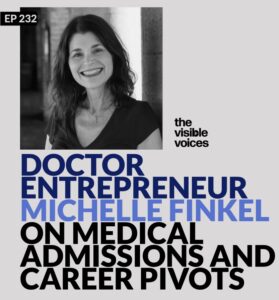
Listen to Dr. Finkel’s interview on the White Coat Investor podcast:
Listen to Dr. Finkel’s interview on the FeminEm podcast:
