
Blog Archives

Pre-Med? Avoid a Big Mistake

Several years ago I was hired by a re-applicant who wanted to better understand why she did not get into medical school the prior year. She had a 3.9 GPA and a 40 on her MCAT (100% percentile). Yet, she had been rejected from all medical schools.

I looked through her materials and discovered the problem. The applicant had no clinical work at all. She had never been in the room with a patient. Many of you know that I like the saying, “No one wants to hire a chef who hasn’t been in the kitchen.” She had fallen prey to exactly that adage.

We talked, and I advised her regarding options she had for obtaining clinical experience. Fast forward a year: The client completed a robust clinical activity and was readily accepted to medical school (and felt more confident about her career choice).

If you are a pre-med, note that robust clinical experience is critical. Working as an EMT, in a good clinical care extender program, formally as a scribe (where you can also make some money), or in a low-income clinic are just some ideas for obtaining excellent clinical exposure. (Although you might think free clinics would be thrilled to have a pre-med volunteer, many understandably require one-year commitments.) Shadowing is a mixed bag: Medical schools don’t know whether you’re second-assisting in the operating room or just standing in a corner being ignored. If you choose to shadow, make sure you highlight any true clinical experiences and skills gained in your written materials. Other popular options for clinical experience include international work (although the activity is usually short-lived, which makes it less robust) and working as a volunteer in a hospital (although it might be more clerical than clinical, depending on the position. Do your research before accepting a “clinical” job). I’ve also had advisees who became certified, practicing phlebotomists and others who worked in veterinarians’ offices to obtain procedural skills.

More important than getting into medical school (gasp), getting robust clinical experience will help you ensure you’ve made the right career choice. Simultaneously, you’ll demonstrate to admissions officers that you can handle the heat.
Tags: , ,

A Novel Approach: Reading throughout your Rotations

I have a thoughtful advisee who told me about an interesting plan she made for herself: As she rotated through different specialties during medical school, she read a book appropriate to each field. For internal medicine, she read “Being Mortal,” by Atul Gawande. For neruology, she read the classic “The Man who Mistook his Wife for a Hat,” by Oliver Sacks. For surgery, she read “When Breath Becomes Air,” a beautiful book by Paul Kalanithi. The list goes on.

I was impressed by this contemplative approach to third and fourth year. So many of us are understandably focused on Shelf Exams and letters of recommendation that we don’t give ourselves a chance to comprehensively reflect on our subject matter and patients’ experiences.

If you have a moment, please check out a few book recommendations I have for those in the medical field. Perhaps my advisee’s stellar plan can be one that other medical students adopt.

Tags: , ,

Happiness: Part 2

Last week I posted about happiness. Unfortunately, I have recently spent a lot of time at an academic medical center with a sick family member. The hours I’ve spent there have made me think further about contentment in medical school and residency.

What I noticed about this highly academic hospital is that the care is outstanding, but the atmosphere is much more collegial than the setting in which I trained. The doctors and nurses are extremely bright and competent. They are also kind and approachable.

The institution at which I trained (and it may have changed in the 12 years since I left) did not have this culture. I experienced unchecked sexism, arrogance, and standoffishness. As I interacted with the physicians and nurses recently, I realized that I probably would have been much happier at an institution that better matched my personality. (Having said that, I met many of my dearest friends and my husband during medical school, residency, and as an attending, and I would not change any of that.)

Bottom line: Yes, reputation is a factor, but culture is really key. You can oftentimes train at an equally excellent place where you will happily fit in.

After all, we’re talking years of your life here.

Tags: , , ,

Happy Medical Training: An Oxymoron?

Medical school and residency training usually decrease one’s happiness for several reasons. Happiness researchers have demonstrated that a feeling of control and the amount of spare time one has both correlate with happiness. Both of those factors are limited during med school and residency. Relationships are also correlated with happiness, and those can be squashed during medical training as well.

I’m not trying to be a downer here! I want to encourage applicants to consider this happiness quotient when selecting an institution and training program. If you are able, maximizing your contentment by choosing an institution that fosters your greatest happiness is key. Geography; proximity to family, friends and community; and a location that provides an opportunity to enjoy hobbies during limited free time is significant.

Excellent training is important, but, in the end, many programs turn out equally qualified clinicians. At least consider your well-being as a factor in selecting where you might be for the next three plus years of your life.

Tags: , ,

Do-It-Yourself Exit Strategy: How I Stitched Together My Own Golden Parachute

Over a decade ago, I was seated in the emergency department with a colleague when I inquired about another one of our physician co-workers I’d not seen in a while. “Oh, she’s on the Mommy Track,” my colleague said and picked up another chart, without giving his words a second thought. To me, selecting a career path that sacrificed career advancement for more time to raise children was legitimate. My colleague’s pejorative “Mommy Track” made it clear that to him, it was not.

At that sad moment, I resolved to pursue a non-clinical supplement to my emergency department work, colloquially known as an “exit strategy.”

Read more on Student Doctor Network here

Tags: , , ,

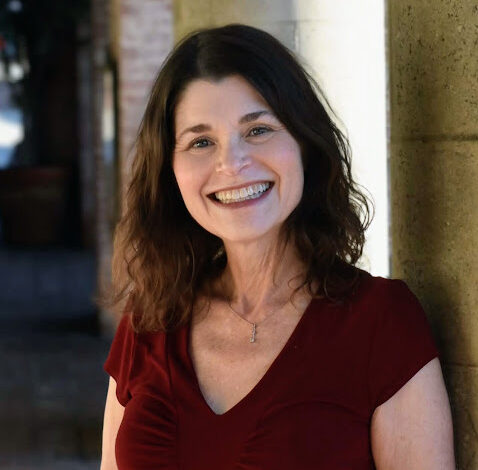
About Dr. Michelle Finkel

Dr. Michelle Finkel

Dr. Finkel is a graduate of Stanford University and Harvard Medical School. On completing her residency at Harvard, she was asked to stay on as faculty at Harvard Medical School and spent five years teaching at the world-renowned Massachusetts General Hospital. She was appointed to the Assistant Residency Director position for the Harvard Affiliated Emergency Medicine Residency where she reviewed countless applications, personal statements and resumes. Read more

Receive FREE Insider Medical Admissions Tips.

Listen to Dr. Finkel’s interview on the White Coat Investor podcast:

Listen to Dr. Finkel’s interview on the FeminEm podcast: