
For Pre-Meds, What IS Solid Clinical Experience Anyway?

Getting into medical school has gotten so competitive that it’s increasingly important to have a strong candidacy with excellent grades and robust extracurricular activities starting early in your college career. As I’ve mentioned in previous blog entries, one mistake I see pre-meds make is that they are so focused on leadership and research they forget a critical component – clinical experience. To prove you want to be a doctor, it’s essential you obtain clinical experience for a significant period of time – not just a health fair or two. Good grades will not make up for a lack of clinical experience.

Working as an EMT, in a good clinical care extender program, or in a low-income clinic are just some ideas for obtaining excellent clinical exposure. (Although you might think free clinics would be thrilled to have a pre-med volunteer, many understandably require one-year commitments.) Shadowing is a mixed bag: Medical schools don’t know whether you’re second-assisting in the operating room or just standing in a corner being ignored. If you choose to shadow, make sure you strategically highlight your clinical experiences in your written materials. Other popular options include international clinical work (although it is usually short-lived) and working as a volunteer in a hospital (although it might be more clerical than clinical, depending on the position).

Do your research before accepting a “clinical” job so you ensure you’ll really get the experience you need to confirm to yourself that you’ve made the right career choice (very important) and to show admissions committees that you can handle the heat.

Tags: , ,

Don’t Just Do It

Many medical school applicants ask me if they have to do things they don’t want – like bench research – to get into med school. While having reasonable academic numbers and some clinical experience is critical, candidates can succeed while lacking traditional aspects of the application, like research.

Now, having a strong research project (especially a publication) under one’s belt will almost invariably help propel an applicant’s candidacy forward, but finding very strong alternatives is a reasonable option.

Tags: , ,

Graduate Medical Education Bill Introduced

Here’s some interesting information from the Association of American Medical Colleges on the recently proposed Graduate Medical Education (GME) Bill. The legislation’s intent is to increase the number of residency training slots in an effort to improve the U.S. physician shortage problem

Tags: , ,

Writing a Compelling Personal Statement

It’s that time of year… Check out my Student Doctor Network® article on how to craft a persuasive personal statement. Remember the goal is to convince the reader of your worthiness – not simply tell a story.

Tags: , , ,

How to Be Happy in Residency

I’m sending a big congratulations to all of those residency candidates who successfully matched last week! Next year will be the start of something wonderful and challenging. Here are my tips for being happy (or at least as happy as possible) during residency:

1. Physician heal thyself. You will be working a ton, but eating healthfully and getting exercise will make everything a little better.

2. You’ve got a friend. You may be working 80-hour weeks, but plan to spend at least half an hour every week catching up with someone who makes you laugh.

3. Vacation – all I ever wanted. Figure out somewhere fun you want to travel when you are not working, and then happily anticipate the trip.

4. Date night. Take time out for your spouse or partner. Although I was not yet married when I trained, I remember being upset by seeing several marriages and relationships split up. You can never get that back. (This advice goes for children too, if you have them. You have an even greater challenge ahead of you than most if you are a parent in residency.)

5. Dance dance party party. Knitting, hiking, dancing, watching movies, kayaking, reading – whatever it is , do not let yourself become unidimensional.

6. Realize that the honking drivers have simply had a bad day. When I was in medical school, a brilliant upper classman came to speak to us about being on the wards. He told us that when someone aggressively honks at you on the road, it’s often because s/he in a bad mood – not because you are about to cause an accident. The same is true in the hospital. Tired, burned out professionals can make you feel bad. Don’t let them.

Tags: , ,

About Dr. Michelle Finkel

Dr. Michelle Finkel

Dr. Finkel is a graduate of Stanford University and Harvard Medical School. On completing her residency at Harvard, she was asked to stay on as faculty at Harvard Medical School and spent five years teaching at the world-renowned Massachusetts General Hospital. She was appointed to the Assistant Residency Director position for the Harvard Affiliated Emergency Medicine Residency where she reviewed countless applications, personal statements and resumes. Read more

Receive FREE Insider Medical Admissions Tips.

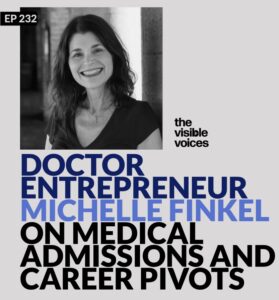
Listen to Dr. Finkel’s interview on The Visible Voices podcast: 


Listen to Dr. Finkel’s interview on the White Coat Investor podcast:

Listen to Dr. Finkel’s interview on the FeminEm podcast: