Blog Archives

Happiness: Part 2

Last week I posted about happiness. Unfortunately, I have recently spent a lot of time at an academic medical center with a sick family member. The hours I’ve spent there have made me think further about contentment in medical school and residency.

What I noticed about this highly academic hospital is that the care is outstanding, but the atmosphere is much more collegial than the setting in which I trained. The doctors and nurses are extremely bright and competent. They are also kind and approachable.

The institution at which I trained (and it may have changed in the 12 years since I left) did not have this culture. I experienced unchecked sexism, arrogance, and standoffishness. As I interacted with the physicians and nurses recently, I realized that I probably would have been much happier at an institution that better matched my personality. (Having said that, I met many of my dearest friends and my husband during medical school, residency, and as an attending, and I would not change any of that.)

Bottom line: Yes, reputation is a factor, but culture is really key. You can oftentimes train at an equally excellent place where you will happily fit in.

After all, we’re talking years of your life here.
Tags: , , ,

Happy Medical Training: An Oxymoron?

Medical school and residency training usually decrease one’s happiness for several reasons. Happiness researchers have demonstrated that a feeling of control and the amount of spare time one has both correlate with happiness. Both of those factors are limited during med school and residency. Relationships are also correlated with happiness, and those can be squashed during medical training as well.

I’m not trying to be a downer here! I want to encourage applicants to consider this happiness quotient when selecting an institution and training program. If you are able, maximizing your contentment by choosing an institution that fosters your greatest happiness is key. Geography; proximity to family, friends and community; and a location that provides an opportunity to enjoy hobbies during limited free time is significant.

Excellent training is important, but, in the end, many programs turn out equally qualified clinicians. At least consider your well-being as a factor in selecting where you might be for the next three plus years of your life.

Tags: , ,

Do-It-Yourself Exit Strategy: How I Stitched Together My Own Golden Parachute

Over a decade ago, I was seated in the emergency department with a colleague when I inquired about another one of our physician co-workers I’d not seen in a while. “Oh, she’s on the Mommy Track,” my colleague said and picked up another chart, without giving his words a second thought. To me, selecting a career path that sacrificed career advancement for more time to raise children was legitimate. My colleague’s pejorative “Mommy Track” made it clear that to him, it was not.

At that sad moment, I resolved to pursue a non-clinical supplement to my emergency department work, colloquially known as an “exit strategy.”

Read more on Student Doctor Network here

Tags: , , ,

DO vs. MD

Thinking about a medical school application for 2018, I’ve had a few industrious pre-meds ask me about DO school. There was an excellent article in the New York Times a few years ago about what doctors of osteopathy do and how their admissions criteria are different from allopathic schools’. It’s here and worth a read.

The topic of DO schools is an enormous one. A few quick points many candidates don’t know about DOs:

1. Many doctors of osteopathy practice medicine just like allopathic doctors do. I do per diem emergency shifts at Kaiser and work with many DOs. Candidly, I usually do not know which colleagues have osteopathic degrees and which have allopathic ones unless I see a prescription blank or a signed computer note.

2. If applying to osteopathic school, candidates are generally better off with at least one (strong) letter of recommendation from a DO supervisor.

3. Osteopaths currently take the COMLEX for their board tests, instead of the USMLE. If an osteopathic medical student wants to enter an allopathic residency, s/he may need to take the USMLE in addition to the COMLEX. On the other hand, there are many allopathic residencies that accept the COMLEX. Also, there is talk that in the future (when exactly is unclear, however) there may be just one board test that both groups take.

4. The osteopathic Match occurs before the NRMP Match, a fact that can be difficult for osteopaths applying to both types of residencies. If those applicants are successful in the osteopathic Match, they cannot enter an allopathic residency. If, on the other hand, they wait and enter the NRMP Match, they run the risk of simply not matching.

Again, this topic is complicated and nuanced, but the DO option is a great one for some applicants.

Tags: , , ,

Haven’t Heard Back from a Medical School or Residency Program? Here’s What to Do.

One of the more frustrating aspects of the medical school and residency admissions processes is the lack of response from some institutions. There is no obligation for medical schools or residency programs to reply to a candidate, which leaves applicants in limbo.

If you have not heard back from medical schools or residency programs to which you’ve applied, I recommend that you contact (preferably call) the institutions to inquire about your status.

After I offered that advice to a residency applicant I was advising, she emailed me to say she obtained an interview in a competitive specialty with a phone call. Another said she received two preliminary interviews with simple emails. (I recommend calls over emails, however, because it’s hard to ignore someone on the other end of a phone line. Still, if you simply can’t bring yourself to call, an email can be effective.)

I’ve seen this phone call strategy work for medical school interviews as well: Several years ago I helped a strong applicant who had been rejected by a top medical school. He thought he was a very good fit for this particular institution, so he called the school to make his case. Surprisingly, after the applicant’s phone call, the school granted him an interview, reversing their original rejection. Ultimately, after being initially rejected, this applicant was admitted to that top school. Of course, this is an exceedingly rare occurrence. But to me, the moral of this story is that it is worth being assertive in the application process.Now, if the school or program explicitly asks in written materials that you don’t contact them about your status, then calling is not a good idea.

An additional strong option is to send an effective update letter or letter of recommendation from an influential writer (alumus, for example). I do edit letters of update/interest for medical school and residency applicants, but even if you choose not to use my services, I recommend sending a well-written, strategic note in addition to making a phone call.

This process is an uncertain one, but asserting some small bit of control can be useful (and comforting).

Tags: , ,

About Dr. Michelle Finkel

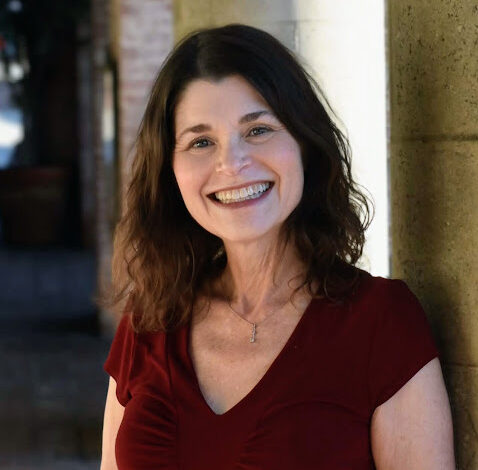
Dr. Michelle Finkel

Dr. Finkel is a graduate of Stanford University and Harvard Medical School. On completing her residency at Harvard, she was asked to stay on as faculty at Harvard Medical School and spent five years teaching at the world-renowned Massachusetts General Hospital. She was appointed to the Assistant Residency Director position for the Harvard Affiliated Emergency Medicine Residency where she reviewed countless applications, personal statements and resumes. Read more

Receive FREE Insider Medical Admissions Tips.

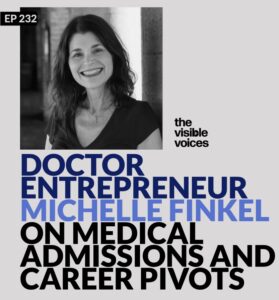
Listen to Dr. Finkel’s interview on The Visible Voices podcast: 


Listen to Dr. Finkel’s interview on the White Coat Investor podcast:

Listen to Dr. Finkel’s interview on the FeminEm podcast: