Blog Archives

Take-aways from the 2026 Match

Doximity recently published a “Clinical Brief” summarizing stats from last month’s Match. Here are the take-home messages:

1) The good news: The Match had the most applicants ever and a strong 93.5% overall fill rate.

2) More good news: DOs and U.S. citizen IMGs saw record high Match rates at 93.2% and 70.0%, respectively.

3) Bad news: Despite 134 new positions, the Family Medicine (FM) fill rate dropped to 83.6%, leaving 899 slots unfilled. The NRMP is taking this seriously: It’s convening a Blue Ribbon Panel to look at why medical students aren’t choosing FM.

4) More bad news: Non-U.S. Citizen IMGs saw a 56.4% Match rate — a five-year low.

Of note, the two pieces of bad news are connected and potentially a big problem: IMGs historically fill a disproportionate number of FM and other primary care positions. If IMG Match rates and FM fill rates are both dropping, that’s an escalating problem for primary health care access, particularly in underserved regions. 

Tags: , , ,

Match Week is Here

Match week has arrived, having officially started at 10 AM EST today when applicants received notifications indicating whether they’d matched. Those who didn’t obtain a position can participate in the Supplemental Offer and Acceptance Program (SOAP), which will proceed from today through Thursday. (If you’re interested in the ins and outs of SOAP and its universally disliked predecessor the Scramble, take a look here.)

This Friday, March 20, applicants will learn where they’ve matched. 

Good luck!

Tags: , , ,

Your Residency Application: Five Factors to Prioritize When Creating your Rank List

Creating your Match rank list can be absolutely agonizing because it feels like so much is at stake. Sometimes it helps to step back and look at the big picture. Below, I briefly note a few important considerations when making your list:

  1. Make sure you understand how the NRMP algorithm works. See my previous blog post regarding errors to avoid at all costs. The key is to rank in the order you want – first goes first, second goes second, etc.
  2. Consider your happiness and life balance. Blasphemy perhaps, but I would argue that they are more important than the strength of the training program.
  3. Reflect on the culture, geography, size, and even maturity/age of the program. Think about whether you will fit in.
  4. Consider whether you could spend your whole life at the institution or in that program’s location. It’s a lot to grapple with, but many residents graduate and stay for the rest of their careers. (Of course, you don’t have to stay post-residency, so if this consideration is too stressful, don’t worry about it.)
  5. Decide whether you liked the program director, chairperson, and faculty generally. They could make or break your happiness and success.
Tags: , , ,

Check Yourself Before You Wreck Yourself: How to Create a Match Rank Order List

As you look toward the NRMP Match rank order list open date on February 3, you’ll want to avoid simple missteps. Improving written materials and interview skills are critical, but all of that work can go to waste if applicants do not understand basic strategies for the Match. Way back in November 2015, the NRMP published an article called, “Understanding the interview and ranking behaviors of unmatched international medical students and graduates in the 2013 Main Residency Match” in the Journal of Graduate Medical Education. The data is still relevant today.

Sadly, the authors found that some applicants made strategic errors including the below:

1. Declining to rank all programs at which they interviewed or not ranking all programs they would be willing to attend.
2. Not attending all interviews, thus failing to capitalize on every opportunity to market themselves. (I suspect this error is less common now with the advent of virtual interviews.)
3. Misunderstanding the Match and, thus, ranking programs at which applicants did not interview.
4. Failing to rank programs based on true preferences or ranking programs based on the perceived likelihood of matching.

It kills me to read about these mistakes :(. Here is a video explanation of the Match algorithm. If you do not understand how the Match works, it is absolutely critical that you learn about it to avoid destructive errors.

Tags: , , ,

NRMP® Data Indicates Matched Residency Applicants had Longer Rank Order Lists than Unmatched Ones

Over the years, the NRMP has published data regarding the impact of length of rank order list (ROL) on success in the Match. I first noticed information on this topic in a document called the Impact of Length of Rank Order List on Main Residency Match Outcomes: 2002-2016. There, the NRMP reported that matched applicants consistently had longer ROLs than unmatched applicants. More recently, this information has been validated in the NRMP’s Impact of Length of Rank Order List on Match Results: 2004-2023 Main Residency Match

Since the latter document assesses two decades of Matches, we can take it seriously. Those approaching the application process should consider a reasonably wide net in choosing residency programs at which to apply and then should include all programs on their ROLs that they would consider “acceptable,” meaning an applicant would rather train there than not Match. Of course, there is a financial cost to applying broadly, and that expense needs to be balanced. However, according to this data, matched applicants and filled programs consistently have longer ROLs than unmatched applicants and unfilled programs. The NRMP reminds candidates that a longer ROL does not adversely affect the chances of matching to choices higher on the ROL. Here’s a video that reinforces that fact. 

Tags: , , ,

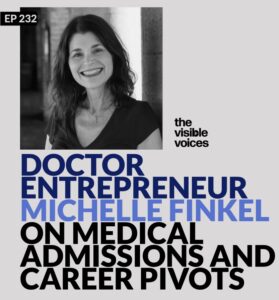
About Dr. Michelle Finkel

Dr. Michelle Finkel

Dr. Finkel is a graduate of Stanford University and Harvard Medical School. On completing her residency at Harvard, she was asked to stay on as faculty at Harvard Medical School and spent five years teaching at the world-renowned Massachusetts General Hospital. She was appointed to the Assistant Residency Director position for the Harvard Affiliated Emergency Medicine Residency where she reviewed countless applications, personal statements and resumes. Read more

Receive FREE Insider Medical Admissions Tips.

Listen to Dr. Finkel’s interview on the White Coat Investor podcast:

Listen to Dr. Finkel’s interview on the FeminEm podcast: