Blog Archives

Insider Medical Admissions Searchable Blogs

Have a specific medical school or residency admissions question? Don’t want to rifle through blog entries individually?

I’ve been writing my blog since 2008 and have a wealth of answers to your questions – all free. But many folks do not know what I have two platforms on which my blog is published.

The first is on my website here. The entries are all tagged, so you can pick a topic and search using that tag.

The second is on Blogger here. This one allows you to search any phrase in the right margin (about a third of the way down the page).

Either way, feel free to use the blogs to get your questions answered easily and quickly.
Tags: , ,

Ten AMCAS Mistakes You Absolutely Want to Avoid

Here’s a quick and dirty list of AMCAS Work and Activities section errors to avoid at all costs:

1. Don’t write to write, and don’t fill to the maximum character count unless necessary. While you want to include many strong achievements, you do not want your AMCAS to be so wordy that your reader is tempted to skim.

2. While you need to be brief, don’t write in phrases; use full sentences. It’s a formal application, and you want to make your written materials as readable as possible.

3. Don’t assume your reader will carefully study the “header” section (including the title of the activity, hours, etc.). Make sure your descriptor could stand alone: Instead of “As an assistant, I conducted experiments…” use “As a research assistant at a Stanford Medical School neuroscience lab, I conducted experiments…”

4. Don’t be vague or trite. Make sure you spell out your accomplishments clearly and substantively. If your reader doesn’t understand an activity, you will not get “full credit” for what you’ve done. Make no assumptions.

5. Avoid abbreviations. Again, you want to be formal, and abbreviations you think are common might not be familiar to the reader.

6. Write about yourself and your role – not an organization. For example, don’t use the space to discuss Doctors without Borders. Use it to discuss the specifics of your role at Doctors without Borders.

7. Avoid generalities and consider using numbers to be persuasive. Saying that the conference you organized had 300 participants says it all.

8. Don’t merge the descriptors with the most meaningful paragraphs because they are separate sections: You can complete descriptors for up to 15 activities with up to 700 characters each plus up to three most meaningful paragraphs of up to 1325 characters each.

9. Unless your PI won the Nobel, avoid using supervisors’ and/or doctors’ names in your descriptors as they will be meaningless to the majority of your readers.

10. Get help. Do not submit your medical school application without having it reviewed. You do not want to showcase suboptimal materials for a process that is this important and competitive.

Tags: , ,

Be A Dirtbag Millionaire

For many of us, medical training means taking on significant debt and learning to manage complex personal finances. Many financial advisors “specialize” in physicians (like wolves who specialize in sheep?), and young doctors have a reputation as easy targets.

How can you defend yourself against financial predators, kill your debt early, and learn to manage your own portfolio? (And where can you even learn what a portfolio is?) Crispy Doc offers a blog dedicated to financial literacy for the newly minted physician with an emphasis on early financial independence for doctors.

Check out his blog, and learn from Crispy Doc’s recent Student Doctor Network article.

Tags: , ,

Brevity

I’ve started editing a lot of medical school essays of late, and I want to give a shout out to the importance of brevity. I focus on a work count of 700 or fewer for my advisees for a few reasons: First, I’ve found that that number is just the right balance of content and streamlining. Under 700 words for an admissions essay leads to a lack of substance, and more lends itself to meandering writing.
Second, your reader is likely stuck reviewing tens or even scores of applications in a short period of time. S/he is looking to spend as little time as possible on your written materials, while still getting a good flavor for your candidacy. Don’t burden your reader with verbiage.
Here’s a helpful trick: Imagine AMCAS or ERAS is charging you $10 per word. How would you keep costs down?
Tags: , ,

DO vs. MD

As the medical school application date looms nearer, I’ve had several pre-meds ask me about DO school. There was an excellent article in the New York Times a few years ago about what doctors of osteopathy do and how their admissions criteria are different from allopathic schools’. It’s here and worth a read.

The topic of DO schools is an enormous one. A few quick points many candidates don’t know about DOs:

1. Many doctors of osteopathy practice medicine just like allopathic doctors do. I do per diem emergency shifts at Kaiser and work with many DOs. Candidly, I usually do not know which colleagues have osteopathic degrees and which have allopathic ones unless I see a prescription blank or a signed computer note.

2. If applying to osteopathic school, candidates are generally better off with at least one (strong) letter of recommendation from a DO supervisor.

3. Osteopaths currently take the COMLEX for their board tests, instead of the USMLE. If an osteopathic medical student wants to enter an allopathic residency, s/he may need to take the USMLE in addition to the COMLEX. On the other hand, there are many allopathic residencies that accept the COMLEX. Also, there is talk that in the future (when exactly is unclear, however) there may be just one board test that both groups take.

4. The osteopathic Match occurs before the NRMP Match, a fact that can be difficult for osteopaths applying to both types of residencies. If those applicants are successful in the osteopathic Match, they cannot enter an allopathic residency. If, on the other hand, they wait and enter the NRMP Match, they run the risk of simply not matching.

Again, this topic is complicated and nuanced. If you’d like to discuss your candidacy and the DO option, contact me for a Strategy Session.

Tags: , ,

About Dr. Michelle Finkel

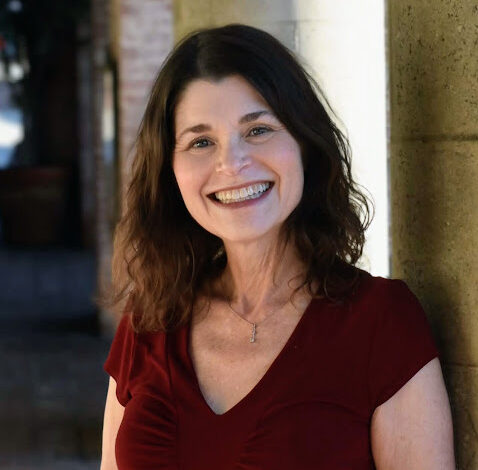
Dr. Michelle Finkel

Dr. Finkel is a graduate of Stanford University and Harvard Medical School. On completing her residency at Harvard, she was asked to stay on as faculty at Harvard Medical School and spent five years teaching at the world-renowned Massachusetts General Hospital. She was appointed to the Assistant Residency Director position for the Harvard Affiliated Emergency Medicine Residency where she reviewed countless applications, personal statements and resumes. Read more

Receive FREE Insider Medical Admissions Tips.

Listen to Dr. Finkel’s interview on The Visible Voices podcast: 


Listen to Dr. Finkel’s interview on the White Coat Investor podcast:

Listen to Dr. Finkel’s interview on the FeminEm podcast: