
Blog Archives

The Number One Strategy for Crushing Medical School and Residency Interviews

Google had a problem. As a 2012 New York Times article described it, Google executives were growing increasingly aware that they were not hiring enough women. Worse still, they were attracting negative attention about it. So, Google did what Google does best: They amassed data and mined it.

In their analysis, among other findings, Google concluded that the company was overlooking women, who tended to be more modest than comparable male applicants during interviews. The interviewers inappropriately perceived the women applicants to be less accomplished, and the candidates were not offered jobs. (Once they understood the problem, Google reported that they altered their internal hiring policies, accordingly.)

No matter what your gender, the story is instructive in understanding how to strategically approach your medical school or residency interview: I call it, Let Your Story Show Your Glory.

Let’s start with this overarching strategy, one that can be gleaned from the Google story: The interview process is a persuasive one. Your role is to convince medical schools or program directors you deserve a slot at their institutions. The best way to persuade is with facts, just like a lawyer does when s/he is trying a case in front of a judge. Saying you are compassionate or hardworking is not convincing, and it doesn’t distinguish you from the scores of other candidates the interviewer is meeting. You need to prove your worth by highlighting your academic, clinical, research, community service, leadership, international, and teaching achievements.

When mentoring applicants, I hear them ask: Michelle, if I showcase my accomplishments in my interview, doesn’t that mean I’m being redundant? My answer: Absolutely! Think of the medical admissions process like building a house. Your AMCAS/ERAS/ResidencyCAS and letters serve as one layer of that house – like scaffolding. In other words, your accomplishments are conveyed simply and succinctly there. The personal statement is your opportunity to apply a thicker layer, one in which you flesh out your achievements, thus persuading the reader of your distinctiveness (plumbing, pipes, electrical). Finally, the interview is your chance to add on the thickest peel (exterior, roof).

Discussing your accomplishments in detail can seal the interviewer’s positive impression of you.

If you still feel shy about drawing attention to your achievements, I can assure you that, occasionally, interviewers do not leave adequate time to review materials for the candidates they will ultimately judge, or they are asked to interview such a large number of applicants that they might understandably get candidates confused. If you treat every interview as though it were a “blind” one, you address these obstacles. Determine in advance how you want your interviewers to remember you when they represent you to the committee, and tailor your interview to leave that impression. At the end of the week, when your interviewer asks what others thought of the “young woman who volunteered with Mother Teresa while doing malaria research and competitive hammer-throwing,” all the other admissions officers will know immediately she is referring to you.

Remember: You can say you are smart or caring or that you want to heal the world, but to admissions committees and program directors, who you are is what you’ve done…and what traits and skills you’ve honed accordingly.

[A version of this blog was previously published on the Varsity Tutors website, where I was part of their Admissions Expert Series.]

Tags: , , ,

Reciprocal Liking

When I was at Harvard, we interviewed a residency applicant about whom I was enthusiastic, but when we sat down to talk about the candidate’s credentials, one of my colleagues put the kibosh on the applicant’s prospects. As it turned out, the candidate had made it clear (at least in my colleague’s eyes) that he did not want to leave California. “If he’s not interested in us, why should we be interested in him?” my colleague asked.

Although you hope institutions will like you, keep in mind that institutions want to see that you are serious about them as well. 

There is a psychological principle called Reciprocal Liking: People tend to have positive feelings for those whom they perceive have positive feelings for them. Apply Reciprocal Liking to institutions when you interview. Be so familiar with the school/program that you implicitly convey you are excited and sincere about spending the next several years there. Know details about the institutional priorities, extra clinical opportunities, location, and associated hospitals. Make sure to have specific questions for your interviewer, ones that demonstrate your intimate knowledge of the institution and your belief that you could be a contributor and leader.

Tags: , , ,

Medical School Interview Tips: What Do AdComs Really Want?

For those of you who’ve submitted your secondary essays, it’s time to start thinking about medical school interviews. Here are tips on what medical school admissions officers/committees are seeking:

1. They want someone distinctive. Your goal is to distinguish yourself from all of the other applicants by showcasing your accomplishments. Anyone can say s/he wants to help people or is hard working. Fewer candidates can prove it with their pre-professional achievements.

2. They want to ensure you’re committed to medicine and you have an idea of what you’re getting yourself into. Medical school is tough; the institutions are not seeking someone who is ambivalent and might quit. Giving examples of your clinical experience can help.

3. The schools want to ensure you’re reasonable. They want to see that you don’t have a problem personality, aren’t going to harass your colleagues, and aren’t going to cause the institution embarrassment or extra work. Being professional during the interview day and having strong letters are important.

4. They want to hear you’re particularly interested in their program. You can convince them of your enthusiasm by knowing specifics about the school and city.

You would never take the MCAT without practicing first, and yet, countless applicants go to medical school interviews without preparing. If you’re interested in working with me, please hire me soon, as I’m booking up for September.

Tags: , , ,

Medical and Dental School Interviews: Preparing for your MMI

Although the majority of medical and dental school interviews are still traditional, some institutions utilize a multiple mini interview (MMI) platform. The MMI is a format that uses several timed stations to assess applicants’ interpersonal skills and judgment.

A few things to note about MMI interview questions:

1) They are not always medically-related. You may be asked to manage an everyday problem (e.g. a disagreement at the supermarket).

2) They are not always situational. You need to be prepared for conventional questions too (e.g. what are your three greatest strengths?).

3) Schools are trying to assess whether you can skillfully employ important techniques and demonstrate professionalism. Underlying topics might include your ability to offer effective counseling, your understanding of patient-doctor confidentiality, an ability to diffuse a heated situation, a capacity to admit wrongdoing, or reporting an impaired supervisor.

It’s important that you practice MMI questions before you go to your medical or dental school interview. Even if you have excellent social skills, there are techniques you should hone to expertly manage the challenging MMI format.

Tags: , , ,

Your Residency Interview: What Do Program Directors Really Want?

Imagine you’re a program director (PD) going through scores of ERASes and interviews. What questions would you ask yourself as you assess each residency candidate to avoid big headaches?

1) Can this person do the job? Is s/he competent?

2) Will this person “play well with others” and not create complaints from patients, faculty, or other services.

3) Will this person stick with the program and not leave prematurely? (A PD does not want to scurry around to fill an open call schedule/ residency slot.)

As you approach your interviews, consider how you can demonstrate your competence and collegiality, as well as your commitment to the field and the residency program. For the former, ensure you showcase academic successes, extracurricular activities that demonstrate teamwork, and – if asked – hobbies and reading materials that demonstrate your agreeable personality. For the latter, highlight research projects in the specialty, sub-internships, and knowledge about the program and city.

Simply making sure the PD knows you’re not going to cause him/her trouble is at least half the battle.

Tags: , , ,

About Dr. Michelle Finkel

Dr. Michelle Finkel

Dr. Finkel is a graduate of Stanford University and Harvard Medical School. On completing her residency at Harvard, she was asked to stay on as faculty at Harvard Medical School and spent five years teaching at the world-renowned Massachusetts General Hospital. She was appointed to the Assistant Residency Director position for the Harvard Affiliated Emergency Medicine Residency where she reviewed countless applications, personal statements and resumes. Read more

Receive FREE Insider Medical Admissions Tips.

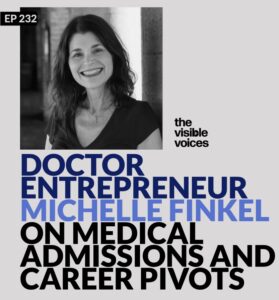
Listen to Dr. Finkel’s interview on The Visible Voices podcast: 


Listen to Dr. Finkel’s interview on the White Coat Investor podcast:

Listen to Dr. Finkel’s interview on the FeminEm podcast: