
Blog Archives

Sesame Street Can Help You Write a Great Medical School Personal Statement

I learned an interesting fact years ago: When small children don’t understand something, they will simply tune it out and start to engage in another activity. That’s why great shows like Sesame Street use professionals to make sure their content is precisely age-appropriate. Children – and adults – don’t like being confused, and you can’t blame them.

In their personal statements, some medical school candidates make the mistake of referring to an accomplishment without explaining it. This is understandable since we are all intimately familiar with what we’ve done. The problem is that the vast majority of application readers are way too busy to do independent research or go back and forth checking an applicant’s supporting documents if she writes something that isn’t crystal clear.

I remember a talented candidate I advised who showcased an award she had won. She listed the name, but didn’t explain what it was. When I asked her, she told me the award was an academic honor given to only the top 1% of students out of several thousand. I was impressed! And, I asked her to rewrite the section so that her admissions readers would give her the credit she deserved for that extraordinary accomplishment. Because the medical school admissions process is so competitive, what you fail to adequately explain counts against you.

On a related topic, don’t expect a reader to understand something in your essay because it’s explained in your AMCAS activities. Different faculty members will approach the application in different ways, so – to get “full credit” for your accomplishments – you need to assume that your reader is seeing your essay first, independent of your AMCAS activities. Ensure your personal statement can stand alone and doesn’t rely on your AMCAS Activities section for clarification.

Contact me for help with your written materials. I have read thousands of essays, and I personally review every document sent to me.
Tags: , , ,

Fellowship Match Data is Out

Take a peek at the NRMP’s recently-published Results and Data: Specialty Matching Service. This information is not as granular or useful as Charting Outcomes of the Match (focused on the residency Match), but it’s still helpful to see what percentage of a subspecialty goes unfilled. (Geriatrics had 77% unfilled in the most recent cycle. Gastroenterology had 1.5%.) The trends year over year are also instructive. 

Tags: , , ,

The NRMP Rank Order List Due Date is Fast Approaching: Check Yourself Before You Wreck Yourself

The rank list deadline is March 4, 2026 at 9 PM EST, however waiting until the last minute and making impulsive changes to your list is not a great idea ;).

Ensure you avoid simple missteps in creating your list. Improving written materials and interview skills is important, but all of that work can go down the drain if applicants do not understand basic strategies for the Match. In November 2015, the NRMP published an article called, “Understanding the Interview and Ranking Behaviors of Unmatched International Medical Students and Graduates in the 2013 Main Residency Match” in the Journal of Graduate Medical Education. The data is still relevant today and especially important for IMGs who represented the majority of unmatched candidates.

Sadly, the authors found that some applicants made strategic errors including the below:

– Not attending all interviews, thus failing to capitalize on every opportunity to market themselves.

– Declining to rank all programs at which they interviewed or not ranking all programs they would be willing to attend.

– Misunderstanding the Match and ranking programs at which applicants did not interview.

– Failing to rank programs based on true preferences or ranking programs based on the perceived likelihood of matching.

Here is a video explanation of the Match algorithm. If you do not understand how the Match works, it is absolutely critical that you learn about it to avoid destructive errors.

Tags: , , ,

How are Residency Programs Managing the $100,000 Fee for New H-1B Visa Applications?

The Association of American Medical Colleges (AAMC) recently published a piece on the effect H-1B visa fees will have on the Match, hospitals, and access to medical care going forward unless there is an exception made for the healthcare field. The article also explains the distinctions between the H-1B and J-1 visas for physicians.

Andrea Price-Carter, MPA, director of health equity advocacy and government relations for the AAMC points out that J-1 and H-1B visa holders do not displace U.S. medical graduates, and instead, fill gaps where there is a shortage of needed professionals.

Here’s the AAMC piece.

Tags: , , ,

AW(e)SOM(e)

This week a friend texted me a PBS NewsHour segment she saw about the Alice L. Walton School of Medicine (AWSOM) that opened for its inaugural class this cycle. The school is located in Bentonville, Arkansas, and its mission is to provide an innovative program that incorporates art and humanities. The school shares a campus with the Crystal Bridges Museum of American Art, and medical students are encouraged to learn the “art of healing.” Importantly, for the first five cohorts, tuition is free, so the admission process is fierce. 

Take a look here at the PBS segment.

Tags: , , ,

About Dr. Michelle Finkel

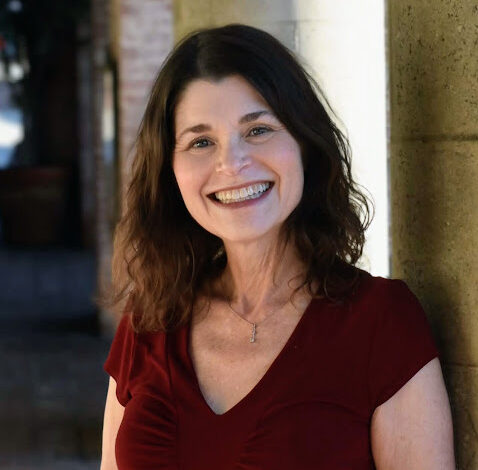
Dr. Michelle Finkel

Dr. Finkel is a graduate of Stanford University and Harvard Medical School. On completing her residency at Harvard, she was asked to stay on as faculty at Harvard Medical School and spent five years teaching at the world-renowned Massachusetts General Hospital. She was appointed to the Assistant Residency Director position for the Harvard Affiliated Emergency Medicine Residency where she reviewed countless applications, personal statements and resumes. Read more

Receive FREE Insider Medical Admissions Tips.

Listen to Dr. Finkel’s interview on the White Coat Investor podcast:

Listen to Dr. Finkel’s interview on the FeminEm podcast: