Blog Archives

White Coat Investor Student Scholarship 2026 Applications – Now Open

Each year the White Coat Investor (WCI) offers a scholarship opportunity to students enrolled in full-time US professional schools. This year’s application opened June 1, and the deadline is August 31. Students must be in good academic standing in eligible professional schools, including medical, dental, law, podiatry, pharmacy, physician assistant, nurse practitioner, and veterinarian, among others. WCI’s stated goal of the scholarship is to reduce winning students’ indebtedness and to promote financial literacy in professional schools.

The lion’s share of the application is an 800 to 1200 word essay. There are 10 grand prize winners. Here’s more information.

Tags: , , ,

The Ins and Outs of Choosing a Specialty: The Generalist vs. The Early Committer

I find it frustrating that we tell students to approach medical school with an open mind but then reward those who demonstrate commitment to a field early. 

If you’re a pre-med or a medical student in your first or second year, check out this piece I wrote with my colleague David Presser MD MPH called “Choosing a Specialty: The Generalist vs. The Early Committer.” 

The case for deciding early is evidence-based, especially for highly competitive fields, but early commitment has real risks too. In the article, read practical advice for effectively approaching a decision about your field.


Ten AMCAS Mistakes You Absolutely Want to Avoid

May 28 (the date AMCAS application verification begins) is only three days away, so as you’re completing your final review of your written materials, here’s a quick and dirty list of AMCAS Work and Activities section errors to avoid at all costs:

1. Don’t write to write, and don’t fill to the maximum character count unless necessary. While you want to include many strong achievements, you do not want your AMCAS to be so wordy that your reader is tempted to skim.

2. While you need to be brief, don’t write in phrases; use full sentences. It’s a formal application, and you want to make your written materials as readable as possible.

3. Don’t assume your reader will carefully study the “header” section (including the title of the activity, hours, etc.). Make sure your descriptor could stand alone: Instead of “As an assistant, I conducted experiments…” use “As a research assistant at a Stanford Medical School neuroscience lab, I conducted experiments…”

4. Don’t be vague or trite. Make sure you spell out your accomplishments clearly and substantively. If your reader doesn’t understand an activity, you will not get “full credit” for what you’ve done. Make no assumptions.

5. Avoid abbreviations. Again, you want to be formal, and abbreviations you think are common might not be familiar to the reader.

6. Write about yourself and your role – not an organization. For example, don’t use the space to discuss Doctors without Borders. Use it to discuss the specifics of your role at Doctors without Borders.

7. Avoid generalities and consider using numbers to be persuasive. Saying that the conference you organized had 300 participants says it all.

8. Don’t merge the descriptors with the most meaningful paragraphs because they are separate sections: You can complete descriptors for up to 15 activities with up to 700 characters each plus up to three most meaningful paragraphs of up to 1325 characters each.

9. Unless your PI won the Nobel, avoid using supervisors’ and/or doctors’ names in your descriptors as they will be meaningless to the majority of your readers.

10. Choose the right category for each activity, so you get “full credit.”

Bonus: Get help. Do not submit your medical school application without having it reviewed by someone with experience. 

Tags: , , ,

Check Out Key Match Dates and Two Safeguarding Policies for Applicants

Recently, the NRMP hosted a webinar called, “Introduction to the 2027 Main Residency Match®.” There are two categories of take away points:

1) Key dates relevant for applicants:

September 15 — Applicant and medical school registration opens
September 23 — Applications available via ERAS and ResidencyCAS (OB/GYN and Emergency Medicine use ResidencyCAS)
February 1 — Ranking opens
March 3 — Rank Order List certification deadline
March 15–19 — Match Week and SOAP
March 19 — Match Day

2) Two policies particularly notable for applicants:

First, residency programs can’t extend more invitations than available slots and must give applicants at least 48 hours to respond.
Second, programs can’t ask applicants about their ranking plans, request preference signals, or solicit commitments to rank.

Here’s the webinar link.

Tags: , , ,

Check out these Useful AMCAS Links

I mentioned in the last couple of blog entries the great utility of the AAMC webinar on April 14 called “Navigating the 2027 AMCAS Application Cycle for Applicants,” and I summarized some of the most important points.

One of the additional benefits of the session was a listing of useful online resources. I collected them and have listed them below. Enjoy!

AMCAS Application Resources

MCAT and PREview

Tags: , , ,

About Dr. Michelle Finkel

Dr. Michelle Finkel

Dr. Finkel is a graduate of Stanford University and Harvard Medical School. On completing her residency at Harvard, she was asked to stay on as faculty at Harvard Medical School and spent five years teaching at the world-renowned Massachusetts General Hospital. She was appointed to the Assistant Residency Director position for the Harvard Affiliated Emergency Medicine Residency where she reviewed countless applications, personal statements and resumes. Read more

Receive FREE Insider Medical Admissions Tips.

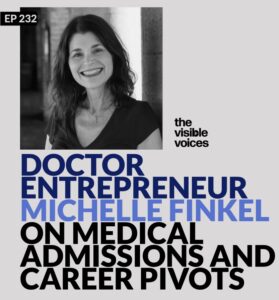
Listen to Dr. Finkel’s interview on The Visible Voices podcast: 


Listen to Dr. Finkel’s interview on the White Coat Investor podcast:

Listen to Dr. Finkel’s interview on the FeminEm podcast: