Applicants must have their rank order lists certified by 9 pm EST this Wednesday (March 2). As I’ve mentioned in a previous post, the algorithm for the Match is relatively simple.
The bottom line:
1. Rank programs so they represent your true preferences. Your first choice should be first. Your second should be second and so on. Do not try to “outthink” the system, as it will only be to your disadvantage.
2. Because of the way the Match algorithm works, what programs think of you (or what you think they think of you) should have zero bearing on how you make your rank order list.
3. Except in highly usual situations, rank all programs at which you interviewed. If you would truly rather not match than be at a specific program, then that program should not be on your Match list; however, do think carefully about the prospect of not matching, entering SOAP, and possibly having to reapply next year.
The Medscape National Physician Burnout & Suicide Report 2021 is now available, and it seems rather evident that the pandemic has negatively affected physicians who were already under a lot of stress, especially those in critical care medicine.
More than half of critical care physicians report being burned out (51%), and critical care ranks as the highest specialty in the burnout questionnaire, followed by rheumatology (50%) and infectious disease (49%). Those numbers compare with last year’s report at 44%, 46%, and 45%, respectively. This year, my field of emergency medicine (EM) was at 44%, which sounds high, but, sadly, EM was not even in the top ten burned out specialties. That gives you an idea of the severe scope of the problem.
Women reported burnout at 51% compared to 36% for men, and while this disparity has been present for many years, the discrepancy between the genders was greater in this most recent report.
Seventy-nine percent of those surveyed relayed that their burnout started before COVID, while 21% reported after. Bureaucratic tasks and too many hours at work were the major reported contributors to burnout.
Several years ago I was hired by a re-applicant who wanted to better understand why she did not get into medical school the prior year. She had a 3.9 GPA and a 40 on her MCAT (100% percentile). Yet, she had been rejected from all medical schools.
I looked through her materials and discovered the problem. The applicant had no clinical work at all. She had never been in the room with a patient. Many of you know that I like the saying, “No one wants to hire a chef who hasn’t been in the kitchen.” She had fallen prey to that adage.
We talked, and I advised her regarding options she had for obtaining clinical experience. Fast forward a year: The client completed a robust clinical activity and was readily accepted to medical school (and felt more confident about her career choice).
If you are a pre-med, note that robust clinical experience is critical. Working as an EMT, in a good clinical care extender program, formally as a scribe (where you can also make some money), in a hospice setting, or in a low-income clinic are just some ideas for obtaining excellent clinical exposure. (Although you might think free clinics would be thrilled to have a pre-med volunteer, many understandably require one-year commitments.)
Shadowing is a mixed bag: Medical schools don’t know whether you’re second-assisting in the operating room or just standing in a corner being ignored. If you choose to shadow, make sure that – in your written materials – you highlight any substantive clinical skills gained. Other popular options for clinical experience include international work (although the activity is usually short-lived, which makes it less robust) and working as a volunteer in a hospital (although it might be more clerical than clinical, depending on the position; thus, the benefit of clinical care extender programs. Do your research before accepting a volunteer hospital job). I’ve also had advisees who became certified, practicing phlebotomists and others who worked in veterinarians’ offices to obtain procedural skills.
More important than getting into medical school (gasp), getting robust clinical experience will help you ensure you’ve made the right career choice. Simultaneously, you’ll demonstrate to admissions officers that you can handle the heat.
See the short video below on the importance of clinical experience:
I’m a huge fan of Flight of the Conchords – both the show and the comedy duo themselves. Bret McKenzie and Jemaine Clement sing a hilarious tune called “The Most Beautiful Girl in the Room” whose lyrics include
…Looking ’round the room I can tell that you Are the most beautiful girl in the… room In the whole wide room (ooh) And when you’re on the street Depending on the street I bet you are definitely in the top three Good lookin’ girls on the street, yeah Depending on the street, ooh…
The lyrics proceed from there, consistently qualifying Jemaine’s crush’s beauty:
…You’re so beautiful Mm, you could be a part-time model But you’d probably still have to keep your normal job
I thought of this song recently when a wonderful client asked if he should let a residency program know it was one of his top two choices. While very well-meaning, that type of endorsement can fall flat. I would also avoid phrases like “one of my top” picks.
Instead, you can say (or write) something like “I would be thrilled to be at your institution,” or ” I’m confident I can make a positive contribution.” In other words, you can stay honest while not shooting yourself in the foot.
Here’s the “Most Beautiful Girl” video. It’s hilarious.
A super nice client of mine who is currently a first-year medical student recently emailed me to ask my suggestions for what he should do this upcoming summer. The summer after the first year of medical school is – unless you take a gap year – the last free one you will have for a while, so it’s important to use it wisely. Of course, it’s hard to plan with COVID, but generally, the advice I give is that if someone plans to go into a highly competitive specialty like dermatology or neurosurgery, research is probably the best bet. Those specialties require a significant early commitment to the field and a lot of investigative experience/ publications.
For less competitive fields, research is still an option, but other opportunities should be considered. If you know you’re not going into a highly competitive field, you have a bit more flexibility. After my first year of medical school, I participated in Harvard’s Urban Health Project and spent my time shadowing a physician in an underserved clinic.
Of course, I would not recommend spending the summer at Club Med :), but I would try to make sure you are happy over the summer – near family or friends – no matter what specialty you are seeking.
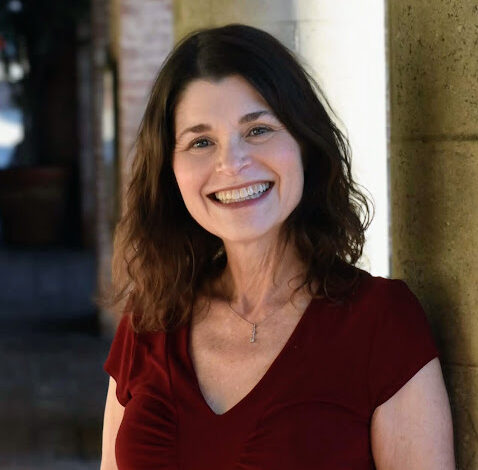
Dr.Finkel is a graduate of Stanford University and Harvard Medical School. On completing her residency at Harvard, she was asked to
stay on as faculty at Harvard Medical School and spent five years teaching at the world-renowned Massachusetts General Hospital.
She was appointed to the Assistant Residency Director position for the Harvard Affiliated
Emergency Medicine Residency where she reviewed countless applications, personal statements and resumes. Read more