Blog Archives

The Residency and Medical School Application Process: Moving Past Impostor Syndrome

First described by psychologists Drs. Suzanne Imes and Pauline Rose Clance in the 1970s, impostor syndrome (IS) occurs among high achievers who can’t easily internalize their successes. They often externally attribute their accomplishments to luck and worry others will eventually realize they’re frauds.

Recognize this phenomenon of self-doubt? You’re not alone.

Although many people suffer in silence (because they don’t want their perceived deficiencies revealed), IS is quite common, especially in medical school. According to one often-cited 2016 study by Villwock et al, almost a quarter of male medical students and nearly half of female students surveyed suffered with IS. A 2026 metaanalysis by Abouelmagd et al reported the overall pooled prevalence of IS was 49%. The phenomenon can be associated with depression, burnout, and anxiety. The American Psychological Association offers a few tips for overcoming IS including speaking to mentors, recognizing where you excel, and talking to a professional.

Here’s a fun article on IS by Joelle Borhart MD, the Program Director of the MedStar Georgetown University/Washington Hospital Center Emergency Medicine Residency Program. I also recommend Amy Cuddy’s TED talk with over 77 million views.
Tags: , , ,

Time to Take a Reading Break

I hope each of you has a moment of downtime over this holiday season. One of the ways I relax is with a good book. Here’s a piece I wrote for Student Doctor Network regarding great books for doctors in training.  

In addition to the list, I want to add another strong recommendation: Pulitzer Prize Finalist Paul Kalanithi’s When Breath Becomes Air. Get ready to cry your eyes out, while appreciating beautiful prose and insightful content. Paul Kalanithi was diagnosed with metastatic lung cancer when he was a senior neurosurgery resident at Stanford. He chronicles his short life in a book that’s hard to put down. 

Tags: , , ,

Being Valued is Undervalued

Back in 2022, an interesting JAMA study called “Trends in Clinician Burnout With Associated Mitigating and Aggravating Factors During the COVID-19 Pandemic” came out. The survey reflected responses from over 20,000 US clinicians and demonstrated that chaotic workplaces and lack of control of workload were associated with higher burnout (think emergency departments or a poorly run, overscheduled clinic), while efficient teamwork and feeling valued were associated with lower burnout. 

People sometimes pay lip service to the importance of being appreciated, but this study supports its significance.

Consider this study’s results when making decisions about what field to choose, where to train, and what position to take after residency. Here’s the article.

Tags: , , ,

Medical School and Residency Admissions: It’s Not Personal

When I was in my second year of medical school, a third-year student (who later also went into emergency medicine, as I did) came to speak to our class about being on the wards. He gave an animated talk about how important it was to recognize that when residents, attendings, or nurses hollered at us on our clinical rotations, 99% of the time, it wasn’t personal. He likened the situation to Boston traffic – how drivers lean on their horns simply because they are frustrated about their days.

It’s not personal, he said.

I say the same to those I mentor. Applicants get an interview at one highly ranked institution but rejected at what is considered a lesser one with no clear cause. Faculty interviewers mix candidates up with one another; some turn up wholly unprepared – reading applicants’ AMCASes or ERASes for the first time during the interview itself. 

Remember: It’s not personal. This process is arduous and cruel, and most candidates, faculty, and program coordinators are tired and doing their best in a dysfunctional system.

Tags: , , ,

Not Quite What I Was Planning

Years ago, I read a beautiful book called Not Quite What I Was Planning: Six-Word Memoirs by Writers Famous and Obscure edited by Larry Smith and Rachel Fershleiser. The premise is that individuals were asked to sum up their lives in six words. Famous contributors include Margaret Atwood and Stephen Colbert, among others.

I thought about the book recently when I was at my medical school reunion: A dozen of us sat around a round table and talked about what we had been up to for the last 30 years. After we finished, we concluded that the overriding theme was that all of us were doing something different than what we thought we would be doing. I found that concept refreshing, and I suspect it might be reassuring to current students who feel burdened with big decisions.

I just checked out the e-book from the library so I can read it again.

Tags: , , ,

About Dr. Michelle Finkel

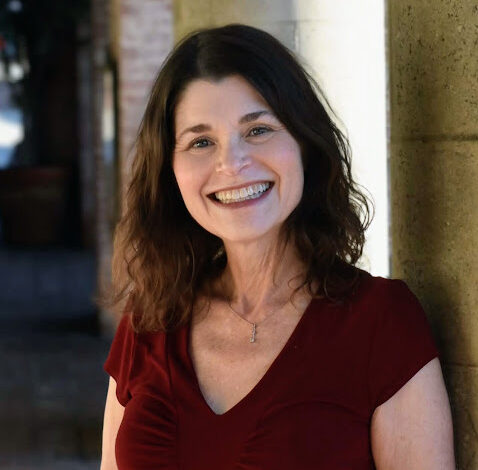
Dr. Michelle Finkel

Dr. Finkel is a graduate of Stanford University and Harvard Medical School. On completing her residency at Harvard, she was asked to stay on as faculty at Harvard Medical School and spent five years teaching at the world-renowned Massachusetts General Hospital. She was appointed to the Assistant Residency Director position for the Harvard Affiliated Emergency Medicine Residency where she reviewed countless applications, personal statements and resumes. Read more

Receive FREE Insider Medical Admissions Tips.

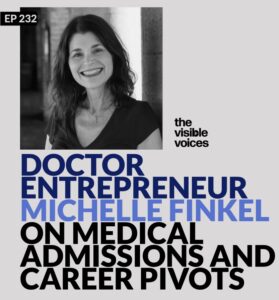
Listen to Dr. Finkel’s interview on The Visible Voices podcast: 


Listen to Dr. Finkel’s interview on the White Coat Investor podcast:

Listen to Dr. Finkel’s interview on the FeminEm podcast: