Blog Archives

Something You Probably Haven’t Considered Could Have a Huge Impact on Your Professional Happiness

A recent article in Emergency Medicine News caught my eye. Emergency physician Dr. Tom Belanger conducted a small study (n=573) in which he crafted a nine-question Likert scale survey and then attempted to predict emergency physicians’ employment structures based on respondents’ answers. He used statements like “I am paid fairly,” “I am secure in my career,” and “Emergency medicine is a good career” in his survey.

In medical school and residency, I thought little about employment structure, which can include democratic, hospital employee, contract management, independent or locums, academic, resident, or government systems. As a student, I was so focused on what specialty I would choose and was so influenced by the academicians I worked with that I didn’t even consider that I could choose a field in which I might be happy in one employment structure and discontent in another. 

Belanger found that employees of contract management groups (CMGs) tended to be the most negative respondents, and owners of CMGs were not far behind. On the other hand, owners of democratic groups were the most positive in almost every aspect. 

In this study, all respondents were in the same specialty and yet, employment structure divided respondents with regard to their career satisfaction. Belanger’s graphs are worth viewing in his piece, but the take-home point for medical students and residents is the importance of the employment structure in which you ultimately work, a topic that may not have even crossed your mind until now. 
Tags: , , ,

An Oversupply of Emergency Physicians?

When I applied in emergency medicine (EM), I had only two other classmates submitting applications to the field. EM wasn’t a very popular specialty, although that would change as the show ER became hotter. Although enthusiasm for the field has generally increased over my career, medical students’ interest in EM has waxed and waned.

Recently an eight-organization consortium of EM groups analyzed the field’s workforce, demonstrating an oversupply of emergency physicians likely to appear over the next decade. There are a number of reasons proposed, including the proliferation of EM residencies and inappropriate use of physician extenders. Take a look at this piece in ACEP Now for detailed information, especially if you see EM in your future.

Tags: , ,

AMCAS Opens for Submission on Thursday

The AMCAS open-for-submission date is this Thursday, May 27. While submitting on Thursday is to your advantage because of rolling admissions, getting that application in at 9:30am EST on May 27 is not worth losing your mind over, so if you simply can’t, please don’t kick yourself.

If you’re wrapping up your work and have your written materials in a superior state, just keep moving and get your application submitted promptly. If you’re behind the eight ball and don’t feel that you can craft outstanding written materials speedily, consider waiting a year to apply. Every season I encounter re-applicants who, during the previous cycle, submitted their AMCASes in August or September…thus making them re-applicants :(. 

Tags: , , ,

Expert Writing Tips

With AMCAS’ submission open date fast approaching (on May 27), I thought I might lower the boiling point a little by offering an amusing group of writing tips based on the wit of the late author William Safire and copywriter Frank LaPosta Visco. Enjoy!

A writer must not shift your point of view.
Always pick on the correct idiom.
Analogies in writing are like feathers on a snake.
Always be sure to finish what
Avoid alliteration. Always.
Avoid archaeic spellings.
Avoid clichés like the plague. (They’re old hat.)
Avoid trendy locutions that sound flaky.
Be more or less specific.
Comparisons are as bad as clichés.
Contractions aren’t necessary.
Do not use hyperbole; not one in a million can do it effectively.
Don’t indulge in sesquipedalian lexicological constructions.
Don’t never use no double negatives.
Don’t overuse exclamation marks!!
Don’t repeat yourself, or say again what you have said before.
Don’t use commas, that, are not, necessary.
Don’t be redundant; don’t use more words than necessary; it’s highly superfluous.
Eliminate quotations. As Ralph Waldo Emerson once said, “I hate quotations. Tell me what you know.”
Employ the vernacular.
Eschew ampersands & abbreviations, etc.
Eschew obfuscation.
Even if a mixed metaphor sings, it should be derailed.
Everyone should be careful to use a singular pronoun with singular nouns in their writing.
Exaggeration is a billion times worse than understatement.
Foreign words and phrases are not apropos.
Go around the barn at high noon to avoid colloquialisms.
Hopefully, you will use words correctly, irregardless of how others use them.
If any word is improper at the end of a sentence, a linking verb is.
If you reread your work, you can find on rereading a great deal of repetition can be avoided by rereading and editing.
It behooves you to avoid archaic expressions.
It is wrong to ever split an infinitive.
Never use a big word when a diminutive alternative would suffice.
No sentence fragments.
One should never generalize.
One-word sentences? Eliminate.
Parenthetical remarks (however relevant) are unnecessary.
Parenthetical words however must be enclosed in commas.
Place pronouns as close as possible, especially in long sentences, as of ten or more words, to their antecedents.
Placing a comma between subject and predicate, is not correct.
Proofread carefully to see if you any words out.
Prepositions are not words to end sentences with.
Profanity sucks.
Subject and verb always has to agree.
Take the bull by the hand and avoid mixing metaphors.
The adverb always follows the verb.
The passive voice is to be avoided.
Understatement is always best.
Use the apostrophe in it’s proper place and omit it when its not needed.
Use youre spell chekker to avoid mispeling and to catch typograhpical errers.
Who needs rhetorical questions?
Writing carefully, dangling participles must be avoided.

Tags: , , ,

You Can’t Be It If You Can’t See It

I had the great opportunity to see the film Black Men in White Coats last week as part of an HMS alum event. The documentary follows several African American male doctors and, in particular, the founder of the Black Men in White Coats organization Dr. Dale Okorodudu, a pulmonary and critical care physician. Here’s the trailer for the film. 

African American men represent only 2% of all physicians, and they are applying to medical school in lower numbers than decades ago. Dr. Okorodudu is trying to improve those numbers through his organization’s efforts, including impressive outreach to kids.

If you have a chance to see the film, I highly recommend it.


Tags: , , ,

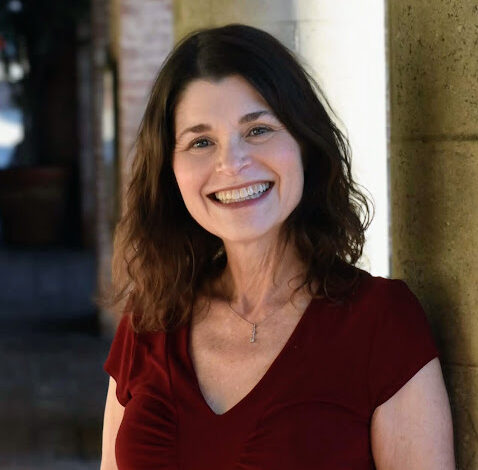
About Dr. Michelle Finkel

Dr. Michelle Finkel

Dr. Finkel is a graduate of Stanford University and Harvard Medical School. On completing her residency at Harvard, she was asked to stay on as faculty at Harvard Medical School and spent five years teaching at the world-renowned Massachusetts General Hospital. She was appointed to the Assistant Residency Director position for the Harvard Affiliated Emergency Medicine Residency where she reviewed countless applications, personal statements and resumes. Read more

Receive FREE Insider Medical Admissions Tips.

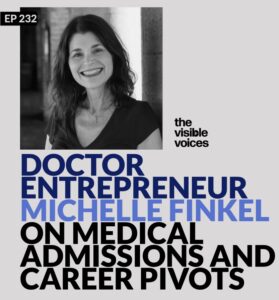
Listen to Dr. Finkel’s interview on The Visible Voices podcast: 


Listen to Dr. Finkel’s interview on the White Coat Investor podcast:

Listen to Dr. Finkel’s interview on the FeminEm podcast: