
Blog Archives

DO vs. MD

Thinking about a medical school application for 2018, I’ve had a few industrious pre-meds ask me about DO school. There was an excellent article in the New York Times a few years ago about what doctors of osteopathy do and how their admissions criteria are different from allopathic schools’. It’s here and worth a read.

The topic of DO schools is an enormous one. A few quick points many candidates don’t know about DOs:

1. Many doctors of osteopathy practice medicine just like allopathic doctors do. I do per diem emergency shifts at Kaiser and work with many DOs. Candidly, I usually do not know which colleagues have osteopathic degrees and which have allopathic ones unless I see a prescription blank or a signed computer note.

2. If applying to osteopathic school, candidates are generally better off with at least one (strong) letter of recommendation from a DO supervisor.

3. Osteopaths currently take the COMLEX for their board tests, instead of the USMLE. If an osteopathic medical student wants to enter an allopathic residency, s/he may need to take the USMLE in addition to the COMLEX. On the other hand, there are many allopathic residencies that accept the COMLEX. Also, there is talk that in the future (when exactly is unclear, however) there may be just one board test that both groups take.

4. The osteopathic Match occurs before the NRMP Match, a fact that can be difficult for osteopaths applying to both types of residencies. If those applicants are successful in the osteopathic Match, they cannot enter an allopathic residency. If, on the other hand, they wait and enter the NRMP Match, they run the risk of simply not matching.

Again, this topic is complicated and nuanced, but the DO option is a great one for some applicants.
Tags: , , ,

Some People Have Real Problems

The residency and medical school application processes are anxiety-provoking, but in honor of Thanksgiving, I’m posting this guest blog from CrispyDoc David Presser about a truly stressful, heartbreaking choice a patient recently had to make…

Years ago, I bought an album because the title caught my eye: Some People Have Real Problems. I was browsing used CDs in a music store back when both of those existed, and I felt the universe trying to restore perspective to my personal pity party.

Fast forward a decade, and I had fallen off the wagon again into whining doctor mode: headed into my second weekend night shift in as many days. The first night had been a killer, where the spigot of patients opened to a steady gush around 1 A.M. and all four of the late shift docs stayed several hours past the end of their shift to flush the proverbial toilet that our waiting room had become.
Tags: , ,

Emergency Medicine: Queen, Rodney Dangerfield, and George Clooney All Rolled into One

Check out the below, a great post called “We Are the Champions?!” written by Crispydoc (Dr. David Presser) on burnout in emergency medicine, a field that towers over the others in burnout statistics:

It’s official: a study published in the Mayo Clinic Proceedings showed that as of 2014, Emergency Medicine (EM) took the top slot for physician burnout (59%).  Suck it, critical care (50%). In your face, OB/GYN (56%).  We’re #1, we’re # …huh?

How did my beloved field of EM win the race to nowhere?  When I was in medical school, the pioneering faculty insisted that EM’s reputation for early burnout was based on the fact that those docs who’d burnt out had trained in another field, couldn’t hack it in their chosen specialties, and ended up woefully underprepared to spend their careers in EM.  As a medical student, I saw EM transform from Rodney Dangerfield disrespected to George Clooney sexy.  A full 13% of my class at UCSF matched in EM.  We smugly believed we knew what we were getting into, and we took for granted our ability to work as lifers.

Read more of this article (and see an awesome Queen video to boot)…
Tags: ,

I Believe

I was recently speaking to a friend who is a law professor at a prominent institution. He teaches first-year law courses and thus, meets students when they are just entering their careers and not yet polished. He was telling me that he is taken aback by how many of his students use “I believe” before their statements in class. The preface “I believe” diminishes the student’s point; my friend is looking for persuasive pronouncements, not thin opinions.

Consider this issue when interviewing. Note the difference between “I’ll make a strong medical student” and “I believe I’ll make a strong medical student.” The latter introduces that inkling of doubt you don’t want to impart.

I have advisees who worry about saying “um” or “uh” during interviews. (I advised a pre-med who, in preparing for interviews, asked his girlfriend to gently slap his hand every time he said “um” so he’d experience negative consequences. Yikes!) As I tell my mentees, I’m not worried about an “um” or an “uh.” (Note President Obama, well-known to be an excellent orator; he inadvertently uses vocal pauses when he speaks.)

Instead, the key to a persuasive interview is to have confident responses that are bolstered by persuasive evidence.

Tags: , ,

What Is the One Thing You’ve Learned…?

I was with my children at a four year-old’s birthday party a few years ago when I met the grandfather of the birthday-boy. As it turned out, before retiring, the man had been on the admissions committee of a prestigious medical school for decades.

So, I asked him, “Looking back at all of those years of experience, what is the one thing you learned from interviewing medical students?”

The man chuckled and said, “They have no idea what they’re getting themselves into.”

In life, we never have any idea what we’re getting ourselves into, but I think of this man every time I practice the question “What will you like least about being a doctor” or “…least about being a [insert your medical specialty here]” with my medical school and residency mentees, respectively. Saying you’ll love everything about being a physician or psychiatrist or pediatrician or internist sounds disingenuous and naive. You need to show that you have some idea what you’re getting yourself into.

Having said that, I would avoid tacky topics like money. And talking about how horrible night shifts are is not going to win you many points. But a sophisticated applicant can infer what the challenges will be in medicine or in her specialty and can express them with aplomb.

…As with everything, practice your answer in advance.

Tags: , ,

About Dr. Michelle Finkel

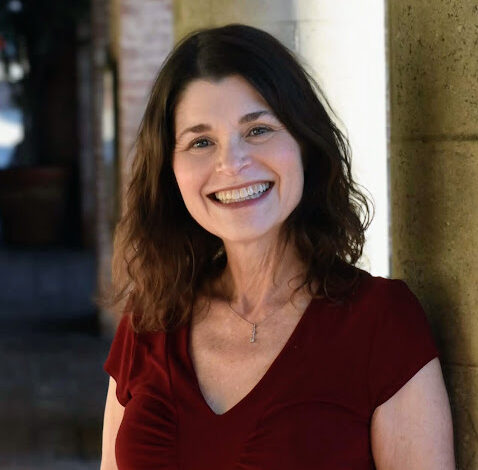
Dr. Michelle Finkel

Dr. Finkel is a graduate of Stanford University and Harvard Medical School. On completing her residency at Harvard, she was asked to stay on as faculty at Harvard Medical School and spent five years teaching at the world-renowned Massachusetts General Hospital. She was appointed to the Assistant Residency Director position for the Harvard Affiliated Emergency Medicine Residency where she reviewed countless applications, personal statements and resumes. Read more

Receive FREE Insider Medical Admissions Tips.

Listen to Dr. Finkel’s interview on The Visible Voices podcast: 


Listen to Dr. Finkel’s interview on the White Coat Investor podcast:

Listen to Dr. Finkel’s interview on the FeminEm podcast: