
Blog Archives

ERAS 2018 Timeline: Don’t Lose the Forest for the Trees

As many of you well know, September 6 was the date that candidates could start applying to ACGME-accredited residency programs (and September 15 will be the date that ACGME-accredited residency programs start receiving applications). I am a big fan of getting your ERAS in on the early side: It demonstrates commitment, and when I was reviewing applications as an Assistant Residency Director, I found my workload was lighter earlier, allowing me more time to spend on those initial applications.

Having said that, do not over focus on an early application such that your written materials are suboptimal. Every year I encounter panicked candidates who want to submit their poorly written documents simply to get them in, shooting themselves in the proverbial foot.

Find a balance. Yes, submitting early is wise, but not at the expense of your candidacy’s success.
Tags: , ,

Medical School Interview Questions: How to Handle the Illegal Ones

In the United States, a professional interview is subject to basic legal rules. Specifically, admissions officers should refrain from asking medical school interview questions that are not relevant to the position the interviewee is seeking. Questions about race, religion, sexual orientation, and marital or family status fall into this category.

If you are asked these types of questions, you can simply answer – if it’s not distasteful to you – or respond by addressing the intent of the question without revealing personal information. (“I think you’re asking if my home life will affect my ability to carry out my medical school studies or my clinical duties. I can assure you it won’t, and I’ll complete my full tenure here at your school.”)

If you have the opportunity to give feedback to the institution about your medical school interview questions or experience, you can consider doing so after the interview. When I was interviewing for residency, I was asked by a faculty member if I had a boyfriend. After the interview day, I talked to a faculty mentor at my school who reported the situation to the other institution. The faculty member who asked me the illegal question was no longer permitted to interview.

Tags: , ,

How to Draft a Strategic Residency Personal Statement

Each year residency applicants ask me if they need to showcase their accomplishments in their residency personal statements if they’ve already drafted strong ERAS activities sections. The simple answer is yes.

First, remember that you don’t know at what part of your application the readers will be starting. If a residency director peruses your personal statement first and it’s thin and boring, you’ll have lost that reader from the beginning.

Also, note that the faculty members seeing your application are reading many more ERASes than just yours. If you only mention an important achievement once in your application, the program director might simply forget your accomplishment. After all, s/he is reading hundreds of similar applications. Your readers need to be reminded several times of your candidacy’s strengths. (You’ll mention those accomplishments again in your interviews.)

To a program director who hasn’t yet met you, you are what you’ve done. You need to use substantive examples of your achievements to demonstrate your worthiness for a potential residency position. Evidence is persuasive; use it!

Tags: , ,

Looking for a Laugh?

Over a decade ago the American College of Emergency Physicians solicited its members to submit a true story to the television show “Untold Stories of the ER.” Lo and behold, my story was chosen, and my husband and I were invited to act in a fictionalized rendition of my tale. If you’re interested in seeing it, check out Netflix’s “Untold Stories” episode 17.

Enjoy!

Tags: , ,

Inaccuracies in Medical Student Grades Translate into Residency Application Strategy

Here’s an interesting article by Dr. Pauline Chen on medical student grades. In reading the article, residency applicants should reflect on how important the content of their letters of recommendation is, especially in the setting of medical school grades that may be inflated or simply inaccurate. The 2016 NRMP Program Director Survey supports the importance of letters, as well, with statistics. Make sure your letters are very strong; remember that mediocre letters should not be a part of your residency package.

Tags: , ,

About Dr. Michelle Finkel

Dr. Michelle Finkel

Dr. Finkel is a graduate of Stanford University and Harvard Medical School. On completing her residency at Harvard, she was asked to stay on as faculty at Harvard Medical School and spent five years teaching at the world-renowned Massachusetts General Hospital. She was appointed to the Assistant Residency Director position for the Harvard Affiliated Emergency Medicine Residency where she reviewed countless applications, personal statements and resumes. Read more

Receive FREE Insider Medical Admissions Tips.

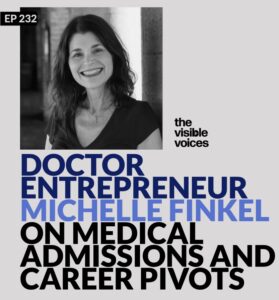
Listen to Dr. Finkel’s interview on The Visible Voices podcast: 


Listen to Dr. Finkel’s interview on the White Coat Investor podcast:

Listen to Dr. Finkel’s interview on the FeminEm podcast: