Blog Archives

Get y’ERAS in Gear

On September 4 (two plus weeks from today) at 9 am EST residency applicants may begin submitting MyERAS® applications to programs. Residency candidates often ask me about the timing of ERAS submissions. These are my thoughts:

1. Yes, getting your ERAS in early helps. As one of my program director friends wrote to me, since the residency application is arguably one of the biggest steps in one’s medical career, getting the application in as early as possible should be a given.

2. On the other hand, if your application is not in its best shape, waiting a few days is preferable to submitting a suboptimal ERAS that will be tossed into the “do not invite” pile. Having said that, you still have 16 days to get your written materials in tip top shape, so there’s no need to plan for a late submission :).

Contact me ASAP for help with your residency application.

Tags: , , ,

The Ins and Outs of Choosing a Specialty: The Generalist vs. The Early Committer

For many third-year med students, this is a challenging time of year. Preparing an ERAS can be daunting, but it’s even worse if you don’t know what specialty you want to practice. Here’s a short piece I wrote with my colleague David Presser MD MPH called “Choosing a Specialty: The Generalist vs. The Early Committer.” And here’s a complementary, but non-medical, New York Times article called “You Don’t Want a Child Prodigy” that’s a great follow up to our piece. 

Tags: , , ,

AAMC Report on Residents 2021

The AAMC recently published their Report on Residents 2021. Of note,

  • The percentage of medical residents who identify as Black or African American and as Hispanic, Latino, or of Spanish origin has increased since last year.
  • Women make up the vast majority in obstetrics and gynecology (85.2%) and pediatrics (72.7%).
  • Only 27.0% of the 2020-21 graduates intended to train in the specialties they had listed as their preference when they began medical school.
  • The majority of medical residents (57.1%) who completed residency training from 2011 through 2020 practice in the state where they completed their residencies.
  • In a tip of the hat to my favorite state, physician retention after medical residency is highest in California (77.8%).

There are more goodies; the information is summed up in this table.

Tags: , , ,

ERAS Announces Candidates Can Submit their ERASes without penalty through September 29 at 9am EST

Last week ERAS Communications sent out a notice to candidates that while applicants may certify and submit their MyERASes as early as Wednesday, September 1 at 9 am EST,  applications submitted on or before September 29 at 9 am EST will display an application date of “September 29” to programs. (Applications submitted after September 29 will display the actual application date.) This means that there is no penalty for candidates to wait to submit their applications until the 29th at 9 am EST. This date is considerably later than recent past years.

This is great news for applicants who are still working on their written materials. Use the time to make sure yours are in the best shape possible.

Tags: , , ,

Something You Probably Haven’t Considered Could Have a Huge Impact on Your Professional Happiness

A recent article in Emergency Medicine News caught my eye. Emergency physician Dr. Tom Belanger conducted a small study (n=573) in which he crafted a nine-question Likert scale survey and then attempted to predict emergency physicians’ employment structures based on respondents’ answers. He used statements like “I am paid fairly,” “I am secure in my career,” and “Emergency medicine is a good career” in his survey.

In medical school and residency, I thought little about employment structure, which can include democratic, hospital employee, contract management, independent or locums, academic, resident, or government systems. As a student, I was so focused on what specialty I would choose and was so influenced by the academicians I worked with that I didn’t even consider that I could choose a field in which I might be happy in one employment structure and discontent in another. 

Belanger found that employees of contract management groups (CMGs) tended to be the most negative respondents, and owners of CMGs were not far behind. On the other hand, owners of democratic groups were the most positive in almost every aspect. 

In this study, all respondents were in the same specialty and yet, employment structure divided respondents with regard to their career satisfaction. Belanger’s graphs are worth viewing in his piece, but the take-home point for medical students and residents is the importance of the employment structure in which you ultimately work, a topic that may not have even crossed your mind until now. 

Tags: , , ,

About Dr. Michelle Finkel

Dr. Michelle Finkel

Dr. Finkel is a graduate of Stanford University and Harvard Medical School. On completing her residency at Harvard, she was asked to stay on as faculty at Harvard Medical School and spent five years teaching at the world-renowned Massachusetts General Hospital. She was appointed to the Assistant Residency Director position for the Harvard Affiliated Emergency Medicine Residency where she reviewed countless applications, personal statements and resumes. Read more

Receive FREE Insider Medical Admissions Tips.

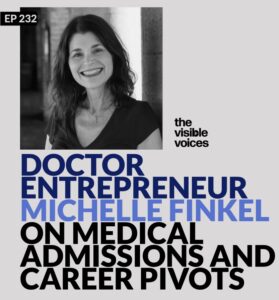
Listen to Dr. Finkel’s interview on The Visible Voices podcast: 


Listen to Dr. Finkel’s interview on the White Coat Investor podcast:

Listen to Dr. Finkel’s interview on the FeminEm podcast: