
Blog Archives

Medical School Interview Questions: How to Handle the Illegal Ones

In the United States, a professional interview is subject to basic legal rules. Specifically, admissions officers should refrain from asking medical school interview questions that are not relevant to the position the interviewee is seeking. Questions about race, religion, sexual orientation, and marital or family status fall into this category.

If you are asked these types of questions, you can simply answer – if it’s not distasteful to you – or respond by addressing the intent of the question without revealing personal information. (“I think you’re asking if my home life will affect my ability to carry out my medical school studies or my clinical duties. I can assure you it won’t, and I’ll complete my full tenure here at your school.”)

If you have the opportunity to give feedback to the institution about your medical school interview questions or experience, you can consider doing so after the interview. When I was interviewing for residency, I was asked by a faculty member if I had a boyfriend. After the interview day, I talked to a faculty mentor at my school who reported the situation to the other institution. The faculty member who asked me the illegal question was no longer permitted to interview.

Tags: , ,

Ten AMCAS Mistakes You Absolutely Want to Avoid

Here’s a quick and dirty list of AMCAS Work and Activities section errors to avoid at all costs:

1. Don’t write to write, and don’t fill to the maximum character count unless necessary. While you want to include many strong achievements, you do not want your AMCAS to be so wordy that your reader is tempted to skim.

2. While you need to be brief, don’t write in phrases; use full sentences. It’s a formal application, and you want to make your written materials as readable as possible.

3. Don’t assume your reader will carefully study the “header” section (including the title of the activity, hours, etc.). Make sure your descriptor could stand alone: Instead of “As an assistant, I conducted experiments…” use “As a research assistant at a Stanford Medical School neuroscience lab, I conducted experiments…”

4. Don’t be vague or trite. Make sure you spell out your accomplishments clearly and substantively. If your reader doesn’t understand an activity, you will not get “full credit” for what you’ve done. Make no assumptions.

5. Avoid abbreviations. Again, you want to be formal, and abbreviations you think are common might not be familiar to the reader.

6. Write about yourself and your role – not an organization. For example, don’t use the space to discuss Doctors without Borders. Use it to discuss the specifics of your role at Doctors without Borders.

7. Avoid generalities and consider using numbers to be persuasive. Saying that the conference you organized had 300 participants says it all.

8. Don’t merge the descriptors with the most meaningful paragraphs because they are separate sections: You can complete descriptors for up to 15 activities with up to 700 characters each plus up to three most meaningful paragraphs of up to 1325 characters each.

9. Unless your PI won the Nobel, avoid using supervisors’ and/or doctors’ names in your descriptors as they will be meaningless to the majority of your readers.

10. Get help. Do not submit your medical school application without having it reviewed. You do not want to showcase suboptimal materials for a process that is this important and competitive.

Tags: , ,

Ten Ways to Improve your Medical School Application

Please check out my latest Student Doctor Network article here. Enjoy!

Tags: , ,

The Residency and Medical School Application: Moving Past Impostor Syndrome

First described by psychologists Drs. Suzanne Imes and Pauline Rose Clance in the 1970s, impostor phenomenon occurs among high achievers who cannot easily internalize their successes. They often externally attribute their accomplishments to luck and worry that others will eventually realize they are frauds.

Recognize this phenomenon of self-doubt?

You are not alone. Although many people suffer in silence (as they do not want to be revealed for what they perceive to be major deficiencies), the syndrome is quite common, especially in medical school. According to one 2016 study, almost a quarter of male medical students and nearly half of female students surveyed suffered with impostor syndrome. The phenomenon can be associated with depression, burn out, and anxiety.

The American Psychological Association offers a few tips for overcoming impostor syndrome including speaking to mentors, recognizing what you excel at, and talking to a professional if necessary.

Tags: ,

Your Residency or Medical School Application: More on the Squeaky Wheel

Please see my previous blog entry about contacting institutions regarding your status. When you call you can gently say, “I’m attempting to make some travel arrangements and was wondering if you could give me an update on my status.” As long as you are polite, you won’t hurt your candidacy. (Of course, if an institution specifically requests on their website or brochures that you not call, I would advise against it.)

Tags: , ,

About Dr. Michelle Finkel

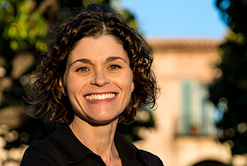
Dr. Michelle Finkel

Dr. Finkel is a graduate of Stanford University and Harvard Medical School. On completing her residency at Harvard, she was asked to stay on as faculty at Harvard Medical School and spent five years teaching at the world-renowned Massachusetts General Hospital. She was appointed to the Assistant Residency Director position for the Harvard Affiliated Emergency Medicine Residency where she reviewed countless applications, personal statements and resumes. Read more

Receive FREE Insider Medical Admissions Tips.

Listen to Dr. Finkel’s interview on the White Coat Investor podcast:

Listen to Dr. Finkel’s interview on the FeminEm podcast: