
Blog Archives

Ten AMCAS Mistakes You Absolutely Want to Avoid

Here’s a quick and dirty list of AMCAS Work and Activities section errors to avoid at all costs:

1. Don’t write to write, and don’t fill to the maximum character count unless necessary. While you want to include many strong achievements, you do not want your AMCAS to be so wordy that your reader is tempted to skim.

2. While you need to be brief, don’t write in phrases; use full sentences. It’s a formal application, and you want to make your written materials as readable as possible.

3. Don’t assume your reader will carefully study the “header” section (including the title of the activity, hours, etc.). Make sure your descriptor could stand alone: Instead of “As an assistant, I conducted experiments…” use “As a research assistant at a Stanford Medical School neuroscience lab, I conducted experiments…”

4. Don’t be vague or trite. Make sure you spell out your accomplishments clearly and substantively. If your reader doesn’t understand an activity, you will not get “full credit” for what you’ve done. Make no assumptions.

5. Avoid abbreviations. Again, you want to be formal, and abbreviations you think are common might not be familiar to the reader.

6. Write about yourself and your role – not an organization. For example, don’t use the space to discuss Doctors without Borders. Use it to discuss the specifics of your role at Doctors without Borders.

7. Avoid generalities and consider using numbers to be persuasive. Saying that the conference you organized had 300 participants says it all.

8. Don’t merge the descriptors with the most meaningful paragraphs because they are separate sections: You can complete descriptors for up to 15 activities with up to 700 characters each plus up to three most meaningful paragraphs of up to 1325 characters each.

9. Unless your PI won the Nobel, avoid using supervisors’ and/or doctors’ names in your descriptors as they will be meaningless to the majority of your readers.

10. Choose the right category for each activity, so you get “full credit.”

Bonus: Get help. Do not submit your medical school application without having it reviewed by someone with experience. You do not want to showcase suboptimal materials for a process that is this important and competitive.
 

Tags: , , ,

Pared to the Bone

I heard a great Fresh Air interview of Siddhartha Mukherjee, who was a lovely acquaintance of mine at Harvard and who has since won the Pulitzer Prize for his book The Emperor of All Maladies. Sid is a hematologist/oncologist clinician/scientist who has a new book out called The Song of the Cell. 

Terry Gross asked Sid how he successfully writes for both the scientific community through his journal articles and for lay people through his books – two different skill sets. Sid responded by explaining the importance – for any genre – of crafting manuscripts that are “pared to the bone,” meaning they avoid verbiage. His recommendation was excellent advice for any writer, even one who is crafting a personal statement. Take a listen to the full interview with Dr. Mukherjee here

Tags: , , ,

Expert Writing Tips

With AMCAS’ submission open date fast approaching (on May 27), I thought I might lower the boiling point a little by offering an amusing group of writing tips based on the wit of the late author William Safire and copywriter Frank LaPosta Visco. Enjoy!

A writer must not shift your point of view.
Always pick on the correct idiom.
Analogies in writing are like feathers on a snake.
Always be sure to finish what
Avoid alliteration. Always.
Avoid archaeic spellings.
Avoid clichés like the plague. (They’re old hat.)
Avoid trendy locutions that sound flaky.
Be more or less specific.
Comparisons are as bad as clichés.
Contractions aren’t necessary.
Do not use hyperbole; not one in a million can do it effectively.
Don’t indulge in sesquipedalian lexicological constructions.
Don’t never use no double negatives.
Don’t overuse exclamation marks!!
Don’t repeat yourself, or say again what you have said before.
Don’t use commas, that, are not, necessary.
Don’t be redundant; don’t use more words than necessary; it’s highly superfluous.
Eliminate quotations. As Ralph Waldo Emerson once said, “I hate quotations. Tell me what you know.”
Employ the vernacular.
Eschew ampersands & abbreviations, etc.
Eschew obfuscation.
Even if a mixed metaphor sings, it should be derailed.
Everyone should be careful to use a singular pronoun with singular nouns in their writing.
Exaggeration is a billion times worse than understatement.
Foreign words and phrases are not apropos.
Go around the barn at high noon to avoid colloquialisms.
Hopefully, you will use words correctly, irregardless of how others use them.
If any word is improper at the end of a sentence, a linking verb is.
If you reread your work, you can find on rereading a great deal of repetition can be avoided by rereading and editing.
It behooves you to avoid archaic expressions.
It is wrong to ever split an infinitive.
Never use a big word when a diminutive alternative would suffice.
No sentence fragments.
One should never generalize.
One-word sentences? Eliminate.
Parenthetical remarks (however relevant) are unnecessary.
Parenthetical words however must be enclosed in commas.
Place pronouns as close as possible, especially in long sentences, as of ten or more words, to their antecedents.
Placing a comma between subject and predicate, is not correct.
Proofread carefully to see if you any words out.
Prepositions are not words to end sentences with.
Profanity sucks.
Subject and verb always has to agree.
Take the bull by the hand and avoid mixing metaphors.
The adverb always follows the verb.
The passive voice is to be avoided.
Understatement is always best.
Use the apostrophe in it’s proper place and omit it when its not needed.
Use youre spell chekker to avoid mispeling and to catch typograhpical errers.
Who needs rhetorical questions?
Writing carefully, dangling participles must be avoided.

Tags: , , ,

What Makes New Yorker Articles So Good?

I have a dear medical school friend who gifts my family the New Yorker every year at the holidays. The New Yorker is one of the best Chanukah presents we receive, and we get to appreciate it weekly, which makes it even better than the usual candy and fruit baskets. What makes New Yorker writing so good is that the journalists offer facts and then let the reader make his/her own assessments. A subject’s own words or the description of his/her home office or clothes or even gait tells it all. There is no need for convincing.

Currently, as I’m editing medical school essays, I’m reminding my clients of the importance of that principle in writing a strong personal statement. To an admissions reader who hasn’t yet met you, you are what you’ve done. It’s the facts that matter. You need to use substantive examples of your achievements to demonstrate your worthiness for a potential medical school position. Evidence is persuasive; use it!

Tags: , , ,

Accomplished, Not Lovely

A few years back I went to hear the author Nicole Krauss speak about her novel Forest Dark. I am a big fan of Krauss’ writing (especially the History of Love in case you are looking for something wonderful to read). The day I heard the author speak, she had published an opinion piece in the NYT Sunday Magazine called “Do Women Get to Write with Authority?” In the article, Krauss speaks about the lack of authority that women writers have compared to men, and specifically, how female artists’ work is often characterized as “lovely,” a word she describes as lacking in “independent power.”

I must admit that I sometimes use the word “lovely” (both for women and men) when I like someone. But Krauss made me think about the word in the context of achievement – not personality – and her point is well-taken.

What does this have to do with medical school and residency admissions? When you interview, you want the faculty member to leave the table saying you were “accomplished,” not “lovely.” Many applicants miss this point: You don’t want to simply be liked; you want to be seen as worthy. It’s important that you focus on that important goal as you practice for interviews.

Tags: , , ,

About Dr. Michelle Finkel

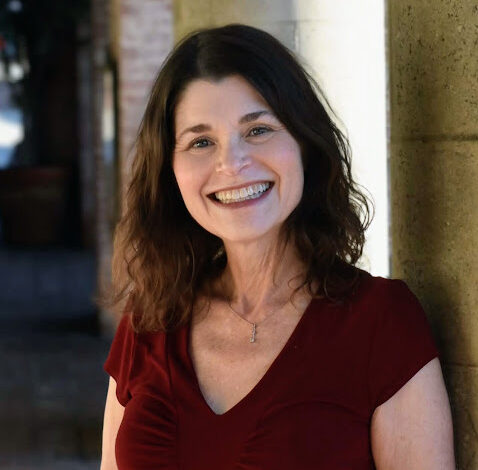
Dr. Michelle Finkel

Dr. Finkel is a graduate of Stanford University and Harvard Medical School. On completing her residency at Harvard, she was asked to stay on as faculty at Harvard Medical School and spent five years teaching at the world-renowned Massachusetts General Hospital. She was appointed to the Assistant Residency Director position for the Harvard Affiliated Emergency Medicine Residency where she reviewed countless applications, personal statements and resumes. Read more

Receive FREE Insider Medical Admissions Tips.

Listen to Dr. Finkel’s interview on the White Coat Investor podcast:

Listen to Dr. Finkel’s interview on the FeminEm podcast: