
A Great Opportunity: American Association for the Advancement of Science (AAAS) Science News Writer Internship

Looking for something different to do this spring and summer? The American Association for the Advancement of Science (AAAS) is offering a paid six-month internship (April through September) with Science Magazine in Washington, D.C.

As some of you know, I was an AAAS Mass Media Fellow in 1995. The program was truly fantastic and life-altering.

In terms of qualifications for the Science News Writer Internship, applicants need to have completed their undergraduate education or be in their senior year of college. They should have interest (and preferably experience) in writing about science for lay people. According to the AAAS, preference will be given to candidates who have published science journalism articles, worked at other science news publications, and/or completed a journalism or science writing program.

The AAAS suggests you visit their job information website to get more information. Applications are due by January 2nd, so get moving!

Tags: , ,

Your Residency Application: What Do Program Directors Really Want?

If you were a program director (PD), you’d be trying to avoid two big headaches as you assessed a residency candidate:

1) Will this person be competent and collegial? A PD does not want to get complaints from patients, faculty, or other services about his/her residents.

2) Will this person leave the program prematurely? A PD does not want to scurry around to fill an open call schedule/ residency slot.

As you approach your interviews, consider how you can demonstrate your competence and collegiality, as well as your commitment to the field and the residency program. For the former, ensure you showcase academic successes, extra curricular activities that demonstrate teamwork, and – if asked – hobbies and reading materials that demonstrate your personality. For the latter, highlight research projects in the specialty, sub-internships, and knowledge about the program and city.

Making sure the PD knows you are not going to cause him/her headaches is half the battle.

Tags: , ,

The Residency and Medical School Application: Moving Past Impostor Syndrome

First described by psychologists Drs. Suzanne Imes and Pauline Rose Clance in the 1970s, impostor phenomenon occurs among high achievers who cannot easily internalize their successes. They often externally attribute their accomplishments to luck and worry that others will eventually realize they are frauds.

Recognize this phenomenon of self-doubt?

You are not alone. Although many people suffer in silence (as they do not want to be revealed for what they perceive to be major deficiencies), the syndrome is quite common, especially in medical school. According to one 2016 study, almost a quarter of male medical students and nearly half of female students surveyed suffered with impostor syndrome. The phenomenon can be associated with depression, burn out, and anxiety.

The American Psychological Association offers a few tips for overcoming impostor syndrome including speaking to mentors, recognizing what you excel at, and talking to a professional if necessary.

Tags: ,

Finding Balance

This time of year, when the residency and medical school interview processes are in full swing, many of us feel overwhelmed. Here’s a brief but thoughtful piece regarding balance. As you consider your future career, it’s worth thinking about issues the author covers like clarifying what makes you happy and defining balance. In this day and age, one can choose a traditionally tough specialty but work in a practice setting that allows for some autonomy and flexibility. But you need to know what you want to guide yourself in the right direction.

Tags: , ,

Your Medical School or Residency Application: What is a Letter of Interest/Intent?

A letter of interest or intent (LOI) is a supplemental note applicants write to medical schools, residencies, and other medical programs to let faculty know of their enthusiasm for an institution and the distinctiveness of their candidacies. LOIs can be written early in an effort to obtain an interview, after the interview to show enthusiasm and to remind the faculty of the candidate’s worthiness, or after a wait list notification (for medical and dental students who don’t participate in the Match).

The letter should be written in a timely fashion. In other words, there’s no reason for a residency applicant to write a letter of intent in late February. The letter should avoid restating the strengths of the institution. Instead the applicant should express his/her interest and then move onto his/her strengths. An LOI should be a page or less.

Please note that some schools and residency programs do not allow post-interview contact, in which case an LOI is not recommended.

For help writing a professional, expert LOI, hire me here.

Tags: , ,

About Dr. Michelle Finkel

Dr. Michelle Finkel

Dr. Finkel is a graduate of Stanford University and Harvard Medical School. On completing her residency at Harvard, she was asked to stay on as faculty at Harvard Medical School and spent five years teaching at the world-renowned Massachusetts General Hospital. She was appointed to the Assistant Residency Director position for the Harvard Affiliated Emergency Medicine Residency where she reviewed countless applications, personal statements and resumes. Read more

Receive FREE Insider Medical Admissions Tips.

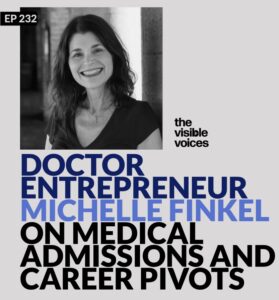
Listen to Dr. Finkel’s interview on The Visible Voices podcast: 


Listen to Dr. Finkel’s interview on the White Coat Investor podcast:

Listen to Dr. Finkel’s interview on the FeminEm podcast: