


Please check out my latest Student Doctor Network article here. Enjoy!
Thank You Notes
Clients ask me what’s the best way to send post-interview thank you notes – email versus snail mail. I advise the latter, sending hand-written notes. Email can be viewed as less labor-intensive or thoughtful.
You can still get the notes in quickly: Put them in the mail the morning after you’ve completed your interview. Some applicants even bring blank thank you notes to the interview day, complete the cards after their interviews, and leave them with the program coordinator.
Your thank you notes should be written on plain cards and sent to every faculty member you conversed with one-on-one. If the residency coordinator helped you with a difficult scheduling issue, for example, writing to him/her would be wise too. Within reason and if written cordially, a thank you note cannot hurt you (unless you have been expressly asked not to communicate after the interview day).
Consider them low-hanging fruit.
Check Yourself Before you Wreck Yourself: Your Residency Application
As we approach the time to submit your rank order list, it’s imperative that you understand how to organize your list.
Don’t try to outsmart the algorithm by putting programs with more residency slots higher on your list or by prioritizing those that have given you good feedback over those that haven’t. None of those factors is relevant in creating your rank order list, and you will harm your chances if you pursue those strategies!
Your first choice should be first. Second should be second, etc.
Take a look at this under-one-minute Guru on the Go video for further clarification.
Your Residency Application: What to Do if You Receive No or Few Interview Invitations?
1. Don’t panic.
2. Try contacting – in a professional manner – all institutions to which you have sent your ERAS. You can send an email and call. When you call, be calm, respectful, and enthusiastic. Do not demand to speak to the program director. Let the person who answers the phone know that you are very interested in the program and would appreciate the opportunity to interview. Offer to be on an interview wait list if necessary.
3. Prepare for the Supplemental Offer and Acceptance Program (SOAP). Note that SOAP is not a separate program from the residency Match. So a) your main residency Match user status must be active and b) your credentials must be verified by the Rank Order List Deadline in order to participate in SOAP. Here is more information on SOAP.
4. Make a plan for what you will do if the Match and SOAP don’t work out for you. What will you do next year? How will you improve your written materials, interview skills, and overall candidacy? If heaven forbid, you do not have success in either the Match or SOAP, please consider getting help from me or someone else who is experienced. The sooner the better to improve a candidacy and prepare for a re-application.
Tags: Interview Tips, Residency Application, SOAP
Understanding How the Match Works is Critical for Succeeding in the Process
Improving written materials and interview skills is important, but all of that work can go to waste if applicants do not understand basic strategies for the Match. In November of last year the NRMP published an article called, “Understanding the Interview and Ranking Behaviors of Unmatched International Medical Students and Graduates in the 2013 Main Residency Match” in the Journal of Graduate Medical Education. The data is especially important for IMGs who represented the majority of unmatched candidates.
Sadly, the authors found that some applicants made strategic errors including the below:
– Not attending all interviews, thus failing to capitalize on every opportunity to market themselves.
– Declining to rank all programs at which they interviewed or not ranking all programs they would be willing to attend.
– Misunderstanding the Match and ranking programs at which applicants did not interview.
– Failing to rank programs based on true preferences or ranking programs based on the perceived likelihood of matching.
It kills me to read about these mistakes :(. If you do not understand how the Match works, it is absolutely critical that you learn about it to avoid destructive errors.
Tags: Medical School Match, Mistakes, tips

Dr. Finkel is a graduate of Stanford University and Harvard Medical School. On completing her residency at Harvard, she was asked to stay on as faculty at Harvard Medical School and spent five years teaching at the world-renowned Massachusetts General Hospital. She was appointed to the Assistant Residency Director position for the Harvard Affiliated Emergency Medicine Residency where she reviewed countless applications, personal statements and resumes. Read more
Listen to Dr. Finkel’s interview on The Visible Voices podcast:
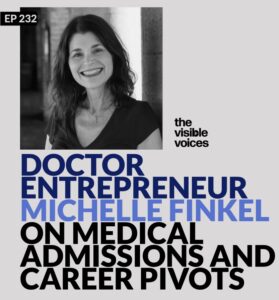
Listen to Dr. Finkel’s interview on the White Coat Investor podcast:
Listen to Dr. Finkel’s interview on the FeminEm podcast:
