


This fun piece from the Harvard Medical School (HMS) alumni magazine is worth a read. The article, “Stress Fractures” by Dr. Jules Dienstag, a member of the HMS Admissions Committee, briefly chronicles a history of the “stress” interview at HMS, specifically whether a well-known professor Dr. Daniel H. Funkenstein used the dubious tactic. The famous nailed-shut window story is explored.
ERAS Help and Scheduling
Just a reminder that U.S. medical students can already register for MyERAS and can start inputting their application materials. IMGs must wait until June 21 for their tokens and then they, too, can register. Both groups can “assign” their documents early September, which means that at that time they can start sending their completed applications to ACGME-accredited residencies.
DO candidates for AOA-accredited residencies have a somewhat accelerated cycle.
No matter what camp you are in, please start working on your materials early. Good writing takes a lot of time, and that mad rush at the end is never strategic.
How to Navigate the Residency Personal Statement when You’re Applying for a Preliminary Year
 Candidates who apply to certain fields – dermatology, ophthalmology, etc. – need a preliminary or transitional year of residency before initiating their specialty training. So does that mean those applicants need to toil over two personal statements?
No, thankfully. It’s very appropriate (and strategic) to use the same essay with modifications. Ensure you explicitly address why a prelim year will advance the rest of your career and how you will contribute to the training program as a future specialist.
When you use a very similar essay, you can be honest about what your professional goals are. After all, the reader knows you’re applying for a one-year position anyway.
Remember that many preliminary/transitional year programs are eager to match residents who are moving onto competitive fields. In general, those applicants will have strong USMLE scores, evaluations, and clinical skills.
Medical School Help: What are the Next Steps Once the AMCAS is In?
 Once you’ve submitted your AMCAS, what can you do next to best prepare for what’s to come in the medical school admissions process?
Here are a few tips:
1. Start to draft secondary essays. Even if you haven’t yet received the prompts, you can begin to craft responses to common themes like “how would you add diversity to our school?” and “describe an extracurricular activity that might be of interest to the committee.” Good writing takes time, but if you wait for the onslaught of secondary applications, you won’t be able to impart your essays with your highest quality effort.
2. Get a head start on preparing for the medical school interview. Practice, practice, practice. Start mocking up answers to interview questions so that you distinguish yourself.
3. Consider what you want. Do some soul searching to determine what you are really seeking geographically, philosophically, and educationally. You want to make considered decisions when the time comes.
AMCAS tips
On June 7, you can submit your AMCAS. In preparation for that rapidly upcoming date, here are a few quick tips for writing your AMCAS activities:
1. Use full sentences. It’s a formal application, and you want to make your written materials as readable as possible.
2. Avoid abbreviations. Again, you want to be formal, and abbreviations you think are common might not be familiar to the reader.
3. Make sure you spell out your accomplishments clearly. If your reader doesn’t understand an activity, you will not get “full credit” for what you’ve done.
4. Choose “most meaningful” activities that show a breadth of experience, e.g. one that is related to research, another that is clinical, and a final that is volunteer.
5. Write about yourself and your role – not an organization. For example, don’t use the space to discuss Habitat for Humanity. Use it to discuss the specifics of your role at Habitat for Humanity.
6. Use numbers to be persuasive. Saying that the conference you organized had 300 participants says it all.
7. Get help. Do not submit your application without having it reviewed. Don’t submit suboptimal materials for a process that is this important and competitive.
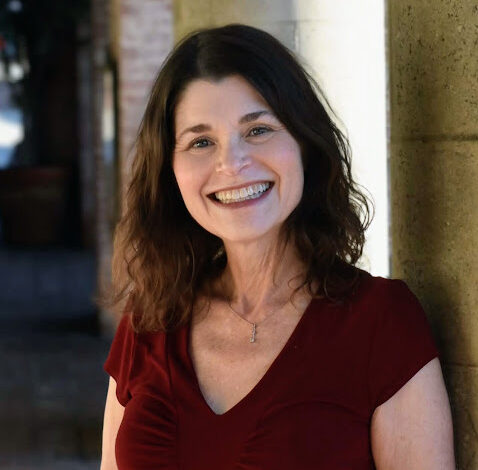
Dr. Finkel is a graduate of Stanford University and Harvard Medical School. On completing her residency at Harvard, she was asked to stay on as faculty at Harvard Medical School and spent five years teaching at the world-renowned Massachusetts General Hospital. She was appointed to the Assistant Residency Director position for the Harvard Affiliated Emergency Medicine Residency where she reviewed countless applications, personal statements and resumes. Read more
Listen to Dr. Finkel’s interview on The Visible Voices podcast:
Listen to Dr. Finkel’s interview on the White Coat Investor podcast:
Listen to Dr. Finkel’s interview on the FeminEm podcast:
