
The Medical Residency Interview: What if You Haven’t Received an Invitation?

Once your ERAS has been submitted, getting into residency kicks into high gear with the interview season. But what if you’ve completed your residency application and yet haven’t been invited to interview?

First of all, realize that residency admissions have become increasingly competitive of late. This is especially true for “lifestyle” specialties like Radiology, Opthalmology, Anesthesia and Dermatology (often termed the “ROAD”). The number of applicants in those fields and others is generally increasing, as the number of medical students continues to increase. Thus, the lack of an invite may just represent overloaded admissions offices. Read more ›

Tags: , , , , , , , , , ,

Nursing Home Life for Medical Students

There’s a charming article in the NYT on University of New England medical students who temporarily live in a nursing home to experience what their patients do. About three-quarters down the first page there are statistics on geriatric fellowships. (Please see my other blog entry on this topic.) Geriatrics is a field that has traditionally been unpopular; but I think that will change as the population continues to age.

Contact me now for help with your fellowship application.

Tags:

Appropriate Letters of Recommendation

For residency applicants, remember that beyond getting strong letters of recommendation, you want to get appropriate ones. You need at the very least one letter in your field and other letters from associated specialties; a psychiatry letter for a general surgery residency is going to be almost worthless.

For help with your residency application please contact me as soon as possible.

Tags:

Personal Statement for the Preliminary Year

Candidates who apply to certain fields – Radiology, Dermatology, in some case Emergency Medicine – need a preliminary year of training before initiating their specialty residency. I’ve been asked about submitting the same personal statement for both the desired specialty and the prelim year.

It is appropriate to use the same essay with modifications. Ensure you explicitly address why a prelim year in – let’s say Internal Medicine – will advance the rest of your career. Of course, you can be honest about what your professional goals are; the reader knows you are applying for a one -year position, but it is important to include a paragraph that focuses on how the prelim program will help you.

The season is in full swing. Contact me asap if you would like editing services.

Tags:

The Medical Residency Interview: Mistakes to Avoid

Once your ERAS has been submitted, your residency admission pivots on your interview performance. And because residency admissions have become so competitive of late – especially in this weaker economy – the medical residency interview has become critical.

There are a few, simple easy mistakes that you can avoid with a little preparation:

  1. Don’t speak in general terms. Your goal is to distinguish yourself from all of the other applicants by highlighting your achievements. Answer questions with specific examples of what you have done in order to demonstrate that you are distinctive. Don’t worry about repeating what is in your residency application. It is expected that you will flesh out your ERAS and personal statement during the interview. Read more ›
Tags: , , , , , , , , , , ,

About Dr. Michelle Finkel

Dr. Michelle Finkel

Dr. Finkel is a graduate of Stanford University and Harvard Medical School. On completing her residency at Harvard, she was asked to stay on as faculty at Harvard Medical School and spent five years teaching at the world-renowned Massachusetts General Hospital. She was appointed to the Assistant Residency Director position for the Harvard Affiliated Emergency Medicine Residency where she reviewed countless applications, personal statements and resumes. Read more

Receive FREE Insider Medical Admissions Tips.

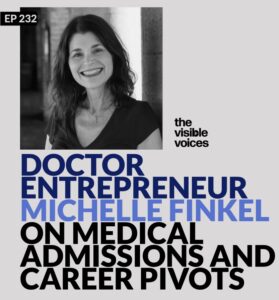
Listen to Dr. Finkel’s interview on The Visible Voices podcast: 


Listen to Dr. Finkel’s interview on the White Coat Investor podcast:

Listen to Dr. Finkel’s interview on the FeminEm podcast: