Be A Dirtbag Millionaire

For many of us, medical training means taking on significant debt and learning to manage complex personal finances. Many financial advisors “specialize” in physicians (like wolves who specialize in sheep?), and young doctors have a reputation as easy targets.

How can you defend yourself against financial predators, kill your debt early, and learn to manage your own portfolio? (And where can you even learn what a portfolio is?) Crispy Doc offers a blog dedicated to financial literacy for the newly minted physician with an emphasis on early financial independence for doctors.

Check out his blog, and learn from Crispy Doc’s recent Student Doctor Network article.

Tags: , ,

Brevity

I’ve started editing a lot of medical school essays of late, and I want to give a shout out to the importance of brevity. I focus on a work count of 700 or fewer for my advisees for a few reasons: First, I’ve found that that number is just the right balance of content and streamlining. Under 700 words for an admissions essay leads to a lack of substance, and more lends itself to meandering writing.
Second, your reader is likely stuck reviewing tens or even scores of applications in a short period of time. S/he is looking to spend as little time as possible on your written materials, while still getting a good flavor for your candidacy. Don’t burden your reader with verbiage.
Here’s a helpful trick: Imagine AMCAS or ERAS is charging you $10 per word. How would you keep costs down?
Tags: , ,

DO vs. MD

As the medical school application date looms nearer, I’ve had several pre-meds ask me about DO school. There was an excellent article in the New York Times a few years ago about what doctors of osteopathy do and how their admissions criteria are different from allopathic schools’. It’s here and worth a read.

The topic of DO schools is an enormous one. A few quick points many candidates don’t know about DOs:

1. Many doctors of osteopathy practice medicine just like allopathic doctors do. I do per diem emergency shifts at Kaiser and work with many DOs. Candidly, I usually do not know which colleagues have osteopathic degrees and which have allopathic ones unless I see a prescription blank or a signed computer note.

2. If applying to osteopathic school, candidates are generally better off with at least one (strong) letter of recommendation from a DO supervisor.

3. Osteopaths currently take the COMLEX for their board tests, instead of the USMLE. If an osteopathic medical student wants to enter an allopathic residency, s/he may need to take the USMLE in addition to the COMLEX. On the other hand, there are many allopathic residencies that accept the COMLEX. Also, there is talk that in the future (when exactly is unclear, however) there may be just one board test that both groups take.

4. The osteopathic Match occurs before the NRMP Match, a fact that can be difficult for osteopaths applying to both types of residencies. If those applicants are successful in the osteopathic Match, they cannot enter an allopathic residency. If, on the other hand, they wait and enter the NRMP Match, they run the risk of simply not matching.

Again, this topic is complicated and nuanced. If you’d like to discuss your candidacy and the DO option, contact me for a Strategy Session.

Tags: , ,

Make It Pop: Your Residency or Medical School Personal Statement

As I’ve written many times, the personal statement should be substantive and crafted in a persuasive essay format. Yet, the introduction is a place where you can let your hair down (to a point) and write in a narrative fashion.

It helps to start your essay with a “clincher,” something that will convince the reader your statement is worth reading:

I found this short piece in an old Stanford Magazine to be worth a read. The author compiled a list of first lines from the application essays of Stanford’s newest college class at the time.

Some of my favorites:

Unlike many mathematicians, I live in an irrational world; I feel that my life is defined by a certain amount of irrationalities that bloom too frequently, such as my brief foray in front of 400 people without my pants.

When I was 8 years old, I shocked my family and a local archaeologist by discovering artifacts dating back almost 3,500 years.

As an Indian-American, I am forever bound to the hyphen.

Tags: , ,

Time to Take A Reading Break

It’s a stressful time of year for you, pre-meds. (Then again, maybe all times of the year are stressful for your cohort, unfortunately.) Why not take a break from crafting your personal statement, starting your AMCAS activities, gathering your letters of recommendation, studying for finals (and maybe the MCAT), and attending all of your extracurricular activities to read a book? Here’s a piece I wrote that was featured last week on Student Doctor Network regarding great books to read for doctors in training.

Tags: , , ,

About Dr. Michelle Finkel

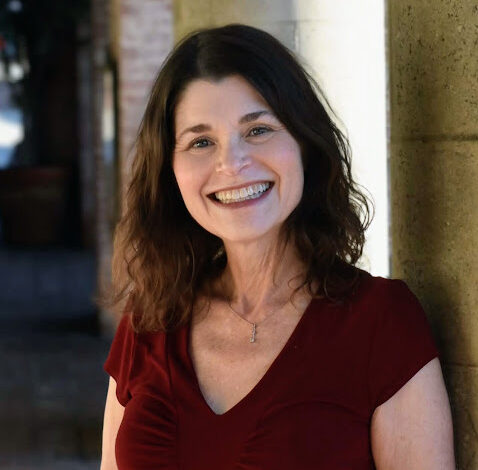
Dr. Michelle Finkel

Dr. Finkel is a graduate of Stanford University and Harvard Medical School. On completing her residency at Harvard, she was asked to stay on as faculty at Harvard Medical School and spent five years teaching at the world-renowned Massachusetts General Hospital. She was appointed to the Assistant Residency Director position for the Harvard Affiliated Emergency Medicine Residency where she reviewed countless applications, personal statements and resumes. Read more

Receive FREE Insider Medical Admissions Tips.

Listen to Dr. Finkel’s interview on The Visible Voices podcast: 


Listen to Dr. Finkel’s interview on the White Coat Investor podcast:

Listen to Dr. Finkel’s interview on the FeminEm podcast: