Blog Archives

For Those Seeking Postbaccalaureate Program Info

Over the years, I have strongly recommended the AAMC database for those applicants seeking postbaccalaureate programs. On the left you can filter by public or private, undergraduate or graduate, and special focus. Importantly, for the latter, distinguishing whether you need a career changer or academic record enhancer program is critical.

Here’s some additional information from the AAMC regarding postbaccalaureate programs – what to look for, how the curriculum prepares students for medical school, etc. 

Tags: , , ,

Writing Your Own Letter of Recommendation:  An Offer you Can’t Refuse

Every year applicants ask me if it’s okay to write their own letters of recommendation when the offer is made by a faculty member. It’s not unethical to write your own letter if you’re asked to do so. If you’d like to explore the scruples of this issue, take a look at this classic New York Times Ethicist column about the topic.

The mistake I see candidates make in this situation is that applicants don’t write very strong letters for themselves, likely because they feel awkward about showcasing their accomplishments fully. If you have the opportunity to write your own letter, craft a glowing one. Be effusive and full-throated in your remarks about yourself! Remember that the letter-writer can choose to tone down the recommendation if s/he doesn’t agree. But if s/he does, you’ve utilized an opportunity fully and bolstered your candidacy tremendously.

Tags: , , ,

Excel During Your (Emergency Medicine) Rotation

Medical students starting their third and fourth years are navigating required clerkships, specialty-specific electives, and sub-internship rotations. What are the tricks to making a good impression during these long weeks and months? Here’s a piece I wrote on how to succeed in your emergency medicine rotation; many of the tips translate to other rotations as well.

Tags: , , ,

15 ERAS Tips to Boost your Residency Candidacy

Over the years, I’ve cultivated several tips for crafting the best ERAS Experience Section. I’ve included 15 important ones below:

1. Include relevant pre-professional accomplishments from college. If you conducted research, for example, list and describe it. Do not include high school achievements unless they were truly unique (worked at the White House, sang on Broadway, published in Nature ;)).

2. As of 2023, you have only 10 slots, so avoid minor activities (like an afternoon health fair). 

3. Write in a streamlined fashion. Avoid verbiage. Of note, you can choose three most meaningful activities, but you only have 300 characters for each. So while you want to explain why the activity was impactful, you’ll need to keep your writing here especially tight.

4. Use full sentences. It’s a formal application, and you want to make your written materials as readable as possible.

5. Avoid most abbreviations. Ones you think are common might not be familiar to the reader.

6. Avoid contractions; they are too informal for an ERAS (but okay for this blog entry ;)). 

7. Make sure you spell out your accomplishments clearly. If your reader doesn’t understand an activity, you won’t get “full credit” for what you’ve done. Make no assumptions – not even that the reader has reviewed the experience’s introductory information (position title, location). 

8. Write about yourself and your role – not an organization. For example, don’t use the space to discuss Physicians without Borders. Use it to discuss the specifics of your role at Physicians without Borders.

9. Use numbers to be persuasive. Saying that the conference you organized had 500 participants says a lot.

10. Unless your PI won the Nobel, avoid using supervisors’ and/or doctors’ names in your descriptors as they will be meaningless to the majority of your readers.

11. Do your best not to leave the “Medical School Awards” section blank. Even if you have to simply include clerkships in which you obtained honors (or high honors), fill that section out.

12. If you have not already, consider joining your specialty’s national organization and listing it under the “Membership in Honorary/Professional Societies” section. If you are applying in two fields, take this advice, though. 

13. Try to end your entries with a sentence about how the experience you just described will help you as a future specialist. Making that connection for the reader furthers your candidacy. 

14. As with all good writing, avoid redundant language. Having the word “research” three times in two lines is distracting and demonstrates a lack of originality. 

15. Get help. Don’t submit your residency application without having it reviewed by someone with a lot of experience. (I started Insider Medical Admissions in 2007.) You do not want to put forward suboptimal materials for a process that is this important and competitive.

(Please note that there are a few changes to this year’s ERAS, including the use of Thalamus for interview scheduling. For more information, see this AAMC page.)

Tags: , , ,

Not Quite What I Was Planning

Years ago, I read a beautiful book called Not Quite What I Was Planning: Six-Word Memoirs by Writers Famous and Obscure edited by Larry Smith and Rachel Fershleiser. The premise is that individuals were asked to sum up their lives in six words. Famous contributors include Margaret Atwood and Stephen Colbert, among others.

I thought about the book recently when I was at my medical school reunion: A dozen of us sat around a round table and talked about what we had been up to for the last 30 years. After we finished, we concluded that the overriding theme was that all of us were doing something different than what we thought we would be doing. I found that concept refreshing, and I suspect it might be reassuring to current students who feel burdened with big decisions.

I just checked out the e-book from the library so I can read it again.

Tags: , , ,

About Dr. Michelle Finkel

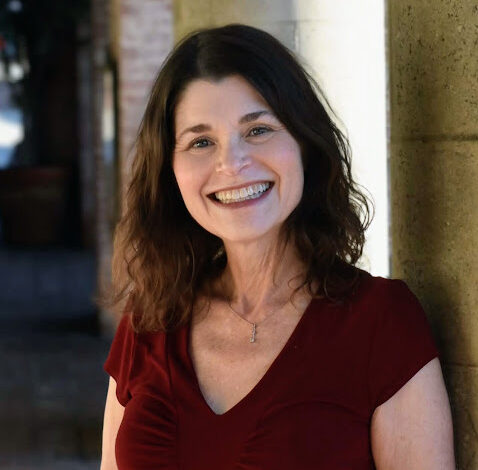
Dr. Michelle Finkel

Dr. Finkel is a graduate of Stanford University and Harvard Medical School. On completing her residency at Harvard, she was asked to stay on as faculty at Harvard Medical School and spent five years teaching at the world-renowned Massachusetts General Hospital. She was appointed to the Assistant Residency Director position for the Harvard Affiliated Emergency Medicine Residency where she reviewed countless applications, personal statements and resumes. Read more

Receive FREE Insider Medical Admissions Tips.

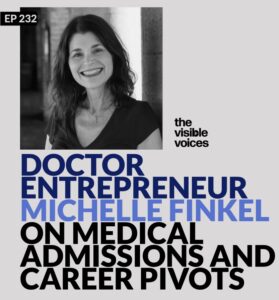
Listen to Dr. Finkel’s interview on The Visible Voices podcast: 


Listen to Dr. Finkel’s interview on the White Coat Investor podcast:

Listen to Dr. Finkel’s interview on the FeminEm podcast: