
Blog Archives

The Craft of Writing

Two weeks ago I blogged about the importance of using your personal statement to showcase your accomplishments, while ensuring your essay does not become a resume in prose. In the “The Sound of a Sentence,” Constance Hale reviews techniques a writer can use to invigorate his or her compositions.

During my medical school admissions process, I introduced myself to my Duke interviewer who said, “Ever since reading your secondary essay, I’ve been looking forward to meeting you!” I had made a favorable impression and distinguished myself through my writing – the goal of my essay. I find some applicants are simply slogging through the process of writing their personal statements. Remember that you only have a small piece of geography to catch the admission reader’s attention. Use the personal statement space to your advantage, and don’t lose a great opportunity to make a positive impression!

Contact me for help with your written materials – AMCAS, ERAS, personal statements, secondary essays, CVs, letters of intent, etc.
Tags: , , , , , , , , , ,

Happy Customers

“Your turnaround speed is amazing!”

“I hope that all is well, and that your clients are all as happy as I am!”

“Your edits really helped me think deeper about this process.”

The above are comments I’ve received from clients this month. If you are hitting a wall with your AMCAS, consider hiring me.
Tags: , ,

Showcasing your Accomplishments without Creating a Resume in Prose

Recently, an applicant asked me how to write a personal statement that distinguished him without regurgitating his resume.

Although highlighting your achievements is critical to make you stand out as a distinctive applicant, you can avoid simply repeating your curriculum vitae by giving a sense of your motivation, dedication, and personality with your choice of words and details. You can also express yourself through the weight you place on your varied accomplishments.

Writing a persuasive – yet personal and nuanced – essay is not easy. It takes a lot of work and multiple drafts and edits. Contact me for expert help.

Tags: ,

Expert (Goofy) Writing Tips

This entertaining list of writing don’ts offers a comic break for applicants who are working feverishly on their medical school personal statements. The rules are based on the wit and wisdom of the late New York Times’ William Safire and the copywriter Frank LaPosta Visco. Enjoy!
  1. A writer must not shift your point of view.
  2. Always pick on the correct idiom.
  3. Analogies in writing are like feathers on a snake.
  4. Always be sure to finish what
  5. Avoid alliteration. Always.
  6. Avoid archaeic spellings.
  7. Avoid clichés like the plague. (They’re old hat.)
  8. Avoid trendy locutions that sound flaky.
  9. Be more or less specific.
  10. Comparisons are as bad as clichés.
  11. Contractions aren’t necessary.
  12. Do not use hyperbole; not one in a million can do it effectively.
  13. Don’t indulge in sesquipedalian lexicological constructions.
  14. Don’t never use no double negatives.
  15. Don’t overuse exclamation marks!!
  16. Don’t repeat yourself, or say again what you have said before.
  17. Don’t use commas, that, are not, necessary.
  18. Don’t be redundant; don’t use more words than necessary; it’s highly superfluous.
  19. Eliminate quotations. As Ralph Waldo Emerson once said, “I hate quotations. Tell me what you know.”
  20. Employ the vernacular.
  21. Eschew ampersands & abbreviations, etc.
  22. Eschew obfuscation.
  23. Even if a mixed metaphor sings, it should be derailed.
  24. Everyone should be careful to use a singular pronoun with singular nouns in their writing.
  25. Exaggeration is a billion times worse than understatement.
  26. Foreign words and phrases are not apropos.
  27. Go around the barn at high noon to avoid colloquialisms.
  28. Hopefully, you will use words correctly, irregardless of how others use them.
  29. If any word is improper at the end of a sentence, a linking verb is.
  30. If you reread your work, you can find on rereading a great deal of repetition can be avoided by rereading and editing.
  31. It behooves you to avoid archaic expressions.
  32. It is wrong to ever split an infinitive.
  33. Never use a big word when a diminutive alternative would suffice.
  34. No sentence fragments.
  35. One should never generalize.
  36. One-word sentences? Eliminate.
  37. Parenthetical remarks (however relevant) are unnecessary.
  38. Parenthetical words however must be enclosed in commas.
  39. Place pronouns as close as possible, especially in long sentences, as of ten or more words, to their antecedents.
  40. Placing a comma between subject and predicate, is not correct.
  41. Proofread carefully to see if you any words out.
  42. Prepositions are not words to end sentences with.
  43. Profanity sucks.
  44. Subject and verb always has to agree.
  45. Take the bull by the hand and avoid mixing metaphors.
  46. The adverb always follows the verb.
  47. The passive voice is to be avoided.
  48. Understatement is always best.
  49. Use the apostrophe in it’s proper place and omit it when its not needed.
  50. Use youre spell chekker to avoid mispeling and to catch typograhpical errers.
  51. Who needs rhetorical questions?
  52. Writing carefully, dangling participles must be avoided.
Tags: , , ,

Start with a Clincher…

Advisees routinely tell me how they struggle with crafting their personal statement introductions. My advice: Start with a clincher (and end with a zinger). But how can you avoid writing about accompanying your grandmother to the emergency department/ realizing your calling? (FYI: If you are considering this tactic, it’s worth noting that I’ve seen it scores of times.)

Here is a great piece from my alma mater’s The Stanford Magazine. I originally read this short article way back in 2008, but it stuck with me.

Let the examples you read open your eyes to the opportunity you have to distinguish yourself in the eyes of medical school admissions committees and residency directors.

If you are interested in my editing assistance, please consider hiring me soon. My volume is already increasing tremendously as the summer approaches.

Tags: , , , , ,

About Dr. Michelle Finkel

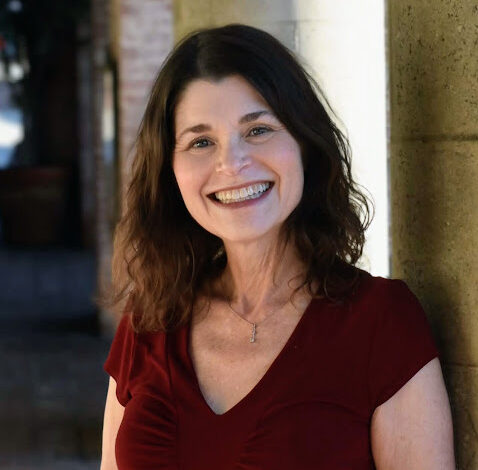
Dr. Michelle Finkel

Dr. Finkel is a graduate of Stanford University and Harvard Medical School. On completing her residency at Harvard, she was asked to stay on as faculty at Harvard Medical School and spent five years teaching at the world-renowned Massachusetts General Hospital. She was appointed to the Assistant Residency Director position for the Harvard Affiliated Emergency Medicine Residency where she reviewed countless applications, personal statements and resumes. Read more

Receive FREE Insider Medical Admissions Tips.

Listen to Dr. Finkel’s interview on The Visible Voices podcast: 


Listen to Dr. Finkel’s interview on the White Coat Investor podcast:

Listen to Dr. Finkel’s interview on the FeminEm podcast: