
Blog Archives

Optional Secondary Essays: Are They Really Optional?

I’ve recently received several questions about optional secondary essays and their necessity.

The beauty of an “additional comments” section is that it is intentionally vague. It’s your chance to provide details, context, or qualifications that the structure of the application didn’t allow you to present. For that reason, I lean toward using that space to both highlight who you are and any exceptional aspect of your candidacy that you’d want a reader to know before making an interview decision.

So, one good option for these essays is to pick something completely nonmedical that distinguishes you and is nowhere else to be found on your application. In this case, the essay can actually be fun to write.

Of note, sometimes people use this type of a prompt to explain one major deficiency in their candidacy. I only recommend that if there’s a big elephant in the room: In other words, in general I tell applicants – throughout the process – to avoid highlighting weaknesses. The goal is to demonstrate distinctiveness and worthiness, so negatives are usually left out. But sometimes someone has a big problem like a low MCAT score that is an anomaly that’s worth addressing head on.

Bottom line:  Since an interview isn’t guaranteed, don’t save your best material for an in-person meeting. Get your foot in the door. And as always, make sure that your essay is substantive and not fluffy.


15 ERAS Tips to Boost your Residency Candidacy

It’s July, which means it’s time for residency applicants to start thinking about their ERASes. Here are tips I’ve cultivated for crafting the best application:

1. Include relevant pre-professional accomplishments from college. If you conducted research, for example, list and describe it. Do not include high school achievements unless they were truly unique (worked at the White House, sang on Broadway, published in Nature).

2. While you want to include many strong achievements, you do not want your ERAS to be so long that your reader is tempted to skim it, so avoid small activities (like an afternoon health fair). 

3. Keep your descriptors to approximately five to seven sentences. Fewer can look lazy and more can look self-indulgent.

4. Use full sentences. It’s a formal application, and you want to make your written materials as readable as possible.

5. Avoid abbreviations. Ones you think are common might not be familiar to the reader.

6. Avoid contractions; they are too informal for an ERAS. 

7. Make sure you spell out your accomplishments clearly. If your reader doesn’t understand an activity, you won’t get “full credit” for what you’ve done. Make no assumptions – not even that the reader has reviewed the experience’s introductory information (location, name of activity). 

8. Write about yourself and your role – not an organization. For example, don’t use the space to discuss Physicians without Borders. Use it to discuss the specifics of your role at Physicians without Borders.

9. Use numbers to be persuasive. Saying that the conference you organized had 500 participants says a lot.

10. Unless your PI won the Nobel, avoid using supervisors’ and/or doctors’ names in your descriptors as they will be meaningless to the majority of your readers.

11. Do your best not to leave the “Medical School Awards” section blank. Even if you have to simply include clerkships in which you obtained honors (or high honors), fill that section out.

12. If you have not already, consider joining your specialty’s national organization and listing it under the “Membership in Honorary/Professional Societies” section. If you are applying in two fields, take this advice, though. 

13. Try to end your entries with a sentence about how the experience you just described will help you as a future specialist. Making that connection for the reader furthers your candidacy. 

14. As with all good writing, avoid redundant language. Having the word “research” three times in two lines is distracting and demonstrates a lack of originality. 

15. Get help. Don’t submit your residency application without having it reviewed by someone with a lot of experience. You do not want to put forward suboptimal materials for a process that is this important and competitive.


Understaffing is Affecting Patient Care

I am only middle aged, and yet, so many of my cohort, including myself, have recently left clinical medicine. There are layer upon layer upon layer of reasons: Even before the pandemic, burnout and discouragement about the current healthcare system were big problems amongst providers. Then, COVID facilitated more departures because of the need to stay home to care for children or even illness and death, sadly. Finally, the national workforce shortage and economic cuts have led to a real crisis in our medical system. 

See this piece by Dr. George Hyde, a pediatric resident at Harbor UCLA, as he describes how understaffing is directly harming patient care.

Tags: , , ,

“Why Our School” Secondary Essay: How to Get Started

Secondary essay prompts vary, but there are a few that are standard fare. See my recent blog entry for guidance on the familiar “diversity essay.” “Why do you want to attend our school?” is also a common topic pre-meds will encounter.

Medical school admissions officers want to be assured that you know their institution, are seriously considering it, and will fit in well there. In approaching the “why-our-school” question, do your research on the institution and link something specific about you with the school’s philosophy, curriculum, patient population, and/or extracurricular programs.

For instance, if you were a teaching assistant for chemistry in college, you might link your use of the Socratic method with a school’s tutorial-based learning. In that way, you demonstrate knowledge of the school, show that you connect well with it, and showcase your accomplishment.  

The paradox here is that – although you are theoretically focusing your essay on one school – because so many institutions have overlapping philosophies, curricula, and objectives – you can oftentimes use the same essay framework for many different schools.

That’s one strategic way to cut down the overwhelming workload that secondary applications present.

Tags: , , ,

Secondary Essays: The Diversity Prompt

I’ve had several questions recently on how to approach secondary essays, so I’ll address some common prompts over the next month or so in this blog.

In considering your strategy and content for the diversity prompt, I’d recommend you ask yourself the following question:

What ethnic, religious, racial, gender, language, socioeconomic, or sexual orientation aspects of me, my family, or my experience make me distinctive?

Please note that experience is part of the question I have posed. An applicant I mentored a few years back wrote to me concerned that she did not fit into a minority category and thus, could not answer the prompt effectively. I suggested she consider an experience that targeted the prompt’s theme, and she wrote a strong essay about her successful efforts to increase diversity during sorority rush. When I applied to medical school, I crafted one of my secondary essays on my experience hearing Spike Lee speak on my college campus. 

Don’t be afraid to think outside the box.

Tags: , , ,

About Dr. Michelle Finkel

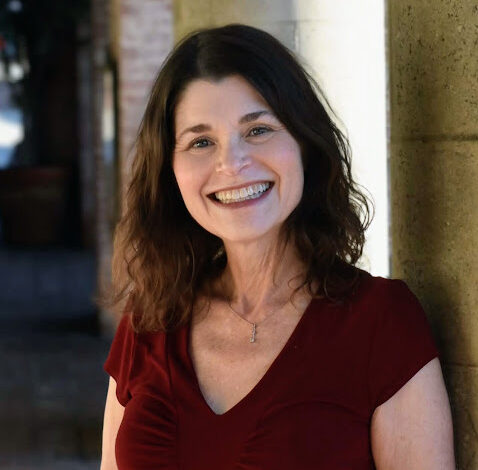
Dr. Michelle Finkel

Dr. Finkel is a graduate of Stanford University and Harvard Medical School. On completing her residency at Harvard, she was asked to stay on as faculty at Harvard Medical School and spent five years teaching at the world-renowned Massachusetts General Hospital. She was appointed to the Assistant Residency Director position for the Harvard Affiliated Emergency Medicine Residency where she reviewed countless applications, personal statements and resumes. Read more

Receive FREE Insider Medical Admissions Tips.

Listen to Dr. Finkel’s interview on the White Coat Investor podcast:

Listen to Dr. Finkel’s interview on the FeminEm podcast: