


Picture, if you will, a residency admissions committee member beneath a halo of light reading applicant essays in her office at midnight. Caffeine on her breath, crumpled white coat next to her desk chair, she is making steady progress on the never-ending stack of applicant files until she picks up a residency personal statement that begins, “I first became interested in Internal Medicine when Grandma was diagnosed with cancer…” Pulling out her hair by the fistful, she tosses the file into the trash. That cancer may not have killed your grandma, but it just might have killed your application. Read more ›
Blog Archives
Medical Residency Interview Advice
Matching to a residency program through the NRMP® (National Resident Matching Program) is a competitive endeavor. Even strong candidates – especially IMGs (international medical graduates) – can have difficulty getting positions in many specialties. Those that do match may not get their top choices, leaving them in suboptimal programs.
Consequently, optimizing your performance during the medical residency interview is critical. But what are residency directors looking for during the interview process?
First, they are seeking someone distinctive. Your goal is to distinguish yourself from all of the other applicants by showcasing your accomplishments. Anyone can say s/he is compassionate or hard working. Fewer candidates can prove it. Read more ›
Improving Your Medical Residency Application: Tips for Obtaining Optimal Letters of Recommendation
Matching to a residency program through the NRMP® (National Resident Matching Program) is a competitive endeavor. Even top-tier candidates can have difficulty getting PGY-1 (post graduate year one) positions in many specialties. Those that do match may not get their first or second choices, leaving them in suboptimal locations or programs. Consequently, the submission of an excellent residency application is crucial.
The Electronic Residency Application Service (ERAS®) is a centralized program that transmits applications, letters of recommendation (LOR) and other supporting credentials from the applicant to program directors using the Internet. Most residency programs now use ERAS®, although a few use individualized applications. Read more ›
Tags: Application Tips, Electronic Residency Application, Electronic Residency Application Service, Eras, Letter Writer, Letter Writers, Letters Of Recommendation, National Resident Matching Program, Program Directors, Residency Application Advice, Residency Application Service, Residency Directors, Residency Program, Residency Programs
The Medical Residency Interview: What if You Haven’t Received an Invitation?
Once your ERAS has been submitted, getting into residency kicks into high gear with the interview season. But what if you’ve completed your residency application and yet haven’t been invited to interview?
First of all, realize that residency admissions have become increasingly competitive of late. This is especially true for “lifestyle” specialties like Radiology, Opthalmology, Anesthesia and Dermatology (often termed the “ROAD”). The number of applicants in those fields and others is generally increasing, as the number of medical students continues to increase. Thus, the lack of an invite may just represent overloaded admissions offices. Read more ›
The Medical Residency Interview: Mistakes to Avoid
Once your ERAS has been submitted, your residency admission pivots on your interview performance. And because residency admissions have become so competitive of late – especially in this weaker economy – the medical residency interview has become critical.
There are a few, simple easy mistakes that you can avoid with a little preparation:
- Don’t speak in general terms. Your goal is to distinguish yourself from all of the other applicants by highlighting your achievements. Answer questions with specific examples of what you have done in order to demonstrate that you are distinctive. Don’t worry about repeating what is in your residency application. It is expected that you will flesh out your ERAS and personal statement during the interview. Read more ›

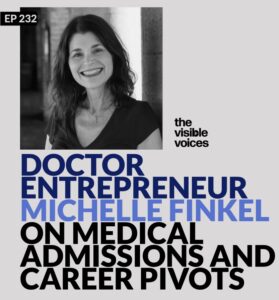
Dr. Finkel is a graduate of Stanford University and Harvard Medical School. On completing her residency at Harvard, she was asked to stay on as faculty at Harvard Medical School and spent five years teaching at the world-renowned Massachusetts General Hospital. She was appointed to the Assistant Residency Director position for the Harvard Affiliated Emergency Medicine Residency where she reviewed countless applications, personal statements and resumes. Read more
Listen to Dr. Finkel’s interview on The Visible Voices podcast:
Listen to Dr. Finkel’s interview on the White Coat Investor podcast:
Listen to Dr. Finkel’s interview on the FeminEm podcast: