Blog Archives

Congratulations and Congratulations

I’ve heard from several clients who have already been accepted to medical school this cycle. Congratulations! I’ve also heard from several clients who have been waitlisted. Congratulations! The waitlist can feel like a disappointment, but it’s important to see it for what it is – a potential acceptance.

One of the hard parts of being on a waitlist is the uncertainty. We humans like to be in control! One way to alleviate this discomfort is to do something. Assuming the school you’re waitlisted at allows communication through their portal, email, or snail mail, I recommend sending a letter of interest (LOI).

When writing your LOI, you should have the following goals:

  1. Restating your strong enthusiasm for the institution
  2. Positioning yourself as a distinctive candidate who can contribute fully to the school
  3. Showcasing any updates to your candidacy. (If you don’t have updates, you should still write the LOI.)

LOI errors to avoid:

  1. Don’t include generic content about the institution’s advantages, meaning don’t waste valuable “geography” telling a medical school admissions officer what makes his/her institution special. Using precious space this way is an opportunity cost, keeping you from fully showcasing what makes you a compelling applicant. Instead, a good technique is to link one of your particular accomplishments with a distinctive opportunity at the institution. For example if you’ve done cancer research, make sure to showcase it and point out that you’ll contribute to the renowned oncology center the institution is associated with.
  2. Don’t focus on how the school will help you. (“Your medical school will assist me in reaching my career goals.”) Your angle instead, should be on how you will be a contributor to their institution. For example, you can detail how one of your leadership experiences has given you the tools to make you a future leader at this institution. (It’s the “What have you done for me lately?” Janet Jackson principle.)

Finally, let me say that I find the term “letter of interest” to be better than the old jargon “letter of intent” because, generally, I don’t recommend you let institutions know what your intent is (since it might change). Note that with a letter of interest you can create one general letter that you modify and send to multiple institutions with different goals (i.e. if you are placed on another waitlist, to request an interview, or to demonstrate your interest post-interview at another medical school). You can also modify the letter and send it to your top choices because, if you are not making a commitment to one school, then you can honestly use it for multiple institutions. 

For those of you interested in LOI assistance for medical school, please contact me.

Tags: , , ,

Highly Recommended, Paid Summer Opportunity – AAAS Mass Media Fellowship

I was an American Association for the Advancement of Science (AAAS) Mass Media Science and Engineering Fellow in 1995 (during medical school). The program was truly fantastic and life-altering.

The 10-week summer program places science, engineering, and mathematics students at media organizations around the country, including National Public Radio, the Los Angeles Times, and WIRED. Fellows learn to communicate complex scientific issues for the lay public. They are provided a stipend of $8000 for the summer, plus travel expenses to and from AAAS and their media sites.

I worked at the Oregonian in Portland and had a tremendous time learning how to write and edit effectively. I also gained an appreciation for the impactful influence journalists can have on medical and public health topics. The Mass Media Fellowship is really an amazing program.

Applications for this year’s AAAS Mass Media Science and Engineering Fellowship just opened on October 1 and will remain available through January 1, 2024. Check eligibility requirements and apply here.

Tags: , , ,

AAMC Virtual Medical School Fair

For those of you applying to medical school this year or next cycle, the Association of American Medical Colleges (AAMC) is holding an online medical school fair on October 17 and 18. Topics for the first day include financing medical school, combined degrees, and a timeline for application. On the second day, medical schools and student groups will be available to answer questions. I’m registered and looking forward to the conference. Of note, if you’ve not yet subscribed to the Medical School Admissions Requirements (MSAR), you should wait until you’ve signed up for the fair, as your registration will include a 15% discount on the MSAR database.

Tags: , , ,

AI-Generated College Essays

“I hope this letter finds you well…”

When my family and I played around with ChatGPT – asking it to craft silly letters to different people – every ChatGPT response started with that phrase. I quickly realized that originality is not ChatGPT’s strong suit.

On top of the fact that most institutions consider AI-generated essays to be unethical (even plagiarism, at Yale), an applicant’s ability to write something distinctive (and persuasive) is really what demonstrates his or her worthiness for competitive university spots.

I found this amusing New York Times piece called, “We Used A.I. to Write Essays for Harvard, Yale and Princeton. Here’s How It Went” reinforced my strong distaste for AI-generated personal statement writing.

Although challenging to craft, your written materials are a tremendous opportunity to showcase your creativity and further your candidacy.

Tags: , , ,

Medical School Interview Tips: What Do Admissions Officers Really Want?

Congratulations to those who have already been invited for medical school interviews. It’s early in the season, so if you’re an applicant who hasn’t been invited yet, don’t be dismayed.

Getting into medical school has gotten so competitive; the interview is critical. But what are medical schools looking for during the interview process?

1. They are seeking someone distinctive. Your goal is to distinguish yourself from all of the other applicants by showcasing your accomplishments. Anyone can say s/he wants to help people or is hard working. Fewer candidates can prove it with their pre-professional achievements.

2. They want to ensure you’re committed to medicine and that you have an idea of what you’re getting yourself into. Medical school is tough; the institutions are not seeking someone who is ambivalent and might quit. Giving examples of your clinical experience can help.

3. The schools want to ensure you’re reasonable. They want to see that you don’t have a problem personality, aren’t going to harass your colleagues, aren’t going to cause them embarrassment or extra work. Being professional during the interview day and having strong letters are important.

4. They want to hear you’re particularly interested in their institution. You can convince them of your interest by knowing specifics about the school and city.

One would never take the MCAT without practicing first and yet, countless applicants go to medical school interviews without preparing. If you are interested in working with me, please hire me soon, as I’m booking up for September. 

Tags: , , ,

About Dr. Michelle Finkel

Dr. Michelle Finkel

Dr. Finkel is a graduate of Stanford University and Harvard Medical School. On completing her residency at Harvard, she was asked to stay on as faculty at Harvard Medical School and spent five years teaching at the world-renowned Massachusetts General Hospital. She was appointed to the Assistant Residency Director position for the Harvard Affiliated Emergency Medicine Residency where she reviewed countless applications, personal statements and resumes. Read more

Receive FREE Insider Medical Admissions Tips.

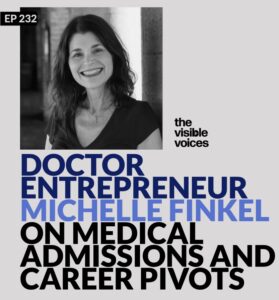
Listen to Dr. Finkel’s interview on The Visible Voices podcast: 


Listen to Dr. Finkel’s interview on the White Coat Investor podcast:

Listen to Dr. Finkel’s interview on the FeminEm podcast: