Blog Archives

Awesome Paid Summer Opportunity

I was an American Association for the Advancement of Science (AAAS) Mass Media Science Fellow in 1995. The program was truly fantastic and life-altering.

Applications for this year’s AAAS Mass Media Science and Engineering Fellowship just opened on October 1 and will remain available through January 1, 2021. This cycle’s fellowship dates are June 2 through August 17, 2021. Here’s the link to application information. The scholarship is a 10-week summer program that places science, engineering, and math undergraduate and graduate students at media organizations across the nation – outlets like NPR, the Los Angeles Times, and WIRED. I worked at the Oregonian in Portland and had a tremendous time, learning how to write effectively and edit. I also gained an appreciation for the amazing public health opportunities journalists have.

Tags: , , ,

Residency Personal Statement Tips

I’ve received questions recently about the residency personal statement, so I’m including some articles and blog posts that might be useful:

  • For an overall approach to the personal statement, check out this article.
  • Is Your Personal Statement a Little Too Personal? is a fun, pointed piece by guest blogger David Presser MD, MPH.
  • Should you be a creative nonconformist when writing your personal statement? Find out here. 
  • Examples of outstanding essay intros (from Stanford undergraduate applicants) are here.

And as always, contact me for help.

Tags: , , ,

How to VITAlize your VITA interviews

At the end of the spring, with the weightiness of COVID clearer, the AAMC (much to their credit) strongly recommended that medical schools and residencies conduct virtual interviews during the upcoming admissions season. Upending years of in-person sessions, the announcement has made a huge impact on this season’s admissions process. Virtual interviews will likely diminish some of the bias that plagued the system previously and will save everyone a bundle of money. 

The AAMC did not urge the use of any particular platform, but it does provide its own, called the Video Interview Tool for Admissions (VITA), for interested medical schools. The AAMC describes VITA as a one-time, one-way recorded video interview to help medical schools assess applicants’ pre-professional competencies that are important for success in medical school. 

The AAMC indicates that VITA questions will target the below capabilities:

  • Social Skills
  • Cultural Competence
  • Teamwork
  • Reliability and Dependability
  • Resilience and Adaptability

An applicant’s VITA session will include six questions presented in text form (no interviewer), and applicants record a video response after having one minute to read and reflect on each question. Candidates then have up to three minutes to record a response. If an applicant needs a break between questions, that’s not a problem: All six questions can be completed in one sitting, or candidates can choose to have breaks of any desired length between questions. (Of course, the interview must be submitted by a medical school’s deadline.)

According to the AAMC, questions can be related to personal experience (e.g. “Why did you choose medicine?”), past behavior (“Describe a time…”), or hypothetical situations (“Imagine you are… What would you do to resolve this issue?”). 

These types of questions can be tricky without practice, but are bread-and-butter for someone who is prepared. 

Remember the time you spent a week studying for the MCAT? No, you don’t ;). That’s because one week is not enough time to study for the MCAT! Along those lines, it’s important to start early, preparing yourself fully for VITA and other virtual interview platforms. Much of interviewing is confidence, which can be developed. Please hire me now for help. 

Tags: , , ,

My Personal Experience with (What Appears to Have Been) “COVID Fingers”

I usually don’t use this blog to talk about personal issues, but I recently wrote this piece in KevinMD “Why Are COVID Antibodies of Questionable Relevance Being Marketed to the Public” regarding my experience with pseudo-chilblains (burning spots on my fingers – ouch) and my subsequent COVID antibody test. 

Even in the past week since the piece was published, there has been more in the news about the likelihood that T-cell modulated immunity may play an important role in COVID recovery. 

Tags: , , ,

No, I Can’t Fix Your Computer

My husband spotted a man wearing a t-shirt with that saying on it, and we have ever since jokingly referred to it when someone in the house is having a tech problem. 

As we all probably know, there is usually someone in the extended family who is the “computer person.” 

Well, we could use that individual now. While I am a big fan of the virtual interview for medical school and residency (see my upcoming Doximity article on the topic), I do worry about technical glitches. A client recently wrote me that her asynchronous, recorded virtual medical school interview had a problem, leaving her with one question unanswerable. (I counseled her to inform the school.) I’m crossing my fingers that this is an anomaly and not a reflection of what’s to come this cycle.

As always, make sure to practice for your interviews; you wouldn’t go into a standardized test without a lot of preparation, and the same should be true for interviews. 

Contact me here for help. 

Tags: , , ,

About Dr. Michelle Finkel

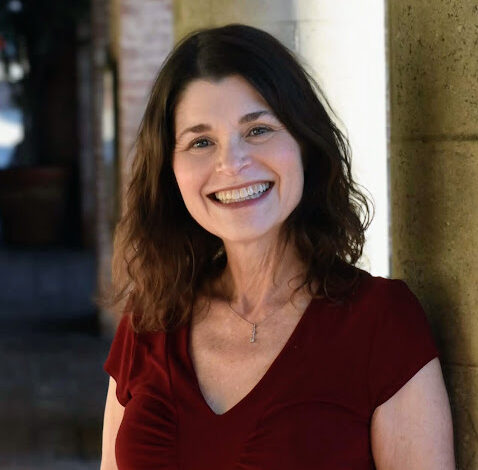
Dr. Michelle Finkel

Dr. Finkel is a graduate of Stanford University and Harvard Medical School. On completing her residency at Harvard, she was asked to stay on as faculty at Harvard Medical School and spent five years teaching at the world-renowned Massachusetts General Hospital. She was appointed to the Assistant Residency Director position for the Harvard Affiliated Emergency Medicine Residency where she reviewed countless applications, personal statements and resumes. Read more

Receive FREE Insider Medical Admissions Tips.

Listen to Dr. Finkel’s interview on The Visible Voices podcast: 


Listen to Dr. Finkel’s interview on the White Coat Investor podcast:

Listen to Dr. Finkel’s interview on the FeminEm podcast: