Blog Archives

The Medical School Wait List: Can Anything Be Done?

Just when you’ve completed your interviews and feel that you can finally sit back and relax a little because – after all – the rest is out of your hands, you may be surprised by a medical school wait list notification. What can you do?

1. Realize that getting into medical school has become increasingly competitive year by year. Being wait listed is infinitely better than being rejected, and thus a positive, despite the anxiety is causes.
2. Send a letter of interest. Let the school know of your continued enthusiasm and your new accomplishments. Ensure the letter is well written, streamlined, and brief. If the school is absolutely, positively your first choice, let the admissions committee know that. Feel free to send more than one letter if you are on a medical school wait list for months.
3. Ask the school if you can set up a second look. A supplementary visit indicates to the institution that you are serious, and it offers you more data in making your decision if you’re later offered a spot.
4. Do not neglect your other options. Don’t focus all of your attention on this institution to the exclusion of others: Ensure you are well-prepared for any late interview invites at other medical schools.
5. Ask a well-positioned faculty member who knows your work to make a call or send an email on your behalf. This tactic is especially helpful if the supervisor has a connection to the institution. (I do not recommend that a family friend who hasn’t worked with you contacts the school.)
6. Plan for last minute notice. At some institutions, applicants are offered slots off the medical school wait list throughout the summer. I’ve even heard of acceptances being offered the day before school was to begin. Would you be able to change your living situation, move your personal belongings, and uproot if this were to happen? Be prepared. 
Tags: , , ,

Medscape National Physician Burnout Report 2020 is Out – Yikes!

The Medscape National Physician Burnout & Suicide Report 2020 has been published, and its results are as interesting as past years’.

The report’s most burned out specialty was…. drum roll please…urology. Fifty-four percent of urologists surveyed reported burnout. Next came neurology (50%) and nephrology (49%). The least burned out fields were public health and preventive medicine (29%), ophthalmology (30%), and orthopedics (34%). Note that my field of emergency medicine is not in the top 5 this year. (Congrats.) However, a whopping 43% of emergency physicians report burnout. 

This year Medscape compared burnout in Millenials (25-39 years old), Generation Xers (40-54), and Baby Boomers (55-73). According to the survey, Generation Xers are the most burned out at 48% compared to 38% for Millenials and 39% for Baby Boomers, although there may be other age-related, non-career issues that lead to burnout in the Xers like caring for children and aging parents.

Women suffer from significantly more burnout than men (48% versus 37%). 

Take a look at the Medscape National Physician Burnout & Suicide Report 2020 slide show yourself, and check out my Kevin MD piece on burnout here. 

Tags: , , ,

No One Wants to be your Second (or Third) Choice for the High School Prom

Imagine you’re back in high school, planning to ask out a fellow classmate to the prom. You approach your potential date, “Would you be interested in going with me to the dance? You’re my second or third choice.”

Not very compelling…The same is true for letters of intent: I’ve had several applicants this cycle (and in past years) ask me if it’s okay to say that an institution is their “second or third choice” or “one of my top” picks.

Avoid that type of language. Instead you can say something like “I would be thrilled to be at your institution,” or ” I’m confident I can make a positive contribution.” In other words, you can stay honest while not shooting yourself in the foot.

I do edit letters of intent and have been busy with them of late. Let me know if you need assistance.

Tags: , , ,

New Year's Resolution: Ten Ways to Improve your Medical School Application

It’s the beginning of the year and, thus, a great time for pre-meds to redouble their efforts toward their medical school goals. As always, I recommend a very focused approach that allows you to do more of what you want and less of what you don’t. Think research will help your candidacy but don’t like being in the lab? Consider public health or clinical investigations. Think volunteerism will bolster your application but don’t like being one of a crowd in a group project? Start your own social justice initiative. 

There are definitely necessary elements to any robust medical school candidacy (clinical experience, strong grades), but being a pre-med can also be fun, mind-broadening, and career-affirming.

Here is an article that will give you direction but also leeway to be a happy applicant – not just a strong one. 

Tags: , , ,

Selling Yourself

A recent, interesting article in the New York Times written by two professors – one from Harvard and one from Yale – reviewed a study they published in the British Medical Journal that finds that male-led scientific teams were up to 21 percent more likely than women-led teams to use positive adjectives to describe their research findings. Importantly, they also found that the greater use of positive language by male-led teams was linked to more citations. 

In the NYT article, the authors point out that in many realms and fields women have been found to use language that is more tentative than men. I have found this to be true when I conduct mock interviews as well. I note that, generally, women applicants are less willing to showcase their achievements, which I do believe adversely affects their candidacies. I try to counter that in practice with applicants. 

Of course, there is an alternate assessment of this issue: The “Lean Out” crowd feels that women should not have to conform to men’s patterns. While I strongly agree in theory, I have witnessed the disadvantage of being overly modest in the application process. 

This is a good discussion for your next coffee break with a friend!

Tags: , , ,

About Dr. Michelle Finkel

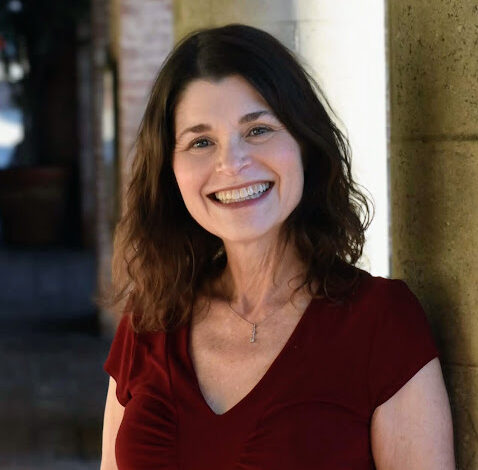
Dr. Michelle Finkel

Dr. Finkel is a graduate of Stanford University and Harvard Medical School. On completing her residency at Harvard, she was asked to stay on as faculty at Harvard Medical School and spent five years teaching at the world-renowned Massachusetts General Hospital. She was appointed to the Assistant Residency Director position for the Harvard Affiliated Emergency Medicine Residency where she reviewed countless applications, personal statements and resumes. Read more

Receive FREE Insider Medical Admissions Tips.

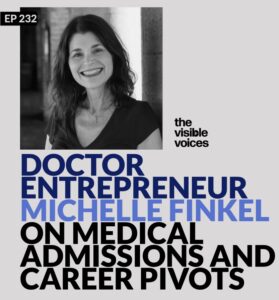
Listen to Dr. Finkel’s interview on The Visible Voices podcast: 


Listen to Dr. Finkel’s interview on the White Coat Investor podcast:

Listen to Dr. Finkel’s interview on the FeminEm podcast: