
Blog Archives

Physician Heal Thyself By Getting Help

I wrote recently about burnout, which affects 37.9% of doctors, as compared to 27.8% of the general population, according to an Archives of Internal Medicine study.

Beyond burnout, suicidality is a major problem for doctors. Physicians have much higher suicide rates than the general population with male doctors at 70% higher and female physicians at 250-400% higher, according to a JAMA piece.

For the younger cohort in the profession, things are also rough: Fifteen to 30% of medical students and residents screen positively for depression, according to Medscape, and suicide is the number one cause of death among medical residents.

Excessive work burdens and expectations, lack of a perceived internal locus of control, and isolation from friends and family can all lead to clinical depression among medical students and trainees. It’s critical to take note if you see symptoms in yourself or colleagues, including hopelessness, withdrawal, anger, recklessness, anxiety, substance abuse, excessive feelings of guilt, and inability to concentrate. Realizing that many others are in the same boat and that most institutions have psychological counseling options can be a relief. Additionally, a national resource is the National Suicide Prevention Lifeline at 1 800 273 TALK.

Tags: , , ,

SOAP®

Just a reminder that if you have received few or no residency interviews, it’s time to start getting ready for SOAP.

On March 14 SOAP begins, but you need to understand how it works and be prepared for its brisk schedule prior to that.

Here is an article on the history and basics of SOAP.

Tags: ,

Match Ranking is (Strategically, but Not Emotionally) Easy Peasy

Getting into residency is hard. Understanding how to rank programs for the Match is easy. Thanks to a Nobel Prize winning economist and his colleagues, the current Match algorithm ensures that your desires are the priority over the residency programs’. What this means practically is that you should rank your first choice first, your second second, etc. There is no need to try to play the system.

I’ve had applicants tell me that they plan to rank a less preferred institution higher because that program has more residency slots. That’s a huge no-no. The applicant will actually be harming him/herself with that strategy!

Please see my Guru on the Go® video “NRMP Ranking to Avoid a Spanking” below for a fun summary.
Tags: , ,

How Do I Evaluate My Score from the New MCAT?

Assessing your score on the new MCAT is not easy. The AAMC has no plans to release an MCAT conversation table from old to new scores, as their position is that the tests are not comparable.

With the old test, the conventional wisdom was that getting a 30 or 31 (approximately the 85th percentile) was the threshold to aim for, as it represented the allopathic medical school new matriculant average. Until we see who gets into medical school this year and what their corresponding scores are, it’s hard to know what the “new 30” is.

Having said all of that, using last year’s MSAR should still help you decide whether you need to re-test. An option for those committed to medicine who don’t score at or above the “new 30” is osteopathic medical school, an institution that shows a great commitment to primary and holistic care and a (limited) leniency with MCAT scores. (Students entering osteopathic medical schools in 2013 had an MCAT score of 27. Their average GPA was 3.5 compared to 3.69 for incoming allopathic students.) Here is a great New York Times piece about DO schools.)

We have to take a wait and see approach to assess scores from the new MCAT, but it is key that you ensure you give yourself enough time to study and that you prepare effectively.

Tags: ,

The LAX Test

How does Google attract the best talent and what does that have to do with medical school and residency training anyway? If you don’t have time to read the whole book How Google Works by Eric Schmidt and Jonathan Rosenberg, I strongly recommend this excerpt.

Schmidt and Rosenberg highlight their “secrets” on hiring, including the LAX test, “Googleyness,” and hiring folks they may not want to have a beer with. They say the most important skill a business person can develop is interviewing.

In the end they declare, “Nothing is more important than the quality of hiring,” which is the ultimate truth for medical admissions as well, of course.

Tags: , ,

About Dr. Michelle Finkel

Dr. Michelle Finkel

Dr. Finkel is a graduate of Stanford University and Harvard Medical School. On completing her residency at Harvard, she was asked to stay on as faculty at Harvard Medical School and spent five years teaching at the world-renowned Massachusetts General Hospital. She was appointed to the Assistant Residency Director position for the Harvard Affiliated Emergency Medicine Residency where she reviewed countless applications, personal statements and resumes. Read more

Receive FREE Insider Medical Admissions Tips.

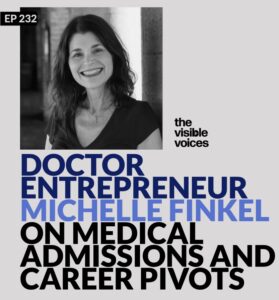
Listen to Dr. Finkel’s interview on The Visible Voices podcast: 


Listen to Dr. Finkel’s interview on the White Coat Investor podcast:

Listen to Dr. Finkel’s interview on the FeminEm podcast: