
Blog Archives

Avoid the Trite

The goal of your written materials (and your interview) is to distinguish yourself from everyone else to demonstrate that you are worthy of a competitive medical school, residency, fellowship, or postbaccalaureate slot.

Therefore, it’s critical that you avoid flowery or trite language: Using it does the opposite of making you distinctive. When I’m editing, I often reference a piece by Lisa Miller called, “When Did Everything Become a ‘Journey’?” about the overuse of the word. Miller cites linguistics professor Jesse Egbert who notes that “journey,” as a noun, has almost doubled in American English since 1990. 

In her piece, Miller also includes a wry quote from a Los Angeles clinical psychologist who describes the word “journey” as “eye-rollingly cheapened.” In editing personal statements, I see the word used frequently – maybe once in every four essays I revise.

Good writing takes a lot of time – brainstorming, outlining, and many drafts. Make sure your written materials are the best they can be by being diligent about your process (and by getting help).
Tags: , , ,

Medical School Interview Tips: What Do AdComs Really Want?

For those of you who’ve submitted your secondary essays, it’s time to start thinking about medical school interviews. Here are tips on what medical school admissions officers/committees are seeking:

1. They want someone distinctive. Your goal is to distinguish yourself from all of the other applicants by showcasing your accomplishments. Anyone can say s/he wants to help people or is hard working. Fewer candidates can prove it with their pre-professional achievements.

2. They want to ensure you’re committed to medicine and you have an idea of what you’re getting yourself into. Medical school is tough; the institutions are not seeking someone who is ambivalent and might quit. Giving examples of your clinical experience can help.

3. The schools want to ensure you’re reasonable. They want to see that you don’t have a problem personality, aren’t going to harass your colleagues, and aren’t going to cause the institution embarrassment or extra work. Being professional during the interview day and having strong letters are important.

4. They want to hear you’re particularly interested in their program. You can convince them of your enthusiasm by knowing specifics about the school and city.

You would never take the MCAT without practicing first, and yet, countless applicants go to medical school interviews without preparing. If you’re interested in working with me, please hire me soon, as I’m booking up for September.

Tags: , , ,

For Pre-Meds Applying in the Next Cycle, What IS Solid Clinical Experience Anyway?

Getting into medical school has gotten so competitive that it’s essential to have a strong candidacy with excellent grades and robust extracurricular activities. However, one mistake I see pre-meds make is that they are so focused on leadership and research, they forget a critical component – clinical experience. To prove you want to be a doctor, it’s crucial you obtain clinical experience for a significant period of time – not just a health fair or two. Good grades will not make up for a lack of clinical experience. Here are some ideas for obtaining strong clinical experience:

EMT (Some universities have EMT classes and/or jobs on campus; takes time to certify.)
Participate in a good hospital clinical care extender program (Regular hospital volunteer programs are usually not clinically focused enough.)
Work at a low-income clinic (Many require a one-year commitment.)
Certified Medical Assistant (Takes time to certify.)
Certified Phlebotomist (Same)
Certified Nursing Assistant (Same)
Work at a hospice (Because of the nature of the work, may need to be paired with another, more hands-on clinical experience.)
Scribe (Usually a full-time job)
Veterinarian’s Assistant (A great way to get hands-on procedural experience; need to explain this choice in your application.)

Pharmacy Assistant (Make sure the role is patient facing.)
Volunteer for a crisis text/phone line (May need to be paired with an in-person clinical experience.)

Shadowing is a mixed bag: Medical schools don’t know whether you’re second-assisting in the operating room or just standing in a corner being ignored. If you choose to shadow, make sure you strategically delineate your clinical experience in your written materials.

If you’re not excited about getting clinical experience, it’s time to question your interest in a career in medicine… which is exactly what admissions committees will do if they don’t see that experience.

Do your research before accepting a “clinical” job so you ensure you’ll really get a satisfying experience and show admissions committees you can handle the heat.

Tags: , , ,

The Disadvantages of a BS/MD Program

I’ve always had major qualms about BS/MD programs, especially the six and seven-year ones, perhaps because I appreciated my college experience so much. There are many other disadvantages (and a few advantages) of these programs, which are extremely well covered in podcast episode 542 of Your College Bound Kid

There, college counselor extraordinaire Mark Stucker does a very deep dive into the BS/MD option. Start at 10 minutes into the podcast for his extensive discussion of the (few) pros and (multiple) cons.

Tags: , , ,

Great Podcast Episodes for College Applicants on Pre-med Paths

For those high school students already considering a career in medicine, I recommend a recent, two-part Your College Bound Kid (YCBK) podcast series. YCBK is run by Mark Stucker, a genial college counselor who covers a panoply of topics on the college admissions process. 

He and his colleague Susan Tree recently spoke about what pre-med students should be looking for and avoiding when considering colleges. They get down to the nitty-gritty, including inflated medical school acceptance statistics, specific institutions that offer mentored research programs, and the corporatization of modern medicine. The episodes are number 537 and 539.

Tags: , , ,

About Dr. Michelle Finkel

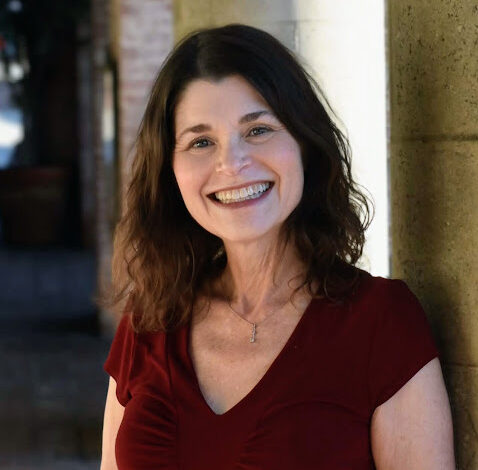
Dr. Michelle Finkel

Dr. Finkel is a graduate of Stanford University and Harvard Medical School. On completing her residency at Harvard, she was asked to stay on as faculty at Harvard Medical School and spent five years teaching at the world-renowned Massachusetts General Hospital. She was appointed to the Assistant Residency Director position for the Harvard Affiliated Emergency Medicine Residency where she reviewed countless applications, personal statements and resumes. Read more

Receive FREE Insider Medical Admissions Tips.

Listen to Dr. Finkel’s interview on the White Coat Investor podcast:

Listen to Dr. Finkel’s interview on the FeminEm podcast: