
Blog Archives

The Week I Spent 138 Hours in the Hospital and What it Means for your Residency Application

During my internship, on my surgical rotation, I once spent 138 hours in the hospital in one week. If you think this isn’t mathematically possible, I will tell you that I was on call from Monday morning to Tuesday evening, from Wednesday morning to Thursday evening, in-house on Friday, and then on call from Saturday morning until the next Monday morning. (I had to stay in-house that Monday until evening rounds were over too.) As you can imagine, I was barely human by the end. How this schedule was good for patient care is beyond me.

I thought of that ghastly time recently when reading this oldie-but-goodie article in the New York Times called “How Job Stress Can Age Us” written by Dr. Dhruv Khullar. The author reports on a study, “Physician-Training Stress and Accelerated Cellular Aging” that assessed the DNA of 250 first-year medical residents around the country. Researchers examined the saliva samples of these residents, focusing on their telomeres – the bumpers at chromosome ends that prevent DNA damage – before and after the first year of residency. Researchers found that the DNA of first-year residents aged six times faster than normal.

Six times faster.

I found this both shocking, upsetting, and validating. Residency training is as hard as we think it is. 

What I would strongly recommend is that you compare residency programs’ hours as you decide where to apply and before you create your Match list this coming winter. Strangely, many applicants don’t even consider this important issue when making decisions about their next three to five years. Also, many residencies support physician wellness programs and night coverage. Especially in the setting of severe burnout among doctors, your happiness should be a primary factor in your career choices. If you’re not sure, consider your shrinking telomeres. 
Tags: , , ,

What Kind of Job Do Female Emergency Physicians Want and How Might that Affect Your Career Choices?

Recently Dr. Thomas Cook, a program director in South Carolina, wrote an article in Emergency Medicine News describing a study about my field – emergency medicine’s – workforce. 

The data found interesting differences between male and female emergency physicians. For respondents, geographic locations was the only factor that was “very important” to more than half of the women (52%) but only 42% of the men. Interestingly, compensation was “very important” to 49% of the men and only 27% of the women. Proximity to family was “very important” to 38% of the women but only 27% of the men. 

Currently more than 50% of medical students are women and yet only one in three chooses emergency medicine for a career. Nationally, only 25% of emergency physicians are women. Using data to better understand what women emergency physicians are seeking might help the field improve the gender gap. 

Tags: , , ,

Something You Probably Haven’t Considered Could Have a Huge Impact on Your Professional Happiness

A recent article in Emergency Medicine News caught my eye. Emergency physician Dr. Tom Belanger conducted a small study (n=573) in which he crafted a nine-question Likert scale survey and then attempted to predict emergency physicians’ employment structures based on respondents’ answers. He used statements like “I am paid fairly,” “I am secure in my career,” and “Emergency medicine is a good career” in his survey.

In medical school and residency, I thought little about employment structure, which can include democratic, hospital employee, contract management, independent or locums, academic, resident, or government systems. As a student, I was so focused on what specialty I would choose and was so influenced by the academicians I worked with that I didn’t even consider that I could choose a field in which I might be happy in one employment structure and discontent in another. 

Belanger found that employees of contract management groups (CMGs) tended to be the most negative respondents, and owners of CMGs were not far behind. On the other hand, owners of democratic groups were the most positive in almost every aspect. 

In this study, all respondents were in the same specialty and yet, employment structure divided respondents with regard to their career satisfaction. Belanger’s graphs are worth viewing in his piece, but the take-home point for medical students and residents is the importance of the employment structure in which you ultimately work, a topic that may not have even crossed your mind until now. 

Tags: , , ,

White Coat Investor Podcast Interview

Two years ago this week (which may seem like a lifetime ago), I was honored to be the featured interviewee on the White Coat Investor (WCI) podcast. For those of you who aren’t familiar with WCI, it’s a website/blog/podcast founded by James Dahle MD, an emergency physician whose interest in personal finance and the FIRE (financial independence – retire early) movement has sparked a slew of physician devotees. My interview focused on how Insider Medical Admissions helped me create autonomy and flexibility while balancing a clinical career and a family. Check it out here or on your favorite podcast app. 

Tags: , , ,

The Fauci Effect

As I write this, I am listening in the background to an interview of Dr. Anthony Fauci by Dr. Sanjay Gupta through the Harvard School of Public Health. Dr. Fauci’s leadership (along with that of other physicians and epidemiologists) has apparently prompted what news outlets are calling the Fauci Effect, an 18% increase in the number of applications to medical school this year. I find this encouraging. After all, one could envision people running for the hills with the physical threat that COVID has posed for physicians (and other critical medical staff and front line workers). See the interview (oriented for a medical and public health community) with Dr. Fauci here

Tags: , , ,

About Dr. Michelle Finkel

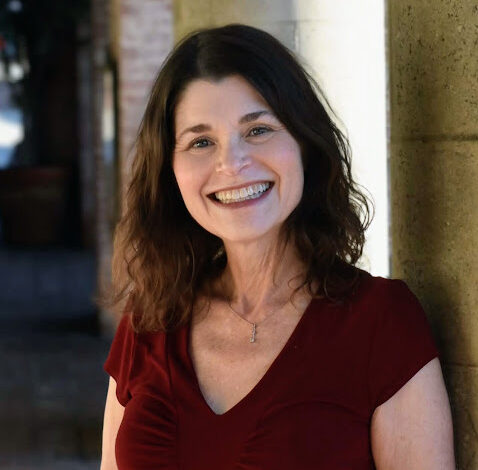
Dr. Michelle Finkel

Dr. Finkel is a graduate of Stanford University and Harvard Medical School. On completing her residency at Harvard, she was asked to stay on as faculty at Harvard Medical School and spent five years teaching at the world-renowned Massachusetts General Hospital. She was appointed to the Assistant Residency Director position for the Harvard Affiliated Emergency Medicine Residency where she reviewed countless applications, personal statements and resumes. Read more

Receive FREE Insider Medical Admissions Tips.

Listen to Dr. Finkel’s interview on the White Coat Investor podcast:

Listen to Dr. Finkel’s interview on the FeminEm podcast: